Your Yard Just Flooded and Nobody Turned On a Hose. Here Is What an Underground Leak Actually Looks Like.
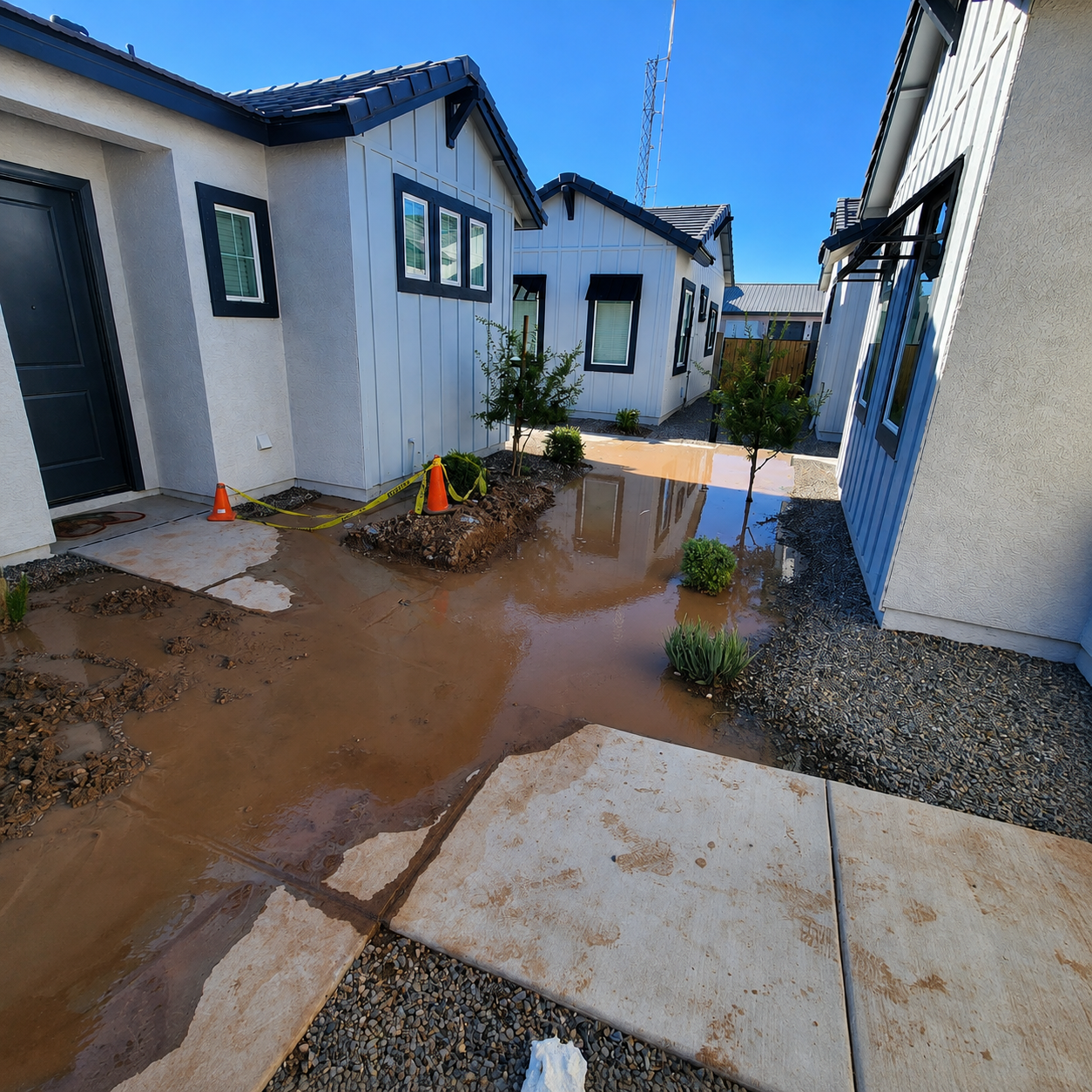
The second photo in this post is from a job we did not long ago. A homeowner woke up to find the space between her house and the neighbor's property completely flooded. Muddy water pooling across the entire area, running across the flagstone, soaking into the landscape rock, with no obvious explanation. It had not rained. Nobody had left anything running. The yard just filled with water overnight.
We found a failed supply line running underground between the meter and the house. The pipe had been running under pressure at the point of failure and the water had been following the soil toward the surface until it had nowhere else to go. By the time it was visible as a flood, it had already been running long enough to saturate the ground across a wide area.
That is how underground leaks work. They do not happen where you can see them. They happen in the ground, and the ground absorbs what it can until the water finds its way up. What looks like a sudden event almost never is.
Why Underground Supply Line Leaks Are a Different Problem
A dripping faucet or a leak under a sink is visible. You see it, you deal with it. An underground leak in the supply line running from the meter to the house, or in any buried pipe on the property, is invisible by definition. The pipe is in the ground. The leak starts there. The water moves through the soil following the path of least resistance, and it can travel a surprising distance from the actual failure point before it surfaces anywhere.
In the job pictured, the visible flooding was several feet from where the pipe had actually failed. If we had just dug at the wettest point, we would have been in the wrong place. The pipe failure was uphill of where the water was pooling, because water follows gravity even underground. Detection work before excavation pointed us to the actual source before we started digging.
This is the part of underground leak repair that separates a good outcome from an expensive one. Going straight to digging based on where the water is visible will get you to the water. It will not necessarily get you to the pipe. A proper leak detection locates the failure point before a shovel goes in the ground.
What Underground Leaks Do Before Anyone Notices Them
A small underground leak that is not dramatic enough to flood a yard still does things. It raises the water bill. A supply line leak running at full main pressure, even a small one, moves a significant volume of water continuously. Homeowners notice the bill is higher but often attribute it to seasonal changes, irrigation adjustments, or just the way the billing cycle landed.
Underground water movement also affects the soil. In the East Valley, the clay content in the soil expands when it gets wet and contracts when it dries. A slow leak that has been wetting a section of soil over weeks or months causes repeated expansion and contraction cycles in the ground around the pipe. That movement stresses the pipe further, which is part of why a small underground leak sometimes becomes a large one without warning. The leak is not static. It is actively working on the surrounding pipe.
Soft spots in the yard, areas that feel noticeably spongier underfoot than the surrounding ground, are one of the more reliable surface signs. A section of grass or landscaping that is unusually green compared to the rest of the yard, particularly in summer when the rest of the yard is dry, is another. Water pressure that has dropped noticeably without any change to the household setup. Any of those in combination with a water bill that does not match usage is worth having looked at.
The Detection Work That Happens Before We Dig
We pressure test the supply line before we open any ground. Isolating sections of the line and testing pressure at each section tells us where water is escaping the system. That narrows the search area from the whole yard to a specific section of pipe before any excavation starts.
Electronic leak detection equipment listens for the sound signature of water escaping a pressurized pipe underground. Different pipe materials transmit that sound differently, and experience with the specific frequencies involved helps locate the failure point with accuracy. On a good detection, we can get within a foot or two of the actual leak location before we break ground.
The combination of pressure testing and electronic detection is what made the repair in these photos as contained as it was. The excavation area you can see in the before photo was targeted, not exploratory. We went to where the leak was, not to where the water happened to show up at the surface.
What the Repair and Restoration Involves
Once the leak is located and accessed, the repair itself depends on what failed and why. A fitting that corroded through gets replaced. A section of pipe that developed a crack gets cut out and replaced. If the pipe material is aging copper that has been carrying Chandler hard water for decades, the conversation about whether the full supply line run should be replaced while access is already open is worth having. Fixing one failure point on a line that is at end of life is buying time, not solving the problem.
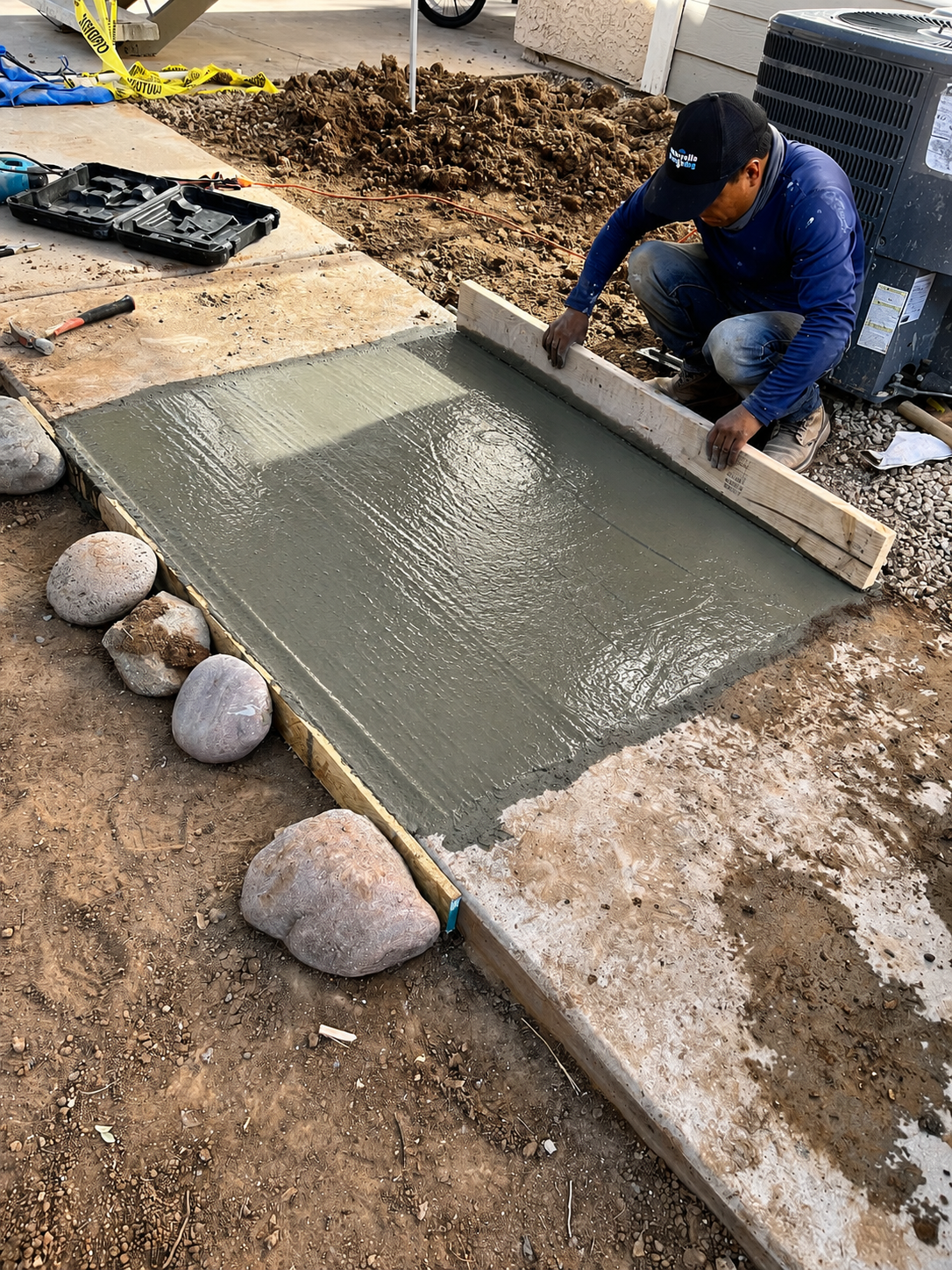
After the plumbing repair is made and pressure-tested, the excavation gets backfilled. The second photo in this article shows that process completed. Fresh concrete over the repair area next to the AC unit, smoothed and framed. The soil and concrete work that follows a buried pipe repair is not a minor detail. The backfill needs to be compacted correctly to avoid settling, and any concrete or hardscape that was cut needs to be restored in a way that holds up, not just patched cosmetically.
What a homeowner gets at the end of an underground leak repair done right is a yard that looks like something happened and was properly addressed, not a yard with a patch that will be obvious for years. The first photo from this job shows a clean concrete pour being finished. That is the last step of a job that started with a flooded yard and ended with everything restored to where it should be.
The Water Bill Is Usually the First Sign
Underground supply line leaks that have not yet surfaced visibly almost always show up on the water bill first. A line that is leaking slowly but continuously moves hundreds or thousands of gallons of water before it ever becomes visible above ground. At Chandler water rates, that volume adds up on the bill in a way that gets noticed before a flooded yard gets anyone's attention.
If your bill has increased without an explanation that makes sense, the irrigation system is the first thing most people check. If the irrigation is not the source, the supply line is the next conversation. A pressure test on the supply system from the meter to the house takes less than an hour and tells us definitively whether water is leaving the system somewhere underground.
The homeowner whose flooded yard is in these photos had not noticed anything unusual on her bill before the event. The failure was fast when it happened. But that is not the typical pattern. Most underground leaks give a bill signal weeks or months before they become visible, and the ones that get found at the bill stage cost significantly less to address than the ones that get found when the yard is already flooded.
If Your Yard Has Water Where Water Should Not Be
A wet area in the yard that does not correspond to irrigation, rain, or any obvious source. A soft spot that has been there for a few weeks. A bill that has been creeping up without explanation. Pressure inside the house that has felt lower than usual. Any of those on their own might have an innocent explanation. A combination of them points toward an underground leak that is worth having located before it becomes the flooded yard situation in the photo.
We detect and repair underground supply line leaks in Chandler homes and handle the full scope from detection through excavation, pipe repair, backfill, and concrete restoration. You do not need to find a separate concrete contractor or a landscaper to finish the job. We handle the whole thing.
Call us at 480-869-6952 or reach out online. We are in Chandler and use detection equipment before we recommend opening any ground. Pricing is discussed before work begins.