Your Toilet Is Clogged and the Plunger Is Not Working. Here Is What Happens Next.
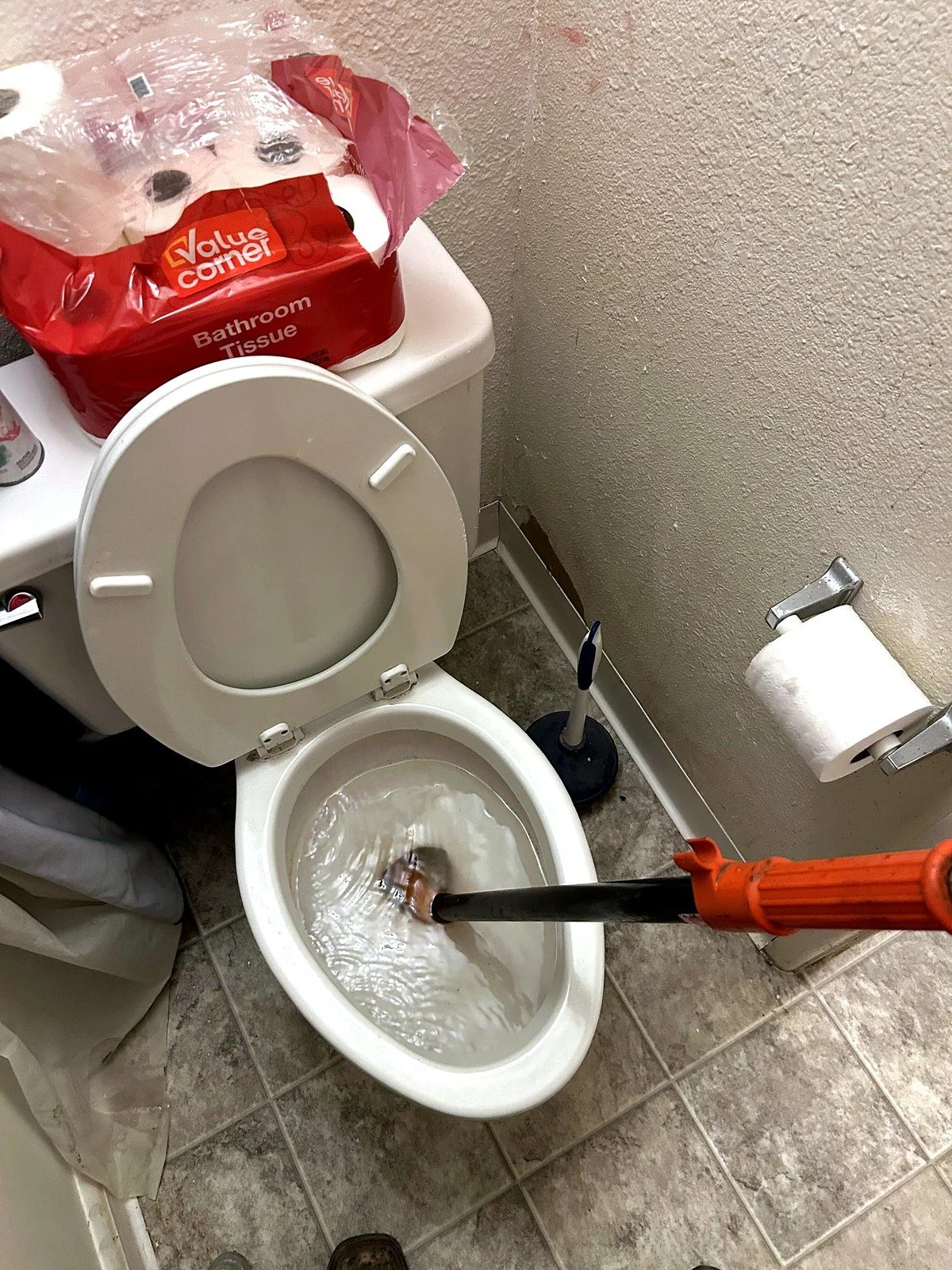
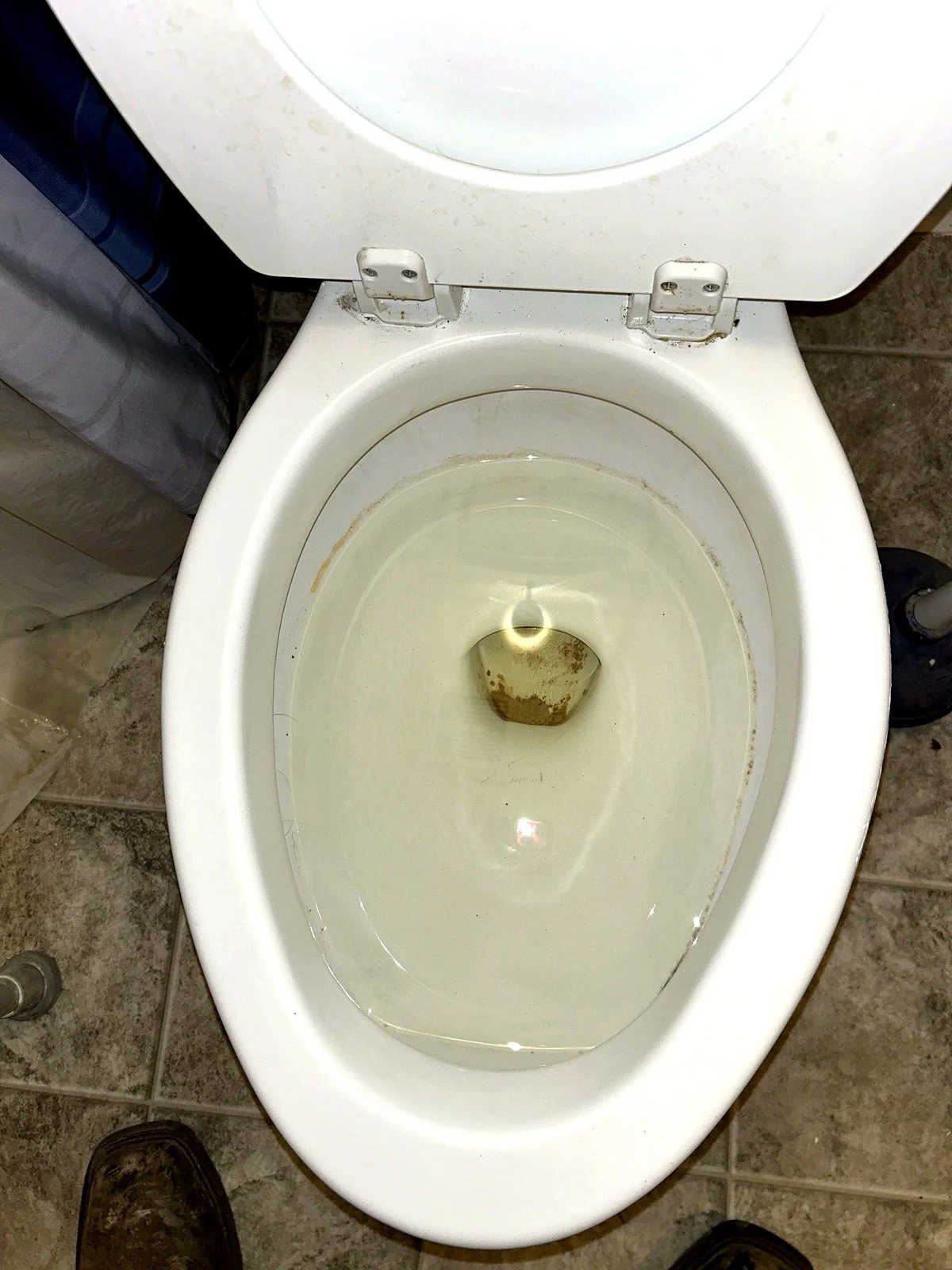
The photos from a recent service call tell the story clearly. On the left, a drain snake cable working its way through a clogged toilet, water sitting in the bowl, the blockage not yet cleared. On the right, the same toilet after the snake did its job, the bowl draining correctly, the trap and drain opening visible and clear at the bottom. Two photos, one visit, the outcome that a plunger was not going to achieve on its own.
A toilet that will not clear with a plunger is one of the more stressful household situations there is. It is not something you can ignore, and when the standard fix does not work, most people are not sure what comes next or whether the problem is something serious. Usually it is not serious. But it does need the right tool, which a plunger is not in every case.
Here is what is actually happening when a toilet will not clear, when to call a plumber instead of continuing to plunge, and what clearing it properly involves.
What a Plunger Can and Cannot Do
A plunger works by creating a pressure wave that pushes the blockage through the trap and into the drain line below the toilet. For a soft blockage sitting right at the trap, that pressure is enough to move it and restore flow. Most toilet clogs that clear with a plunger are exactly that situation.
When a blockage is further into the drain, when it is harder material that does not compress under pressure, or when it is something that has lodged in the trap at an angle that the pressure wave cannot dislodge, a plunger does not solve it. It just moves water back and forth on top of the blockage. Repeated plunging does not make the blockage easier to clear over time. In some cases it compacts the material more firmly into the passage it is blocking.
The test is simple. If a toilet has been plunged several times and the bowl is still not draining normally, the blockage is not one that is going to yield to more plunging. That is when the snake becomes the right tool.
What a Toilet Snake Is and How It Works
A toilet snake, properly called a closet auger, is a flexible cable with a curved guide tube designed to feed through the toilet trap without scratching the porcelain. The cable extends into the drain, and as it rotates it either grabs onto the blockage material and retrieves it or breaks it up enough that it can flush through.
The photos from this job show a drain snake with a drill-powered head being used on the toilet, which allows the cable to rotate with more force than a manual auger. For a stubborn blockage, the additional torque from a powered snake makes the difference between clearing the clog on the first pass and needing multiple attempts.
After the snake clears the blockage, the toilet gets flushed multiple times to confirm the drain is fully open and that nothing was displaced into the line that might cause a secondary blockage downstream. The right photo from this job shows the cleared bowl after service, the drain opening visible at the bottom with clean water present. That is what a properly cleared toilet looks like.
What Gets Stuck in Toilets That a Plunger Will Not Move
The most common non-flushable items we retrieve from clogged toilets are wipes of every kind. Baby wipes, makeup wipes, cleaning wipes, personal wipes, and every variety labeled as flushable. None of them break down in the drain system the way toilet paper does. They hold their shape, they collect at the trap, and they create blockages that get denser the more material accumulates on top of them.
Paper towels are similar. They are designed to hold up when wet, which means they do not dissolve in drain water. A single paper towel flushed can partially block a toilet trap in a way that the next flush of toilet paper makes worse. Feminine hygiene products, cotton products, and children's toys, which we retrieve from rental unit toilets more often than anyone expects, are all items that a plunger will not move and that require a snake or in some cases pulling the toilet entirely to retrieve.
In rental properties, the pattern of what goes into toilets is harder to control than in an owner-occupied home. Turnover between tenants sometimes reveals a drain line that has been receiving non-flushable material consistently enough that the blockage is not just at the trap but extends further into the line. When a camera confirms that the issue is further down than a toilet snake can reach, the approach shifts from a toilet snake to a main line cable or a drain cleaning of the shared stack.
When a Clogged Toilet Is a Symptom of Something Bigger
A single toilet that is clogged and clears with a snake is a straightforward service call. A toilet that clogs repeatedly in the same unit, or multiple toilets on the same floor or in the same building backing up around the same time, is telling a different story.
Recurring toilet clogs that happen within weeks of being cleared are usually a sign that the drain line serving that toilet has a partial blockage, a build-up of material, or a structural issue like a root intrusion or a shifted joint that is collecting material faster than normal use would explain. The toilet clears because the snake opens a path, but the condition that is causing material to accumulate does not change until the line is properly cleaned or the structural issue is addressed.
Multiple toilets backing up simultaneously almost always points to the main sewer line rather than individual toilet clogs. When everything in a building or unit drains into the same main line and that line has a blockage, every fixture upstream of it shows symptoms. Treating individual toilets in that situation does not resolve the underlying problem.
When Pulling the Toilet Is the Right Call
There are situations where the right approach is to pull the toilet rather than snake through it. When the blockage is a solid object, a toy, a personal item, a product cap, something that a snake is going to push further into the line rather than retrieve, pulling the toilet and accessing the drain from above gives a direct line of sight and the ability to remove the object cleanly.
Pulling the toilet also allows inspection of the flange and wax seal underneath. A toilet that has been clogging repeatedly and has also been rocking slightly at the base may have a wax seal that has failed, which creates its own problems separate from the clog. Addressing the clog and the seal at the same visit is more efficient than two separate visits for what is functionally the same access.
We assess which approach makes sense before we start. If the blockage is material that a snake will clear, we snake it. If there is evidence the blockage is a solid object or if the toilet has other issues worth addressing at the same time, we have that conversation before any work starts.
For Property Managers: Responding to Clogged Toilet Calls
Clogged toilets are among the most urgent maintenance calls a property manager receives because a toilet that cannot be used affects the tenant immediately and directly. Response time matters on these calls more than on most plumbing service requests.
We handle clogged toilet calls at residential and multi-unit properties across Chandler. For property management accounts, we prioritize these calls for same-day or next-day response depending on when the call comes in.
If a unit is reporting recurring toilet clogs rather than a one-time event, that pattern is worth a camera inspection of the drain line before the next call comes in. Staying ahead of a drain line issue is considerably more convenient for tenants and less expensive for the property than responding to repeated emergency calls for the same toilet.
Call us at 480-869-6952 or reach out online. We handle clogged toilet service for residential and multi-unit properties across Chandler. Pricing is always discussed before work begins.