When the Pipe Is Inside the Wall and the Wall Is Stucco and Concrete, Here Is What Getting to It Actually Involves.
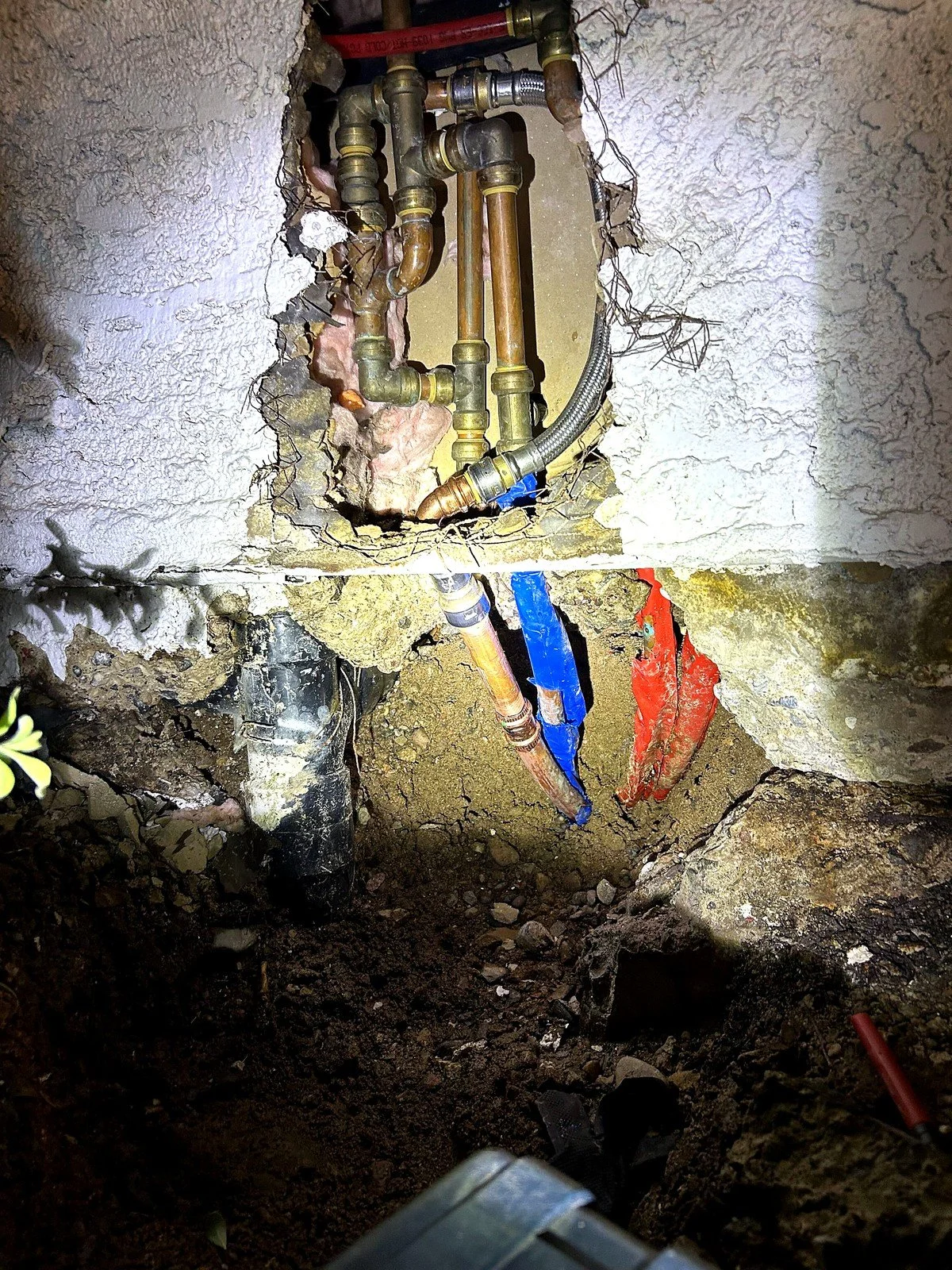
The photos attached to this post are from a job at a multi-unit residential property in the Phoenix area. A copper supply line running inside an exterior stucco wall had developed a leak. The pipe was not accessible from the interior. It was not accessible from a utility space. It was behind stucco cladding on an exterior wall, embedded in the wall cavity, with soil graded against the exterior base.
The left photo shows the wall after we got through it. Stucco removed, concrete substrate opened, soil excavated at the base, and the copper supply lines exposed and accessible for the first time since the building was constructed. The cluster of copper fittings and colored supply lines visible in the cavity tells its own story about how the plumbing in that wall had been configured and what it took to reach the specific line that needed attention.
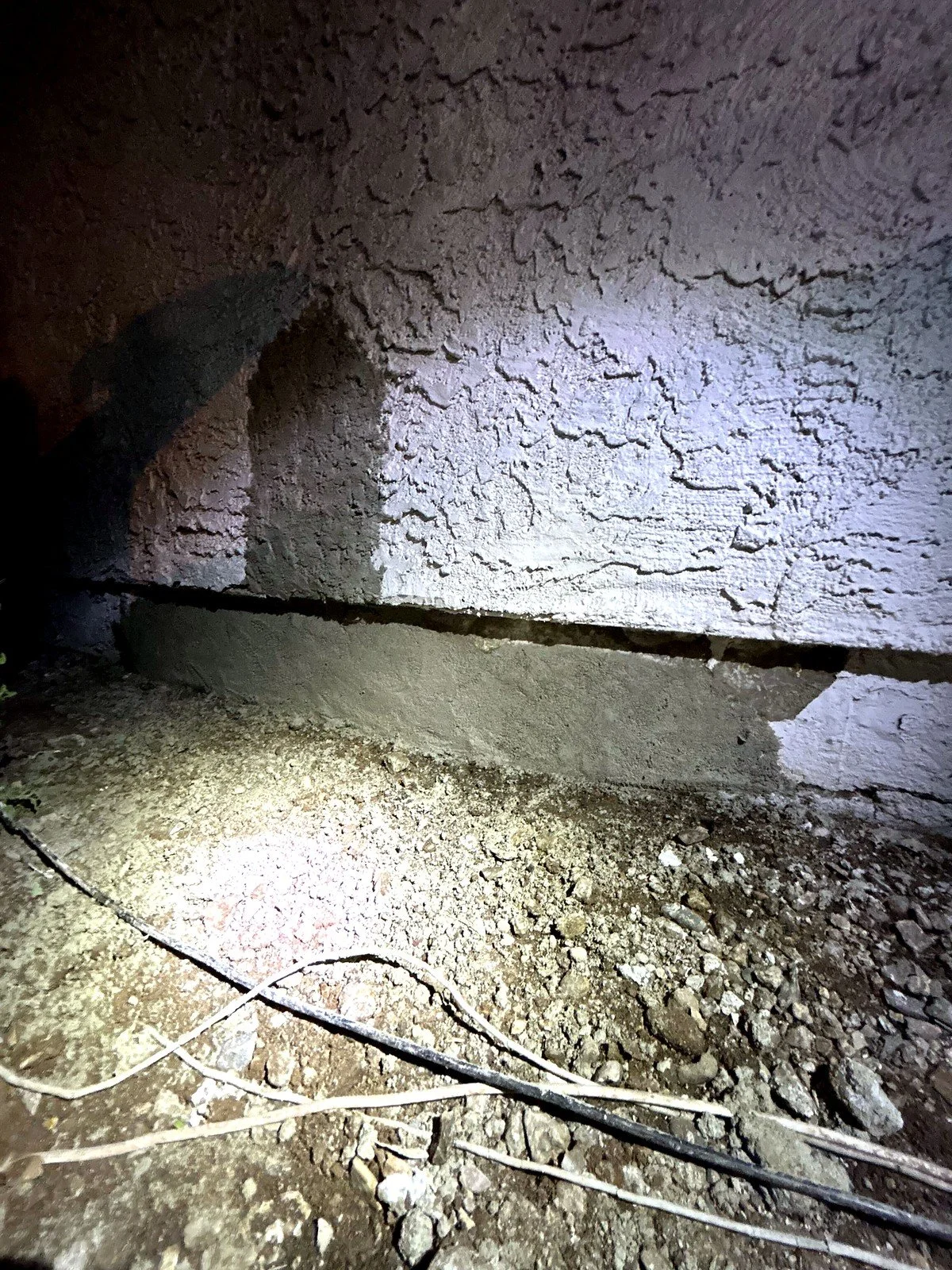
The right photo shows the stucco wall surface with the access cut illuminated, showing the depth of wall penetration and the cavity that had to be opened to reach the pipe. That is not a small repair. That is a coordinated access job that required concrete cutting, stucco removal, and excavation working together before a single plumbing repair could happen.
Why Some Pipe Repairs Start With Demolition
In new construction, supply lines get routed through wall cavities before the walls are closed. The pipe goes in, inspections happen, and then the stucco, drywall, or other cladding goes over it. From that point forward, the pipe is invisible and inaccessible without opening whatever is covering it.
Most of the time that is fine. The pipe does what it is supposed to do and nobody needs to get to it. When a pipe inside a wall develops a leak, a corrosion failure, or a joint that has given way after years of thermal cycling and mineral attack, getting to it means opening the wall. There is no other option.
On an exterior stucco wall, that process is more involved than opening interior drywall. Stucco is a layered system applied over a metal lath substrate over sheathing or concrete masonry. Cutting through it requires the right tools and a controlled approach that minimizes collateral damage to the surrounding wall surface. On jobs where the pipe is also below grade at the wall base, the excavation and the wall opening have to work in coordination, which is what the photos from this job show.
What the Scope of This Kind of Job Looks Like
The access work starts with locating the pipe before anything gets cut. Electronic pipe locating equipment finds the supply line inside the wall and identifies the approximate depth and routing before the first cut is made. Going straight to cutting without that step risks damaging adjacent lines, electrical conduit, or structural elements that share the wall cavity.
Once the pipe is located, the stucco gets scored and removed in a controlled section centered on the pipe location. Stucco cutting produces significant dust and debris and requires containment when the work is near occupied units. The concrete or masonry substrate behind the stucco gets opened next, typically with a rotary hammer or cutting saw depending on the substrate type and thickness.
If the pipe runs below the exterior grade line, which is common at the base of exterior walls in older multi-unit construction, excavation at the wall base is required before the lower portion of the pipe can be accessed. That is the soil removal visible at the bottom of the left photo. The pipe transition from underground to inside the wall cavity is often where failures occur, because that transition point experiences the most movement from soil contact, moisture, and thermal cycling.
With the wall open and the pipe accessible, the plumbing repair happens. Depending on what the leak assessment and visual inspection reveal, that could be a targeted section repair, a fitting replacement, or a more significant pipe repair if the condition of the copper indicates broader deterioration beyond the visible failure point. The pipe in the left photo shows multiple fittings and connection points that become visible and assessable for the first time once the wall is open.
What Aging Copper in Arizona Exterior Walls Goes Through
An exterior wall in the Chandler area is not a stable environment for buried pipe. The wall surface heats significantly in direct sun during summer. The inside face of the wall is climate-controlled. That temperature differential means the pipe inside the wall is going through daily thermal cycles that expand and contract the copper repeatedly across the full Arizona temperature range.
Copper fittings in a wall that has been going through that cycle for twenty or thirty years have been expanding and contracting at every joint, every elbow, every connection. Each cycle is small. The cumulative effect over decades is stress on the solder joints and fittings that eventually shows up as a weep, a pinhole, or a joint that lets go.
At the same time, the hard water these copper lines carry has been depositing mineral scale on the interior walls of the pipe and contributing to the electrochemical corrosion process that thins copper from the inside. The combination of external thermal stress and internal mineral attack is why older copper in Arizona exterior walls fails at a rate that surprises property owners who assumed the pipe would last indefinitely because it is not visible and nothing had gone wrong with it yet.
The green oxidation on copper fittings visible in the left photo is surface corrosion from moisture exposure. When the stucco cladding develops micro-cracks over years of thermal cycling, small amounts of moisture penetrate and reach the copper. That moisture, combined with the mineral content of Arizona water and the electrochemical environment of a wall cavity, accelerates the external corrosion visible on the fitting surfaces.
The Restoration That Follows the Plumbing Repair
Opening a stucco wall to reach a pipe creates a restoration scope on top of the plumbing scope. The stucco that was removed needs to be replaced in a way that matches the existing surface texture and finish, the concrete or masonry substrate needs to be patched and cured properly, and the excavated area at the wall base needs to be backfilled and compacted correctly so the wall base is protected going forward.
On multi-unit properties, the restoration work also needs to account for the visual impact on the building exterior. A stucco patch that does not match the texture or color of the surrounding wall is visible and reflects on the property. We coordinate with property management on the restoration finish to achieve a result that closes out the job cleanly rather than leaving a visible reminder of where the repair happened.
The order of operations matters. The plumbing repair gets pressure tested before any stucco or concrete goes back over the pipe. Restoring the wall over a repair that has not been verified to hold wastes the restoration work and creates exactly the situation everyone was trying to avoid. Test first. Restore after.
What Property Managers Need to Know About This Type of Work
A leak inside an exterior stucco wall on a multi-unit property is not a single-trade job. The plumbing repair, the concrete and stucco access work, and the restoration all have to be sequenced correctly and coordinated between whoever is handling each piece. When those pieces are not coordinated, the result is delays, duplicate work, and a final product that reflects the lack of coordination.
We handle the full scope of this work, detection, access, plumbing repair, and coordination on the restoration, so property managers are not managing multiple contractors trying to hand off between stages of the same job. The leak gets found, the access gets opened correctly, the pipe gets fixed and tested, and the wall gets restored.
If you manage a multi-unit property in the Chandler area and have a leak situation inside an exterior wall or a supply line that is embedded in stucco construction, that is a call that should happen sooner rather than later. Leaks inside exterior walls do more damage the longer they run, and the access and restoration scope does not get smaller with time.
Call us at 480-869-6952 or reach out online. We handle stucco wall access, copper line repair, and full restoration coordination for multi-unit and commercial properties across Chandler. Pricing is discussed before any work begins.