Both the Sink and the Tub Are Draining Slowly. Here Is Why That Happens and What Clearing Them Actually Takes.
We get called out to bathroom drain jobs regularly where both the sink and the tub in the same bathroom are running slow at the same time. That combination shows up more often than people expect, and it usually gets explained as two separate problems happening to coincide. In most cases it is not two separate problems. It is one situation affecting both fixtures.
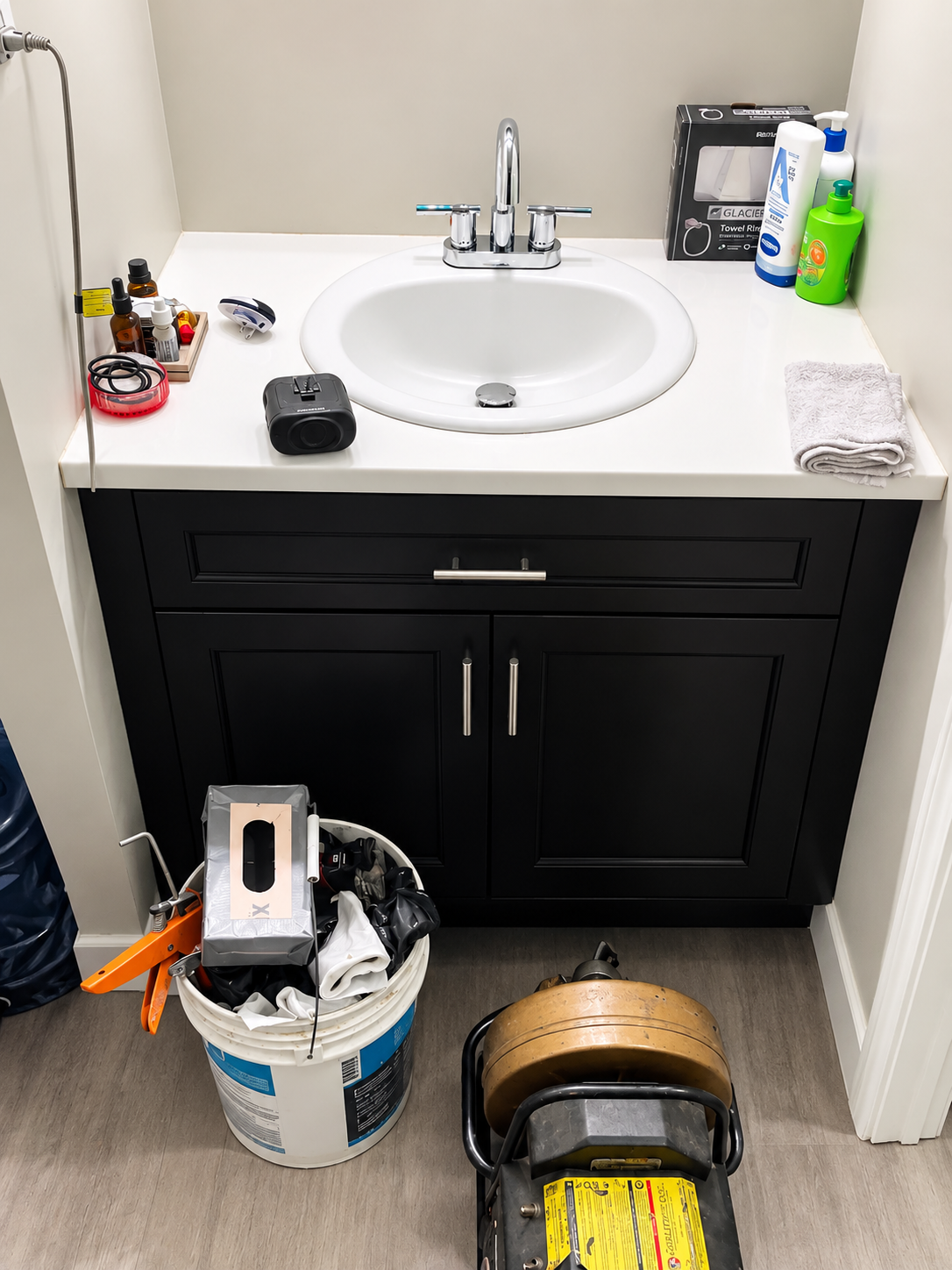
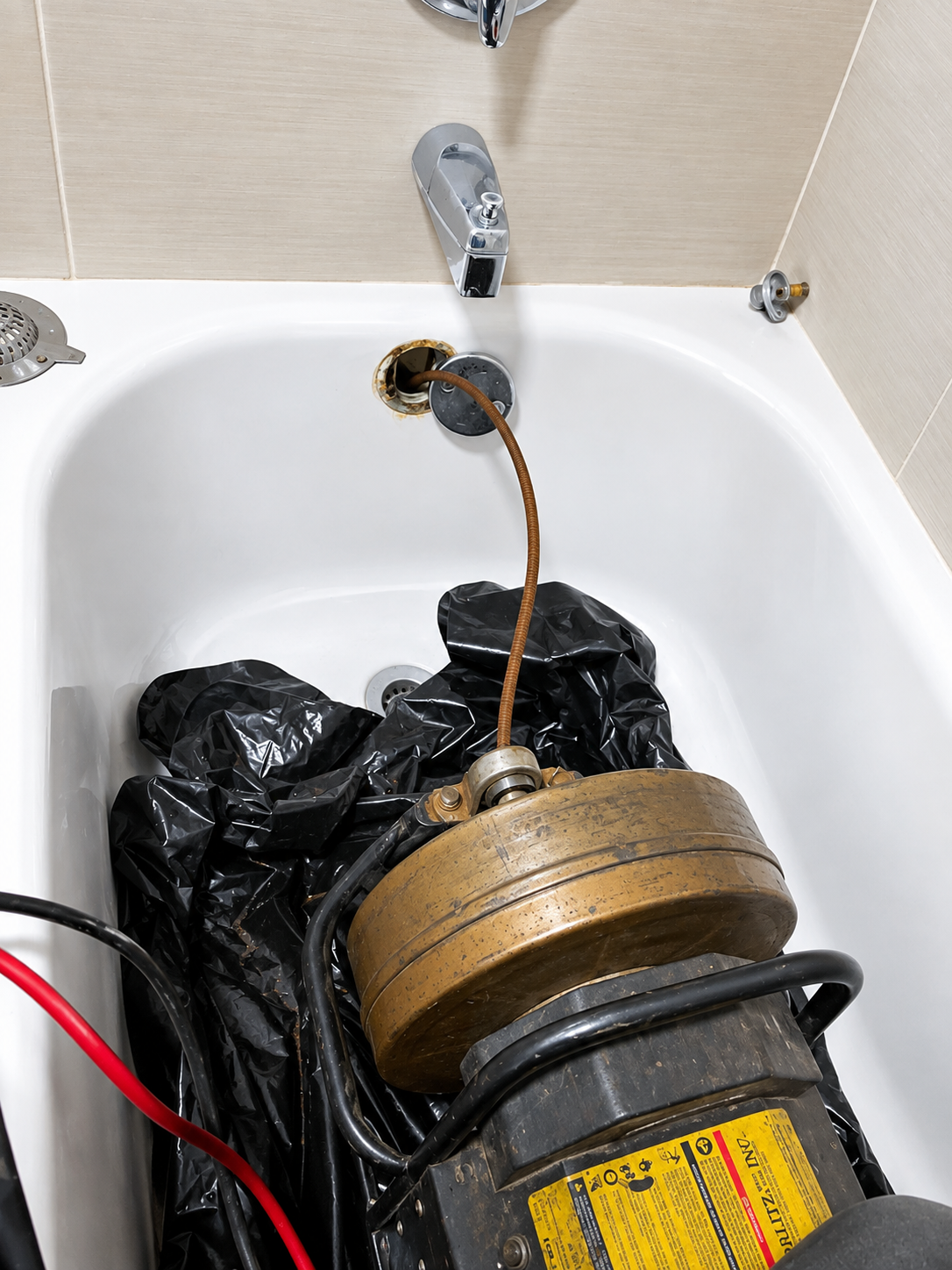
The photos from a recent job at a residential property in Chandler show exactly how this kind of call goes. The drum snake machine is staged at the vanity in one photo, cable deployed into the sink drain. In the other, the cable is working the tub drain. Same bathroom, same visit, both fixtures cleared.
Understanding why both drains slow down together, and what it takes to clear them properly, helps homeowners and property managers make better decisions when this situation comes up instead of treating it as two separate issues that may or may not get addressed.
Why the Sink and the Tub Both Slow Down at the Same Time
A bathroom sink and a bathtub or shower in the same bathroom almost always share a drain line at some point in the system. The individual drains from each fixture run short distances before they connect to a shared branch line that carries everything to the main sewer. When that shared line has a partial blockage, both fixtures upstream of it are affected simultaneously.
This is why a plunger on the sink sometimes makes the tub gurgle, or why running the tub causes the sink drain to bubble. The fixtures are connected. Pressure or air displacement in one shows up in the other because they are both working against the same restriction downstream.
At the individual fixture level, there is also the accumulation that happens at each drain independently. Bathroom sink drains collect hair and soap at the stopper mechanism and at the P-trap directly below the drain. Tub drains collect the same material at the drain screen and the first bend in the line. Both of those localized buildups contribute to the slow drain experience even when the shared line is clear, and both need to be addressed on the same visit for the bathroom to drain the way it should after service.
What Cable Drain Cleaning Is and When It Is the Right Tool
A drain cable, also called a snake, is a flexible steel cable with a cutting or retrieving head at the end that gets fed into the drain line to break up or retrieve whatever is causing the blockage. The cable is driven by a rotating drum machine that spins the cable as it moves through the pipe, which allows the head to cut through or grab onto the material causing the restriction.
For bathroom sink and tub drains, cable cleaning is the standard first approach and it is effective for the kinds of blockages these drains typically develop. Hair and soap compacted at the stopper mechanism, at the P-trap, or in the first several feet of drain line is exactly what a cable is designed to address. The rotating head grabs hair accumulations and either pulls them back or breaks them up so they can flush through.
Cable cleaning is also the appropriate choice when hydrojetting is not indicated. Hydrojetting uses high-pressure water to strip buildup from pipe walls and is very effective for grease and mineral accumulation in kitchen drains and main sewer lines. For a bathroom drain with a hair and soap blockage, cable cleaning clears the obstruction efficiently without the additional complexity or cost of a jetting setup that is not required for the type of blockage present.
How the Job Actually Goes
When we arrive for a bathroom sink and tub drain call, we assess both fixtures before we start. We run water into each drain and watch how it drains. We check whether the sink stopper and pop-up assembly are accessible and pull them if they can be removed. A significant percentage of slow bathroom sink drains have the majority of the blockage right at the stopper pivot mechanism rather than deep in the pipe, and removing that material directly is faster and more complete than trying to cable past it.
For the tub, the drain screen or overflow plate comes off first and the cable goes in through the overflow if accessible, which gives a cleaner path to the main line than going straight down through the drain opening. The cable gets fed until it reaches the blockage, the drum spins, and the head works through the material. We pull the cable back slowly and whatever came with it tells us what we were dealing with.
After both fixtures are cleared, we run water through each one and confirm the drain rate is back to normal before we call the job done. A drain that flows better but still slower than it should sometimes has a secondary accumulation point further down the shared line that the initial pass did not fully address, and that gets caught during the confirmation test rather than showing up as a callback.
The Rental Property Angle
Bathroom drain calls are one of the most frequent maintenance requests we handle at multi-unit residential properties. Tenants use the bathroom daily, the drains accumulate material continuously, and the reporting pattern in rental units means a drain that has been building toward a problem for weeks or months sometimes does not get called in until it is fully blocked rather than just slow.
A drain that is reported as slow is easier and faster to clear than one that is fully blocked. The material causing a slow drain is still somewhat loose and can be retrieved or broken up in one pass. A drain that has been slow long enough to compact into a dense blockage sometimes takes more effort to clear completely, and in some cases reveals a secondary issue in the shared line that the localized blockage was masking.
For property managers handling multiple units, having a reliable drain cleaning service that can respond promptly to bathroom drain calls keeps maintenance requests from becoming more involved repairs. We handle bathroom drain calls at multi-unit properties regularly and coordinate with property management teams to minimize tenant disruption.
When Cable Cleaning Is Not Enough
Most bathroom sink and tub drain blockages resolve with cable cleaning. When they do not, or when the same drain is backing up repeatedly within a short period after being cleared, the situation warrants a closer look.
Recurring blockages in a bathroom drain can trace back to a drain line that has a slope problem, where water is pooling at a low point and debris is accumulating faster than it would in a correctly pitched line. A camera through the line confirms slope and the interior condition of the pipe. In older construction with cast iron drain pipe, the rough interior surface that develops as the pipe ages catches material faster than smooth plastic pipe would, and a camera inspection identifies when the pipe condition is contributing to the frequency of blockages.
Main line involvement is another possibility when multiple bathrooms in a unit or multiple units on a shared drain stack are all reporting drain problems around the same time. That pattern points downstream of the individual bathroom fixtures to the main line, and the service approach shifts from fixture-level cable cleaning to main line assessment.
If Your Bathroom Drains Have Been Running Slow
A slow bathroom sink or tub is not a minor inconvenience that resolves on its own. The material causing it does not dissolve or compress over time. It accumulates. What is slow today is backed up in a few more weeks if nothing is done about it.
We are currently offering 10% off drain cleaning services, which applies to bathroom drain cable cleaning. If your bathroom sink and tub have both been running slow, or if the same drain has been cleared before and is slow again, give us a call.
Call us at 480-869-6952 or reach out online. We are in Chandler and handle bathroom drain cleaning for both residential and multi-unit properties. Pricing is always discussed before work begins.