This Is What a Slab Leak Looks Like When We Finally Get to It. The Pipe Has Already Been Telling You for Months.
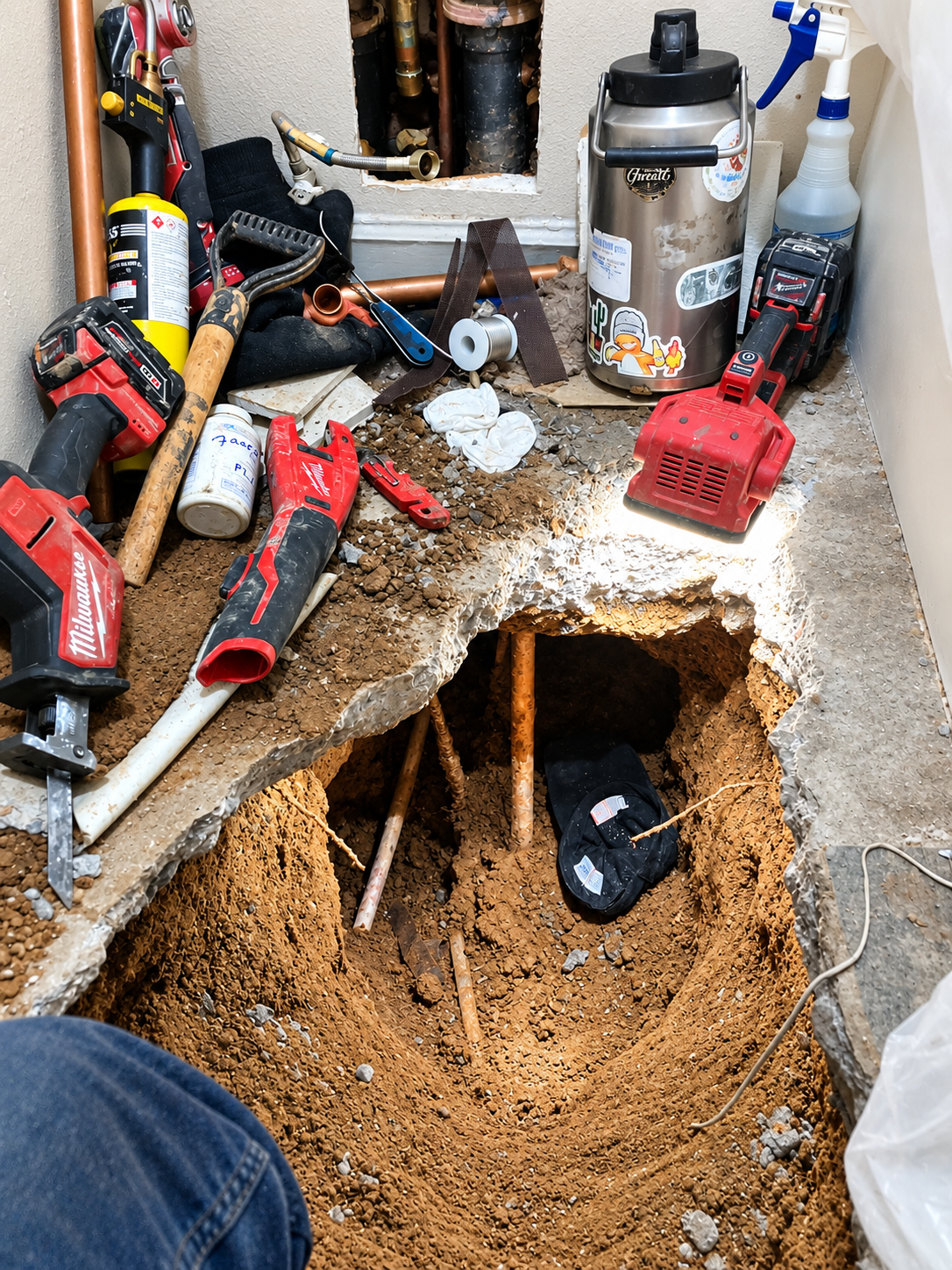
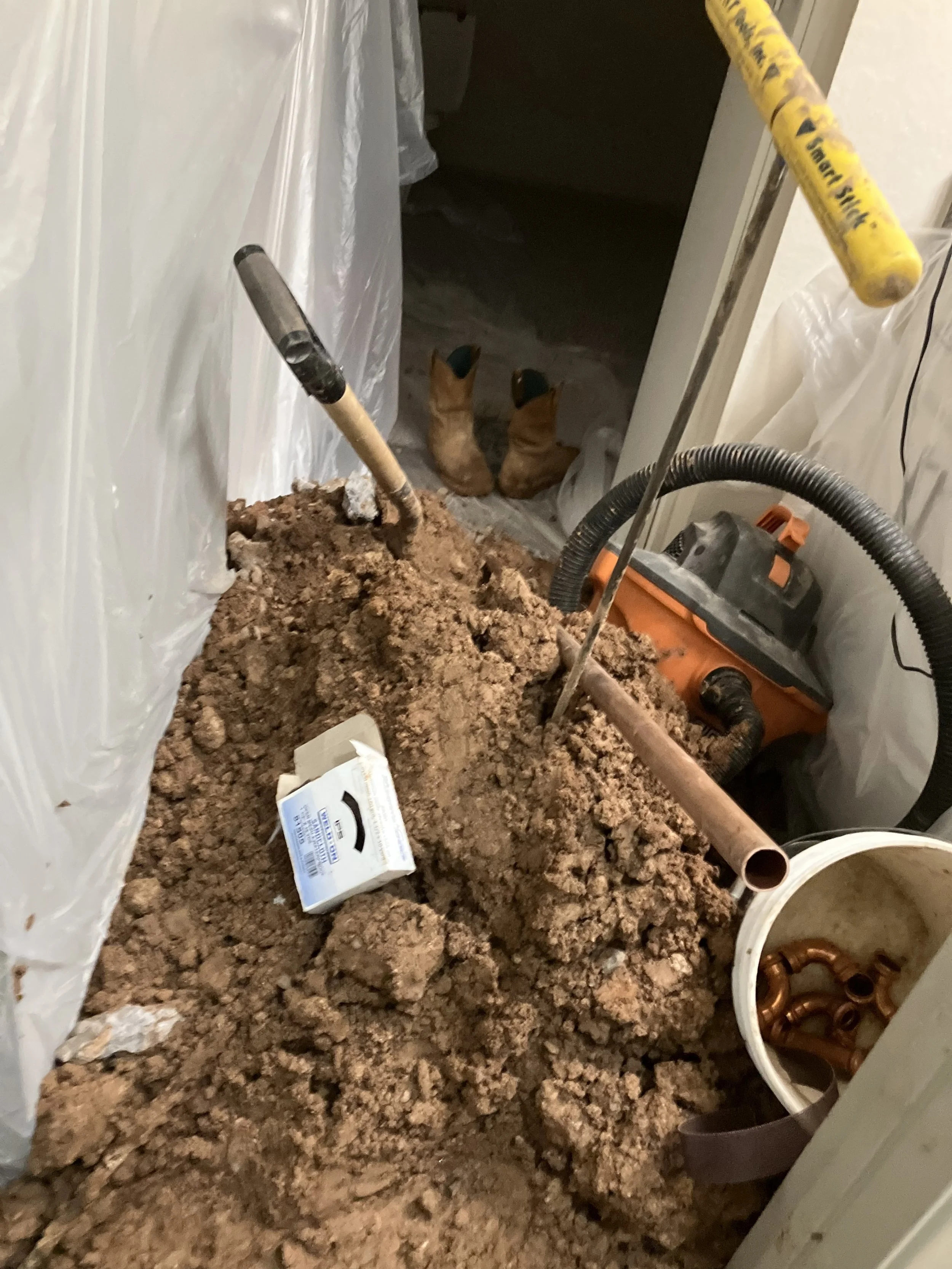
The second photo in this post shows exactly what we found when we opened the ground on a slab leak job recently in Chandler. Heavily corroded copper pipe spraying water at the joint, the trench filling with muddy water by the time we got to it, and corrosion so extensive across the pipe surface that the green oxidation had been building for years. The pipe did not fail suddenly. It had been failing slowly for a long time.
The first photo shows the same location after the repair. Brand new copper pipe and fittings, freshly soldered, a new shutoff valve installed and tagged, and a clean dry excavation that closed out the same day. Two photos, one job, the full picture of what a slab leak repair actually looks like from the moment the pipe is exposed to the moment it is done.
What the photos do not show is everything that happened before we got there. The months of subtle signs that something was wrong. The water bill that kept climbing. The pressure that felt a little softer than it used to. The warm spot on the floor that the homeowner had noticed but could not explain. All of that was happening while that corroded joint in the second photo was getting worse underground.
What You Are Actually Looking at in the Second Photo
That pipe had been in the ground under this Chandler home for decades. The green oxidation across the surface is copper corrosion, the result of years of exposure to soil chemistry and moisture. The white mineral deposits at the joints are from Chandler water, hard mineral-heavy water that leaves calcium and scale residue at every connection point it contacts.
The active spray visible at the joint is pressurized water escaping the system. A supply line under main pressure does not drip when it fails. It sprays. That stream of water had been going into the surrounding soil continuously from the moment the joint gave way. In the time between when the failure started and when we opened the ground, that water had saturated the soil across a wide area, which is why the trench was already filling with muddy water before we had fully exposed the pipe.
This is the version of a slab leak that has progressed past the early stage. The pipe at this point is not repairable in place. The corroded section comes out and new copper goes in. The question that always follows is whether the rest of the supply line, same material, same age, same water conditions, is far enough behind this section that a targeted repair makes sense, or whether the pattern of corrosion visible on the pipe indicates a line that is going to develop the next failure somewhere else within a year or two.
The Pipe Chandler Water Has Been Working on for Thirty Years
Copper was the standard supply pipe material for decades and it is a durable material. In moderate water conditions it lasts a very long time. Chandler water is not moderate. The calcium and magnesium concentration in the local water supply is among the highest in the country, and those minerals interact with copper over years in ways that accelerate the internal corrosion process that eventually produces pinhole leaks and joint failures like the one in the photo.
At the same time, the soil chemistry in the East Valley attacks the exterior of buried copper. Chlorides and sulfates in the soil corrode copper from the outside in. Combined with the expansive clay that causes soil movement when it wets and dries, the buried copper in a Chandler home from the 1980s or 1990s has been under sustained attack from both sides simultaneously for its entire life.
The green oxidation visible in the second photo is the end result of that process. The joint failed where it always fails in this situation, at the point where two sections meet and where the stress of soil movement, thermal cycling, and corrosion is concentrated. Pipe in the middle of a straight run fails last. Joints and bends fail first.
How We Found It Before the Trench Was Dug
Detection work happens before excavation on every slab leak job we do. Pressure testing the supply system isolates where water is leaving. Electronic listening equipment picks up the sound signature of pressurized water escaping a buried pipe. The combination of those two tools points us to the failure location before we break any ground.
On this job, the failure was at the meter box area, which is where the incoming supply line from the street connects to the home's distribution system. That location is one of the more common points for this type of failure because the pipe transitions from the municipal supply connection through a fitting and into the home's line, and that transition point concentrates stress that decades of soil movement have been applying.
Knowing the location before digging meant the excavation was targeted. We opened the ground where the pipe was, not where the water happened to surface. That distinction matters for the scope and cost of the restoration work that follows the plumbing repair.
What the First Photo Shows
New copper. Clean solder joints. A shutoff valve with a 2025 service tag at the connection point. The excavation is dry. Everything that was corroded and failing is gone and what replaced it is rated for many more years of service.
The shutoff valve is worth noting specifically. A shutoff at this location means the supply to the home can be isolated without requiring access to the municipal main. On a property where the previous installation had no accessible shutoff at the meter area, adding one as part of the repair is a meaningful upgrade. The next time any work needs to be done on the supply line, or the next time something inside the house needs the water off quickly, there is now a valve right there that actually works.
The new copper at this connection point was pressure tested before the trench was closed. The system held. The ground was backfilled, the meter box area was restored, and the homeowner had water back on the same day we started.
When a Repair Is the Right Answer and When It Is Not
A targeted repair like this one makes sense when the failure is isolated, the rest of the supply line is in reasonable condition, and the pipe material and age do not suggest that multiple failures are developing in parallel. A single joint failure on a line that otherwise tests well and does not show the same pattern of corrosion visible in the second photo is a repair situation.
When the camera and pressure testing tell a different story, when the corrosion is widespread, when there has already been more than one failure on the same line, or when the pipe material is so degraded that the repair is buying time rather than solving the problem, the conversation shifts to whether rerouting the supply line or replacing it entirely makes more sense than continuing to patch a line that is going to keep failing.
We have that conversation honestly on every slab leak job. We show the homeowner what we found, explain what the condition of the rest of the line suggests, and give them the information they need to make a decision that actually fits their situation. Sometimes that is a targeted repair. Sometimes it is a full line replacement. The pipe in the photo determines which answer is right, not a default recommendation.
If Your Water Bill Has Climbed Without Explanation
The months before that joint in the second photo finally gave way visibly, water was already moving somewhere it should not have been. Not at the rate of the active spray we found when we opened the ground, but enough to show on the water bill, enough to slightly reduce pressure at fixtures, enough to slowly saturate soil that showed up as unexplained moisture in the surrounding area.
A supply line leak that is still in the early stage, before it has reached the point of spraying visibly, costs less to repair and causes less damage to the surrounding area than one that has been running for months before anyone looked. The bill and the pressure are the signals that come first.
If your water bill has been climbing without a clear explanation, or if pressure has felt softer than it used to, a pressure test on the supply system is the fastest way to determine whether water is leaving the system somewhere underground. It takes less than an hour and it tells us definitively what we are dealing with before anyone makes a decision about next steps.
Call us at 480-869-6952 or reach out online. We are in Chandler, we use detection equipment before we dig anything, and pricing is always discussed before work begins.