Your Laundry Room Has a Lint Trap in the Drain Line and There Is a Good Chance Nobody Has Touched It in Years.
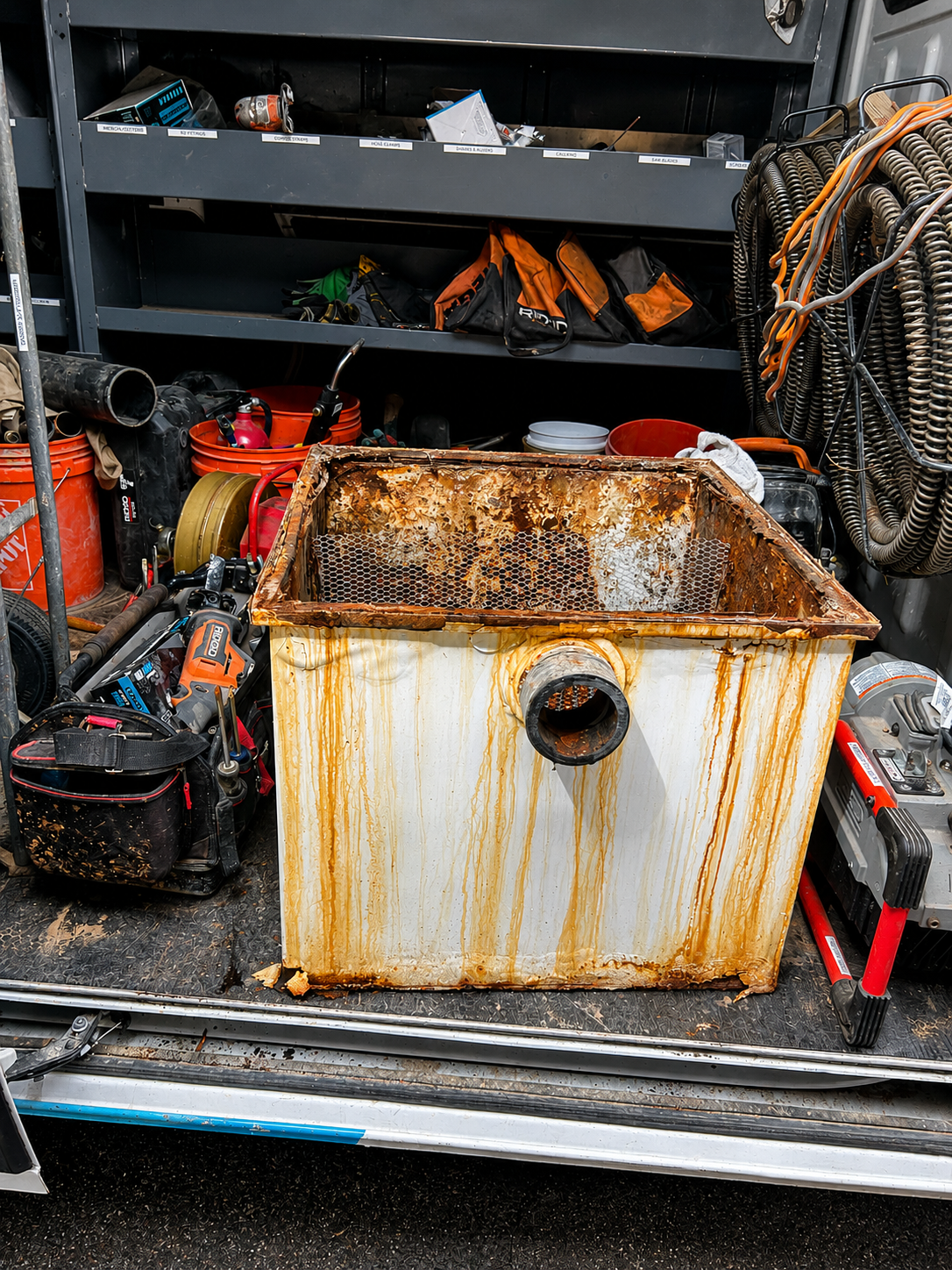
The second photo in this post is the old lint trap we pulled from a laundry utility space recently. The rust on that unit is not surface level. The walls have rusted through in spots, the mesh screen that does the actual filtering is corroded and compromised, and the discharge port is coated with years of residue that had been restricting flow long before the unit failed completely. That trap had been in place for a long time and had not been serviced or replaced in any of it.
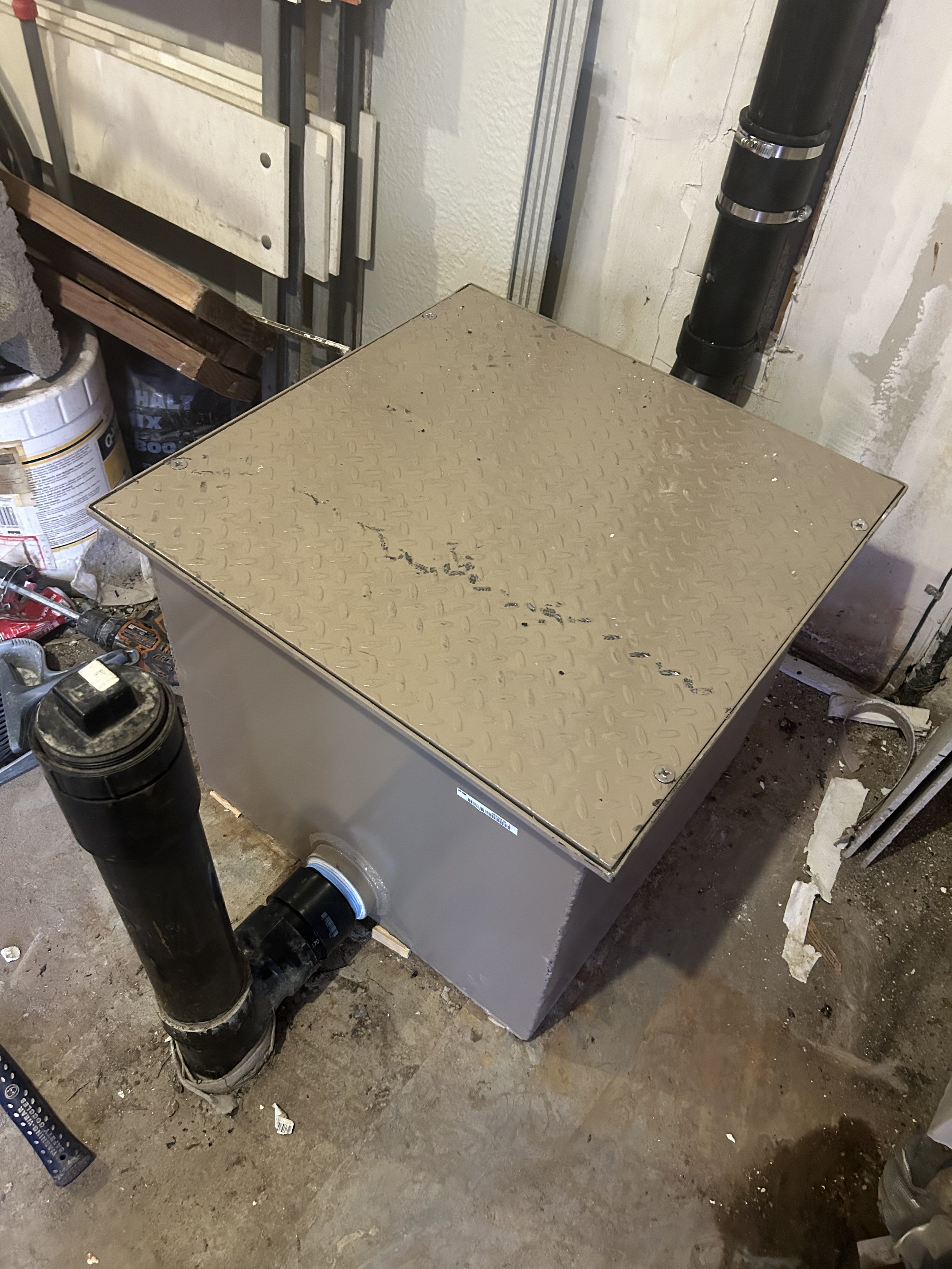
The first photo shows what went in its place. A new lint trap, properly sized, clean grey housing with a diamond-plate access lid, connected to the drain lines and ready to do the job the old one had stopped doing effectively years before we got there.
Most property owners and managers who have a lint trap in their laundry drain system are aware it exists. What is less common is an understanding of how quickly they fail when they are not maintained, what a failed lint trap does to the drain lines downstream, or what the replacement actually involves. This is that conversation.
What a Lint Trap Is and Why Laundry Drains Need One
Commercial laundry operations, multi-unit laundry rooms, and some residential laundry setups route the washing machine drain through a lint trap before the water enters the building's sewer system. The trap is a box or chamber, usually set into the floor or mounted at grade level in a utility space, that intercepts the lint, fibers, and debris that washing machines discharge with every cycle.
Washing machines shed an enormous amount of fiber material. Every load pulls lint from fabric and discharges it with the wash and rinse water. In a residential home with a single machine, that volume is manageable and the drain system handles it without a dedicated trap. In a laundry room serving multiple machines, or a commercial operation running machines all day, the volume of fiber material in the drain water is significant enough that without interception, it accumulates in the drain lines downstream and causes recurring blockages.
The lint trap collects that material before it reaches the sewer line. The mesh screen inside catches fibers and lint, the water passes through and continues to the drain, and the collected material gets removed periodically during maintenance. That is how the system is supposed to work. When the trap is not maintained and the mesh corrodes or fills beyond capacity, the material it was supposed to catch starts passing through into the line below, which is when the drain problems that the trap was installed to prevent start showing up.
What the Old Unit in the Second Photo Was Doing to the Drain System
A lint trap that has rusted through its walls the way the one in the second photo had is no longer a sealed collection chamber. Water and material that should be routed through the mesh and contained in the trap body can escape through the corroded walls. The mesh itself, which is the actual filtering component, was so degraded that its effective opening size had changed significantly from what it was designed to be. Material that should have been caught was passing through.
The discharge port, the opening where filtered water exits the trap and enters the drain line, was clogged with accumulated residue from years of operation without cleaning. When the discharge is restricted, water backs up through the system. A washing machine that drains slowly, that causes water to back up into the utility space floor drain, or that trips a high-water sensor in the machine is often showing the downstream effect of a lint trap that has stopped functioning correctly.
By the time a lint trap looks like the one in the second photo, it has typically been causing problems for longer than anyone realized. The deterioration happens gradually. The drain gets a little slower. The machines take a little longer to drain. The utility space floor drain backs up occasionally. Each of those gets treated as an isolated event until someone pulls the trap and sees what was actually happening.
Who Needs to Be Thinking About This
Multi-unit residential properties with shared laundry rooms are the most common situation we encounter. An apartment building or a condominium complex with a laundry room serving multiple units runs machines continuously through the week. The lint trap in that drain system is working every day, and it needs to be cleaned on a regular schedule and replaced when it has reached the end of its service life.
Commercial laundry operations have the same requirement at higher volume. Laundromats, hotel laundry facilities, and any commercial operation where machines run continuously depend on functional lint interception to keep drain lines clear. A failed lint trap in a commercial laundry context does not just create a slow drain. It creates a recurring drain cleaning expense and eventually a drain line that requires more significant attention from years of accumulated fiber buildup.
Some residential properties also have lint traps, particularly older construction where the laundry drain was configured to route through a trap before connecting to the main sewer. Homeowners in these properties often do not know the trap exists until there is a drain problem and someone traces it back to a trap that has never been serviced.
How Often Lint Traps Need Service
Cleaning frequency depends on how many machines are running through the trap and how often. A shared laundry room serving a twelve-unit building runs a different volume than a laundromat with twenty machines. The general guidance is that the trap should be inspected and cleaned at least quarterly for moderate-volume applications and monthly for high-volume commercial use.
Replacement becomes the conversation when the trap body has corroded to the point where the structural integrity is compromised, when the mesh cannot be restored through cleaning, or when the unit's capacity is no longer adequate for the load it is handling. The unit in the second photo was past all three of those thresholds. Cleaning it would have accomplished nothing because the body itself had failed.
A replacement lint trap, properly sized for the application and correctly installed with accessible connections for future maintenance, resets the clock on the drain protection the system is supposed to have. The new unit in the first photo has an accessible lid specifically so that scheduled cleaning does not require a plumber every time. Lift the lid, remove the material, replace the lid. That maintenance happens on a schedule and the trap does its job.
What the Installation Involves
Pulling an old lint trap and installing a new one requires disconnecting the inlet and outlet connections, removing the old unit from its housing or floor set location, cleaning the connection points, and setting the new unit correctly so the inlet, trap body, and outlet are aligned and sealed.
Sizing the new unit correctly for the application matters. A trap that is undersized for the volume it receives fills faster than it can be practically maintained and backs up sooner. A trap that is correctly sized for the number of machines and the frequency of use gives the maintenance schedule room to work without constant intervention.
After installation, the drain connections get tested to confirm flow is correct and there are no leaks at the connection points. The accessible maintenance lid gets confirmed to seat and seal properly. The property manager or maintenance team gets walked through what the cleaning schedule should look like for that specific installation based on the load it is going to handle.
If Your Property Has a Laundry Room and You Are Not Sure About the Trap
The fastest way to find out what condition a lint trap is in is to look at it. If the utility space has a floor-set box with a lid near the laundry drain connection, that is likely the trap. If the lid has not been opened in a long time, what is inside is probably overdue for cleaning at minimum and may be in the condition of the unit in the second photo.
If you manage a multi-unit property or a commercial laundry operation in Chandler and the laundry drain has been slow, causing recurring backups, or has never had a lint trap inspection, that is a call worth making before a failed trap sends its accumulated years of material into the drain line downstream.
Call us at 480-869-6952 or reach out online. We handle lint trap replacement and laundry drain service for multi-unit and commercial properties across Chandler. Pricing is discussed before any work begins.