Lift Station Pump-Out in Arizona Heat Is Not a One-Person Job. Here Is What It Actually Takes to Do It Right.
The photos attached to this post are from jobs we have done at commercial and multi-unit properties across the Chandler area. The third image shows a team working a lift station pump-out under a shade canopy in the middle of summer, which tells you something immediately about what this kind of work involves in Arizona. The hatch is open, confined space entry equipment is staged, a ventilation blower is running fresh air into the wet well, the vac truck hose is in, and two technicians are working the job properly rather than just showing up with a pump and hoping for the best.
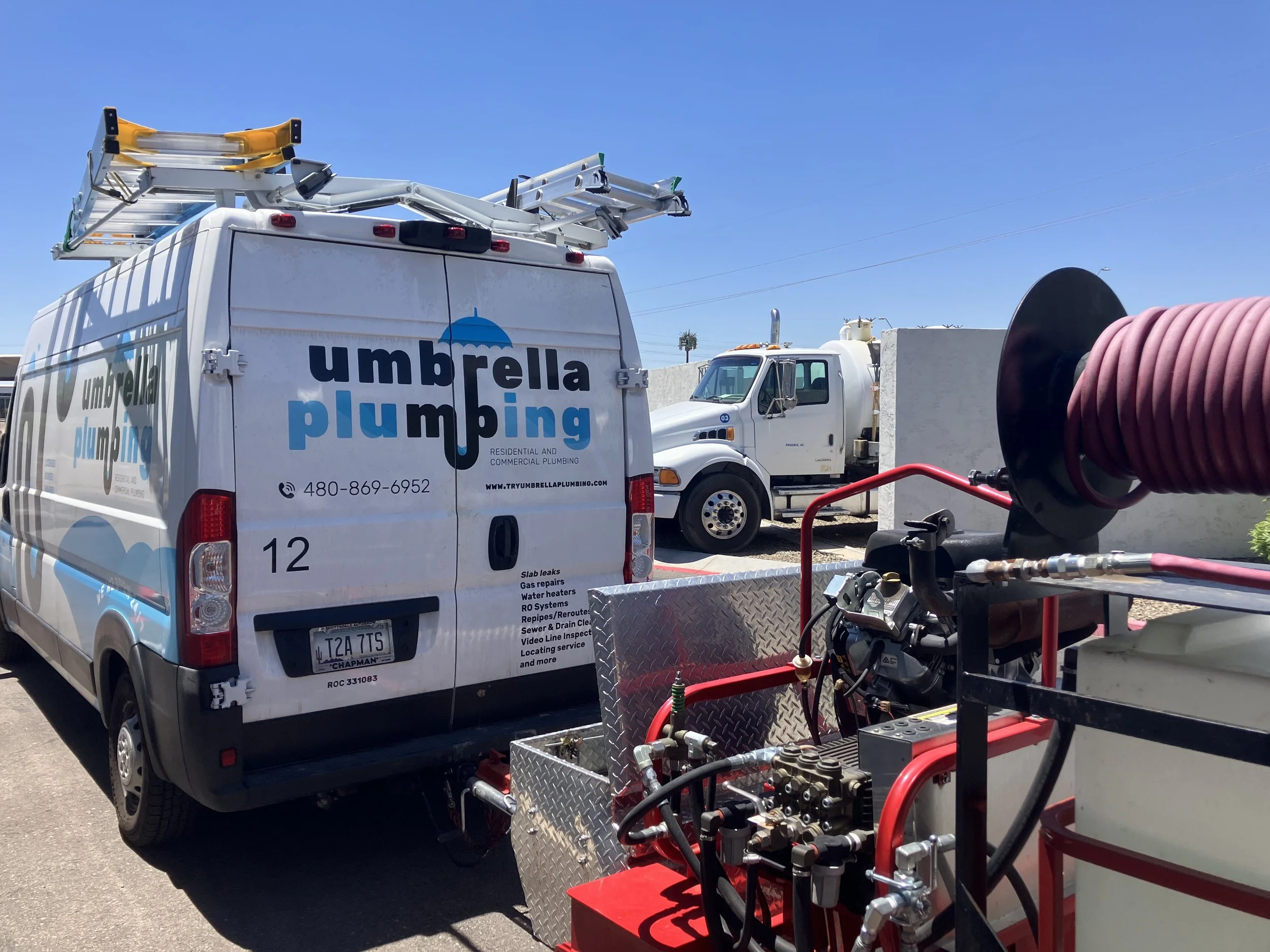
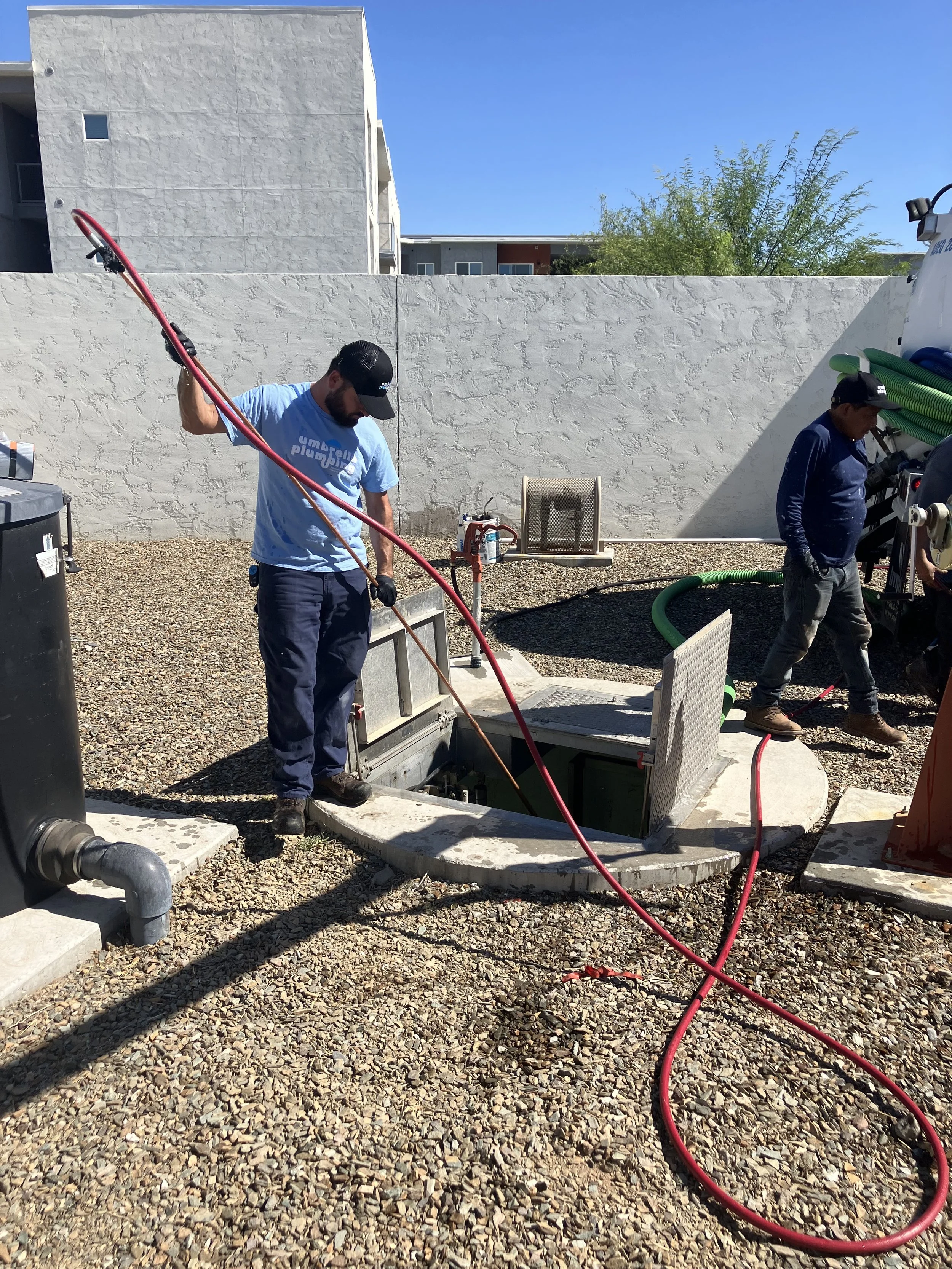
The first photo shows one of our technicians managing the hose lines at a smaller lift station hatch at an apartment complex. The second shows the equipment side of the operation, our service van alongside the vac truck and hydrojetting unit staged for a commercial job.
Lift station pump-out looks simple from the outside. Open the hatch, pump it out, close the hatch. The reality of doing it safely, thoroughly, and in a way that actually extends the life of the station rather than just emptying it for now, is considerably more involved than that description suggests.
What a Pump-Out Is and Why the Wet Well Needs It
A lift station wet well is the underground chamber that receives wastewater from the connected sewer system before the submersible pumps move it forward to the next point in the collection network. Everything that enters the wet well does not leave cleanly through the pumps. Solids, grease, rags, grit, and accumulated debris settle to the floor and coat the walls over time.
That accumulation does several things that are all bad. It reduces the effective volume of the wet well, which means the pumps activate more frequently to keep up with incoming flow. It coats the float switches that tell the control system when to run the pumps, which makes those readings less accurate over time. It accumulates around pump intakes and strains the motors. And in Arizona's heat, an accumulating wet well develops odor conditions and gas concentrations that become a safety concern for anyone who needs to access it.
A pump-out removes the accumulated material. Not just the liquid, but the solids at the floor, the debris coating the walls, and the material that has built up around the equipment. Done properly, the wet well comes out of a pump-out with equipment that can be inspected, floats that are reading accurately, and a volume that gives the control system the margin it needs to operate the way it was designed to.
Why Arizona Adds a Layer of Complexity
Lift station work in a place like Chandler involves conditions that do not apply in most of the country. Ambient temperatures during summer service calls regularly exceed 110 degrees at the surface, which means the team working the job is doing confined space-adjacent work in extreme heat with full personal protective equipment on. That is not a complaint. It is the reality of the work, and it is why the shade canopy visible in the third photo is standard practice for our team on summer jobs rather than an optional comfort item.
The heat also affects what is happening inside the wet well. Higher temperatures accelerate the biological activity in a wet well, which increases hydrogen sulfide gas generation. H2S is heavier than air, settles into the wet well, and at sufficient concentrations is acutely dangerous. A wet well that has been accumulating material in summer heat conditions is producing more gas than the same wet well would produce in cooler months.
The yellow ventilation duct visible in the third photo is not incidental equipment. Fresh air has to be actively pushed into the wet well before and during any work that involves accessing the interior, and gas monitoring has to happen before anyone goes near the opening at the depth that risks exposure. This is confined space protocol and it is not negotiable regardless of how straightforward the job looks from above grade.
The Equipment That Makes the Job Possible
The vac truck is the primary piece of equipment for a pump-out. It creates the suction that pulls accumulated material out of the wet well through the hose, and its tank carries the waste off site to a licensed disposal facility. The size of the vac truck determines how much material can be removed per visit and whether the job requires one trip or multiple.
For wet wells with significant hardened accumulation at the floor, vacuum alone does not always clear the material. High-pressure water, the same hydrojetting technology used for drain line cleaning, gets applied to break up compacted solids and grease deposits before vacuuming. The combination of jetting and vacuuming is what gets a wet well from partially cleaned to actually clean rather than just partially emptied.
The confined space entry equipment staged in the third photo includes the tripod and retrieval system visible above the hatch. If anyone needs to enter the wet well for equipment inspection, pump service, or debris removal that cannot be accomplished from above, that retrieval system is required by OSHA confined space entry standards. It means that if something goes wrong with the person inside, there is a mechanical means of extraction that does not require a second person to enter a potentially hazardous atmosphere.
All of this equipment, the vac truck, the jetting unit, the ventilation blower, the gas monitor, the confined space entry system, comes to a lift station pump-out job because a job done without it either does not get done safely, does not get done completely, or both.
What Gets Inspected During a Pump-Out
A pump-out is also an inspection opportunity, and we treat it that way. With the wet well emptied and accessible, the condition of the equipment is visible in a way that it never is during normal operation when everything is submerged.
Float switches come out of the wet well and get inspected, cleaned, and tested. A float that has been coated in grease and debris for months without cleaning may have been sending inaccurate level signals to the control panel. After cleaning, it should respond to changes in water level within the range it is set for. If it does not, it gets replaced before it is put back in service.
The pump intakes and impellers get inspected for debris accumulation and wear. A pump that has been working against accumulated solids at the intake is a pump that has been running hotter and harder than its design intended. Early wear shows up at the impeller and the seals. Finding that during a scheduled pump-out allows for a planned maintenance decision. Finding it after a pump failure during peak load is an emergency response at a much higher cost.
The wet well walls and floor get inspected for cracks, infiltration, or structural issues that would not be visible during a routine surface check. A crack in the wet well that is allowing groundwater infiltration or that is creating a pathway for waste to escape the system is the kind of finding that changes the conversation from routine maintenance to a repair that needs to be scheduled.
All of this gets documented. The property owner or manager gets a clear picture of what the wet well looked like, what the equipment condition is, what was removed, and what, if anything, needs follow-up attention. That documentation matters for maintenance records and for any regulatory reporting that applies to the installation.
Frequency and Scheduling
How often a lift station wet well needs to be pumped out depends on the volume of flow it receives, what that flow carries, and what the wet well dimensions are. A small residential lift station serving a modest development accumulates material differently than a station serving a large apartment complex or a commercial district.
Most installations benefit from pump-out service at least once a year. Higher volume installations, those serving properties with food service operations, large residential complexes, or any use pattern that puts significant solids into the system, often warrant more frequent service. The best way to establish the right interval for a specific station is to track what a pump-out finds over the first couple of service visits and adjust the schedule based on actual accumulation rate.
What we consistently see is that properties on a scheduled pump-out program have fewer emergency calls, less pump equipment failure, and more predictable operating costs than properties that service the lift station reactively. The difference in outcome is not subtle. A lift station that is maintained on a schedule runs. One that is not eventually stops running at a moment that nobody planned for.
If You Manage a Property With a Lift Station
The first question is always how long it has been since the last pump-out. If the answer is more than a year, or if the maintenance history is uncertain, that is the starting point. The second question is whether a service schedule exists, because a one-time pump-out without a plan for the next one puts the station back on the same track it was on before.
We work with HOAs, property managers, and commercial operators across Chandler and the surrounding area on lift station maintenance programs. The scope of what we bring to the job, the equipment, the confined space protocols, the documentation, is the same whether it is a small residential installation or a larger commercial station. If you manage a property with a lift station and you are not certain about its current service status, we are happy to come out and take a look before establishing a going-forward plan.
Call us at 480-869-6952 or reach out online. We handle lift station pump-out and maintenance for commercial and multi-unit properties across Chandler. Pricing is discussed before any work begins.