
Essential Guide to Shower Valve Replacement
A worn or failing shower valve can turn a simple shower into a daily frustration. It may cause leaks, temperature swings, weak water pressure, or a handle that no longer responds the way it should. Understanding when shower valve repair is enough—and when full shower valve replacement is the smarter move—can help you plan the job with fewer surprises.
When should you replace a shower valve?
You should replace a shower valve when the internal parts are too worn, the valve body is leaking behind the wall, temperature control is unreliable, or replacement parts are no longer available. Minor issues, such as a dripping showerhead or stiff handle, may only need a cartridge, seal, or trim repair. But if the valve itself is damaged, corroded, or outdated, replacement is often the safer long-term fix.
A shower valve controls the flow and temperature of water inside the wall. Because it is not always visible, problems can be easy to overlook until they become more serious. If you notice water stains, moldy smells, rattling pipes, or sudden hot-and-cold changes, the valve should be inspected before the damage spreads.
Common signs of valve trouble
Not every shower problem starts with the valve, but several symptoms point strongly in that direction. Paying attention early can help you avoid water damage and repeated service calls.
Look for these warning signs:
Persistent dripping: A shower that keeps dripping after the handle is fully off may have a worn cartridge, washer, or valve seat.
Unstable temperature: Sudden blasts of hot or cold water can signal a pressure-balancing or mixing issue.
Hard-to-turn handle: Mineral buildup, corrosion, or worn internal parts can make the handle stiff or loose.
Low water flow: Sediment inside the valve may restrict water movement.
Moisture behind the wall: Soft drywall, peeling paint, or musty odors near the shower can indicate a hidden leak.
Some of these issues can be solved with shower valve repair. Others require opening the wall and installing a new valve assembly.
Repair versus replacement
The best choice depends on the age, condition, and accessibility of the valve. If the valve is relatively modern and the problem is limited to the cartridge or trim, repair may be practical. This can restore function without disturbing tile or wall surfaces.
Replacement makes more sense when the valve body is cracked, badly corroded, incompatible with new fixtures, or failing repeatedly. Many homeowners also choose to replace shower valve components during a bathroom remodel, especially when upgrading to pressure-balanced or thermostatic controls.
A simple way to think about it:
Repair if the problem is isolated and parts are available.
Replace if leaks are behind the wall or the valve is outdated.
Upgrade if you want better temperature control, code compliance, or new shower trim.
What happens during shower valve replacement?
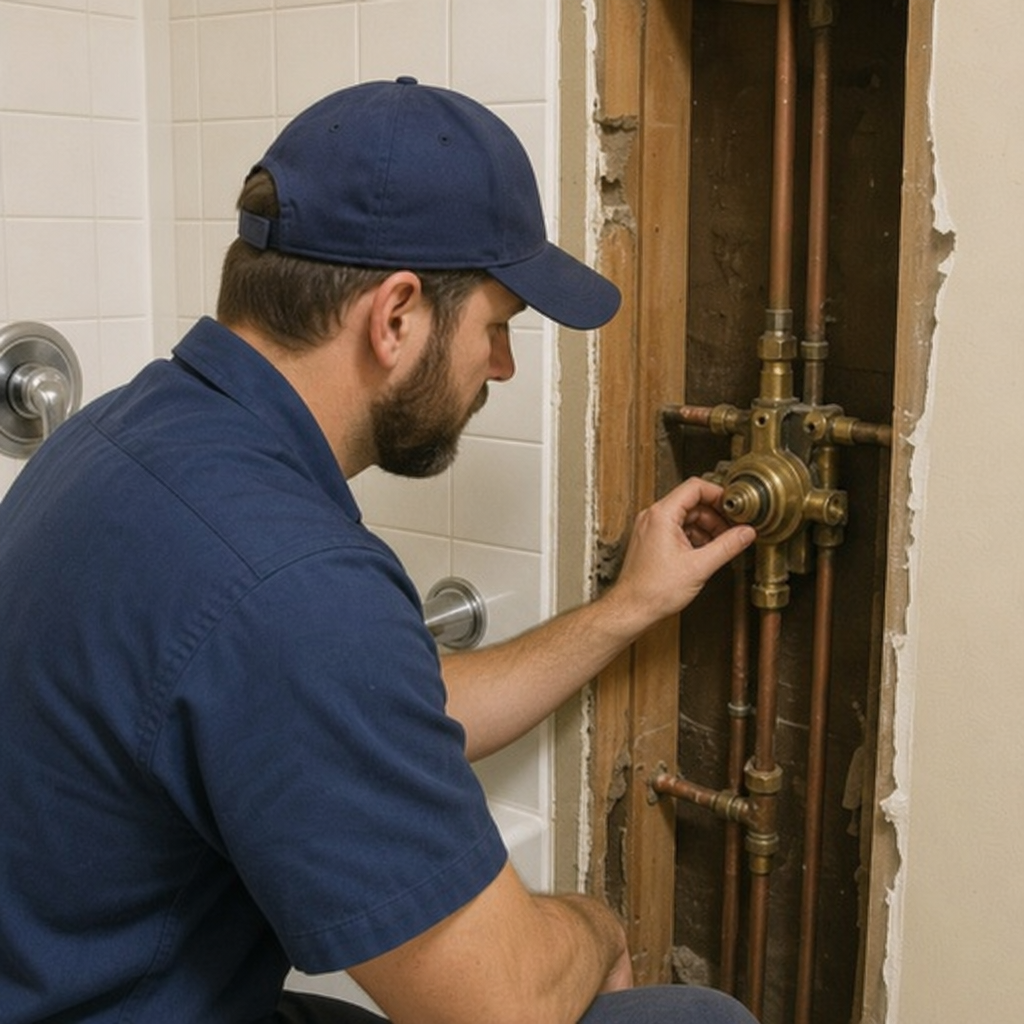
During shower valve replacement, the water supply is shut off, the old trim and internal parts are removed, and the plumber accesses the valve body inside the wall. Depending on the shower layout, access may come through the front tile wall or from the opposite side, such as a closet or hallway.
The old valve is disconnected from the hot and cold supply lines and the shower riser. The new valve is then installed, secured, tested for leaks, and connected to the trim. After testing, the wall opening is repaired or prepared for finishing.
This is why many homeowners avoid DIY replacement unless they have plumbing experience. To replace shower valve assemblies correctly, the installer must manage water lines, fittings, depth placement, and leak testing inside a finished wall.
Need a Shower Valve Replacement?
If your shower valve is leaking, damaged, outdated, or no longer controlling the water properly, Umbrella Plumbing can handle the replacement. Our plumbers can inspect the shower valve, determine the proper replacement, access the plumbing as needed, install the new valve, and test the system for proper operation and leaks.
Avoid letting a shower valve problem turn into water damage inside the wall. Call the trusted name everyone calls - Umbrella Plumbing to schedule your shower valve inspection or replacement.
Final takeaway
A shower valve may be hidden, but it plays a major role in comfort, safety, and leak prevention. Start with an inspection to determine whether shower valve repair will solve the issue or whether replacement is the better long-term option. If the valve is leaking, outdated, damaged, or difficult to control, Umbrella Plumbing can inspect the problem and complete the necessary shower valve replacement.
For professional shower valve replacement, call the trusted name everyone calls - Umbrella Plumbing.
