Your Home's Pipes Have a Lifespan Too. Do You Know How Old Yours Are?
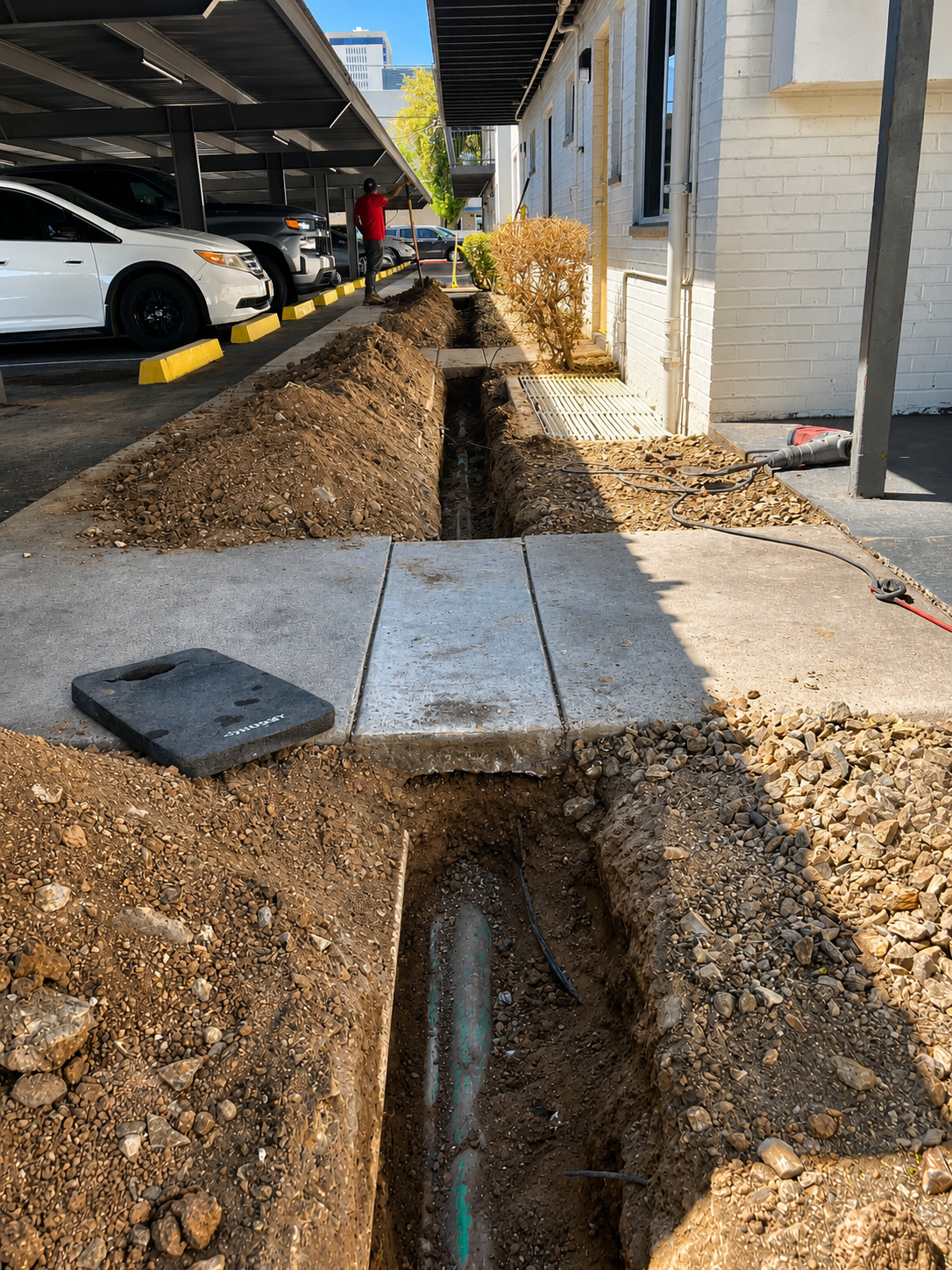
We went out on a low water pressure call in Chandler a while back. The homeowner had been dealing with it for about two years, slow flow at the kitchen faucet, a showerhead that never had great pressure no matter what she replaced it with, and a water heater that seemed to be struggling. She had called two other plumbers before us. One replaced the showerhead. One adjusted the pressure regulator. Neither one fixed it.
When we got in and looked at the supply lines, the inside of the galvanized steel pipe was heavily corroded. Years of hard water had left a thick buildup of rust and scale on the interior walls and what had once been a full inch pipe had narrowed to something considerably smaller. The pressure problem was not a regulator problem or a fixture problem. It was a pipe problem that had been developing since the house was built.
A full repipe fixed everything she had been dealing with for two years in a single project.
What Repiping Means and Why Homes Need It
Repiping means replacing the supply lines that run through your home. These are the pipes that carry water from the main supply to every faucet, shower, toilet, and appliance in the house. They run through walls, under floors, and sometimes through the slab, and most homeowners never think about them until something goes wrong.
Pipe has a lifespan. The material matters, the water quality matters, and how the home has been maintained matters. In Chandler, where the water is hard and a significant portion of the housing stock was built in the 1980s and 1990s, aging pipe is something we see regularly. Some of those homes have never had their supply lines touched since the day they were built.
When pipe reaches the end of its useful life, the symptoms show up slowly and often get misdiagnosed because nobody looks at the pipe itself. Low pressure, discolored water, recurring pinhole leaks in different areas of the house, water heater problems that do not resolve with service. All of these can trace back to supply lines that need to be replaced.
Galvanized Steel: The Pipe That Corrodes From the Inside
Homes built before the mid-1980s in many parts of Arizona were piped with galvanized steel. It was the standard of the era and it worked fine for years. The problem is that galvanized pipe corrodes from the inside out. The zinc coating that was supposed to protect the steel gets eaten away by water over time, and then the steel itself starts to rust.
The rust does not just weaken the pipe. It accumulates on the interior walls and narrows the passage water flows through. A one inch galvanized pipe that has been carrying hard water for 40 years may have an effective interior diameter of half an inch or less. The pressure drop that comes with that narrowing is real and it affects every fixture downstream.
Discolored water, especially a brownish tint that is more noticeable when a tap has not been used recently, is a classic sign of galvanized pipe deterioration. The discoloration is rust. If you are seeing that in a home with original pipe from the 1970s or 1980s, a repipe assessment is overdue.
Polybutylene and CPVC: The Pipes From the 80s and 90s With a Different Problem
Homes from the late 1980s and through the 1990s were often piped with polybutylene or CPVC. Both were considered improvements over galvanized at the time and both are now at an age where problems are common.
Polybutylene, a gray plastic pipe, was widely used across the country and has a well documented history of failing over time. The material degrades when it reacts with oxidants in treated municipal water, and failures tend to happen at fittings and joints rather than in the middle of a straight run. Leaks from polybutylene pipe can develop without much visible warning from the outside of the pipe.
CPVC holds up reasonably well in moderate conditions but does not love Arizona's temperature extremes. The thermal cycling it goes through in unconditioned spaces, a Chandler garage or attic space that hits 120 degrees in summer and drops significantly in winter, stresses the material and the joints over years of repeated expansion and contraction.
Homes in this age range that have never had pipe assessed are worth having looked at. The question is not usually whether there will eventually be a problem but whether you want to find out about it on your schedule or the pipe's.
What the Repipe Process Actually Looks Like
The scope of a repipe depends on the home. A smaller single story home is a more contained project than a larger two story with complex wall routing. We assess the existing system before quoting anything so the price reflects the actual work involved.
The basic process involves accessing the walls to run new supply lines from the main to each fixture location. The access points get patched after the new pipe is in. For most homes the project takes one to two days and the water is off for the working portion of each day, typically a few hours at a time rather than the full day.
We use PEX tubing for the majority of repipes we do. PEX is flexible, which means fewer fittings and a cleaner run through walls. It handles temperature extremes well, which matters in Arizona. It does not corrode and it does not scale up from hard water the way metal pipe does. Most PEX carries a 25 year warranty. A home that gets repiped with quality PEX is set for a long time.
Before we leave, every line gets pressure tested and every fixture gets confirmed. We do not hand off a repipe that has not been fully checked.
Combining a Repipe With Other Work
A repipe is one of the more significant plumbing projects a home can go through, and it is also one of the best opportunities to address other things at the same time. When walls are already open for new supply lines, adding shut off valves at individual fixtures, replacing aging angle stops, or addressing a corroded main shut off valve is straightforward work that would otherwise require opening walls again later.
If a renovation is already in the plan and walls are going to be opened anyway, that is a natural time to assess whether a repipe belongs in the same project. Doing it while access already exists is almost always less expensive and less disruptive than scheduling it separately.
We bring this up because homeowners sometimes do not know to ask. If you call us for a renovation or for recurring leak repairs and we see pipe that is worth addressing, we will say so. Whether to include it is your decision, but you should have the information to make it.
When Repeated Repairs Are Pointing Toward Repiping
The pattern that most reliably tells us a home needs a repipe is multiple pinhole leaks in different locations over a short period. One leak in an old pipe is a repair. Two or three leaks in different areas of the same pipe material within a couple of years is the pipe telling you it is done.
Each repair on aging pipe costs money and disrupts the home. A repipe costs more upfront but it addresses the root cause rather than patching symptoms. The homeowners who have been through three or four pinhole leak repairs almost universally wish they had made the call sooner.
If you have had more than one unexplained leak in your home's supply lines, or if your pressure has been dropping without explanation, or if you have an older home that has never had its pipe assessed, a call to understand what you are working with costs nothing.
We Are Honest About What Your Home Actually Needs
Not every home needs a full repipe. Some homes have one problem area that can be addressed without replacing everything. We assess what is there and give you an honest read on what the situation warrants rather than recommending a full project when a targeted repair is the right answer.
What we do not do is patch aging pipe repeatedly and pretend the underlying problem is not there. If the pipe in your home is at a point where continued repair is spending money against an inevitable outcome, we will tell you that directly.
Call us at 480-869-6952 or reach out online. We are in Chandler, we give upfront pricing before any work starts, and we will tell you honestly what your home's pipe situation looks like and what makes sense to do about it.