Your Water Heater Is Working Harder Than It Should Be. Here Is What Fixes That.
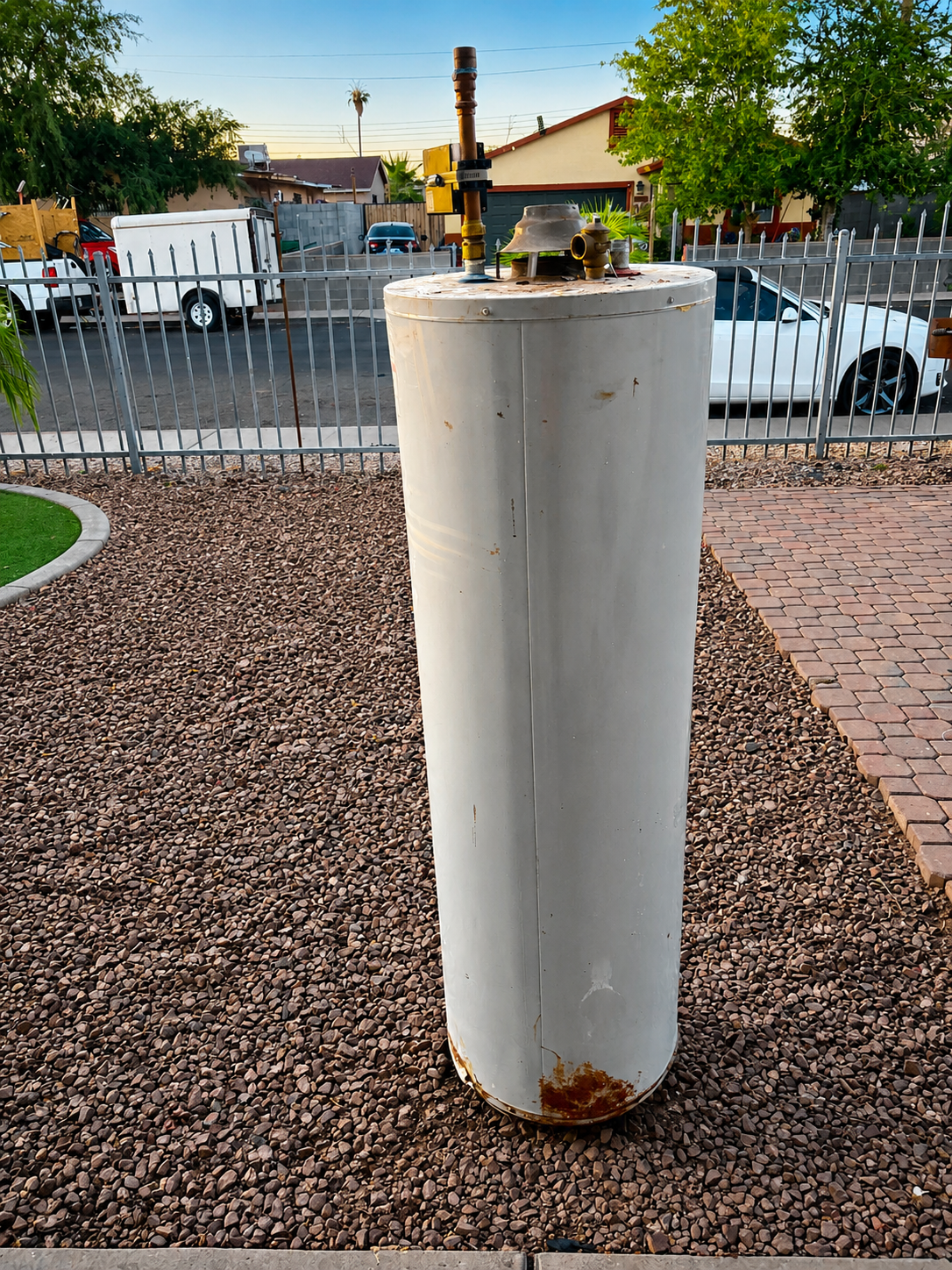
We replaced a water heater last fall for a homeowner whose unit had made it eleven years. Not a bad run. When we drained the old tank before pulling it, the amount of sediment that came out surprised even her. It came out thick and chalky, a significant layer that had been sitting at the bottom of that tank for a long time.
She asked if annual flushing would have made a difference. Honestly, yes. The unit might have made it to thirteen or fourteen years. It also would have been running more efficiently for most of its life instead of working harder and harder as the sediment layer built up. The energy savings alone over a few years are worth the maintenance.
What Is Actually Happening Inside Your Water Heater
Every time your water heater heats water, minerals that were dissolved in the water get left behind as the water expands and heats up. In Chandler, where the water is loaded with calcium and magnesium, that process deposits a significant amount of sediment into the tank over time.
That sediment settles at the bottom of the tank, right above the burner on a gas unit or the lower heating element on an electric one. What you end up with is an insulating layer sitting between your heat source and the water. The unit has to run longer to get the water to temperature. It uses more energy. Parts wear faster from the extended run cycles. The tank itself is more prone to overheating at the bottom where the sediment concentrates heat.
The rumbling or popping sound an older water heater sometimes makes when it fires up is the burner heating water that is trapped in pockets under the sediment layer. If your water heater has been making that sound, it is not a quirk. It is telling you something.
Annual Flushing: What It Is and Why It Matters Here More Than Most Places
Flushing a water heater means draining a portion of the tank to remove the sediment that has settled at the bottom. On a unit that gets flushed annually, the sediment does not build up to the point where it significantly affects performance. On a unit that has never been flushed, the sediment accumulates year over year until it is a problem.
In a soft water area, this process is less urgent because the mineral content in the water is low. In Chandler, it is one of the most important things you can do to extend the life of a water heater. The hard water here deposits sediment at a rate that makes annual maintenance genuinely meaningful, not just a box to check.
We have serviced water heaters in the area where the owner was diligent about annual flushing and the units made it well past their rated lifespan. We have also replaced units that failed significantly early because nobody had ever touched them. The difference in outcome tracks closely with whether maintenance happened.
The Anode Rod: The Part Nobody Knows About
Inside every tank water heater is a component called a sacrificial anode rod. It is a metal rod, usually magnesium or aluminum, that runs through the center of the tank. It is designed to corrode so the tank itself does not. As long as the anode rod is doing its job, it is actively protecting the steel tank walls from rust.
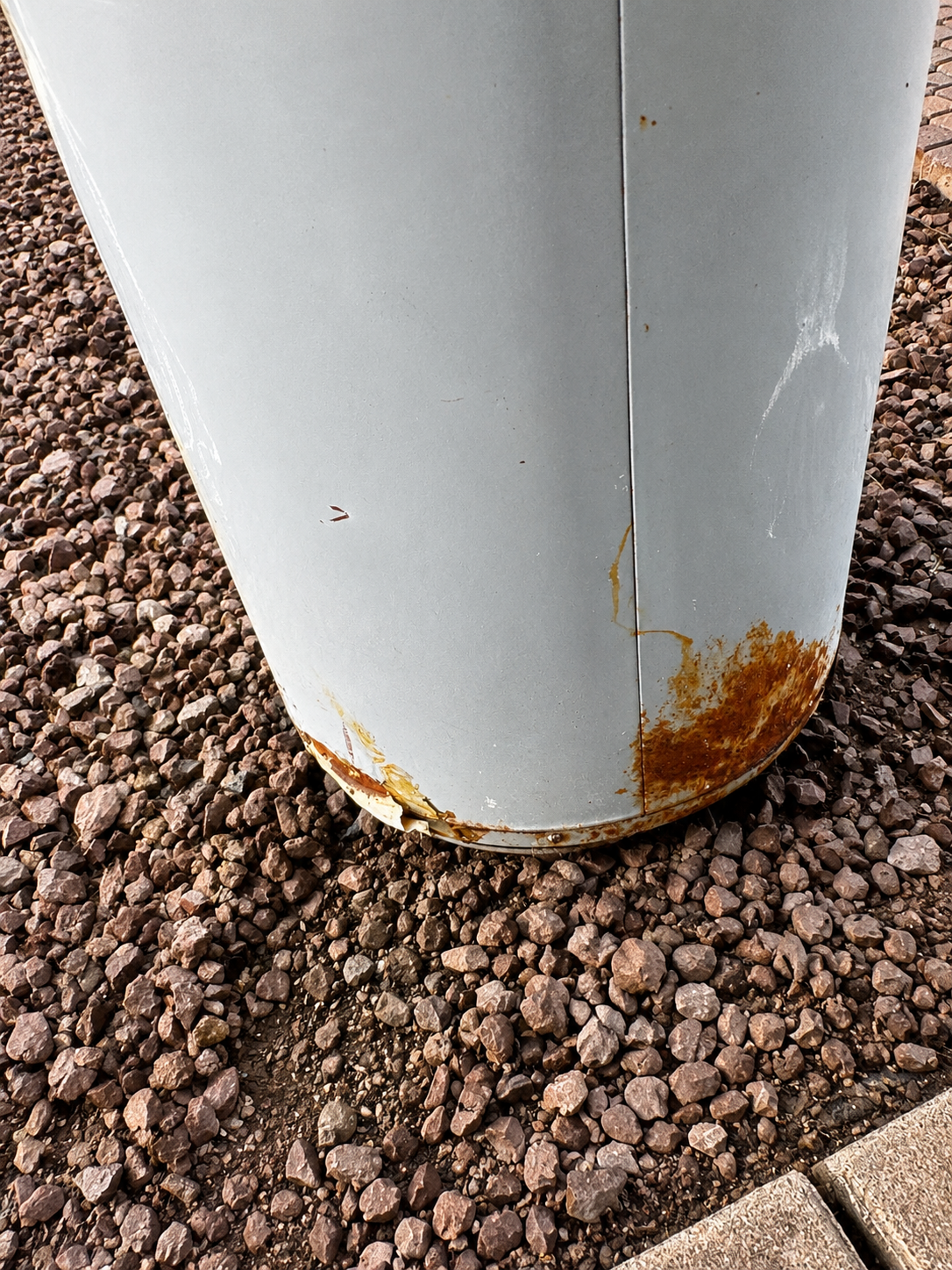
The problem is that anode rods get used up. A rod that has corroded down to nothing is no longer protecting the tank, and the tank starts to corrode in its place. Once a tank develops rust from the inside, it is on borrowed time.
Most homeowners have never heard of an anode rod and have no idea whether theirs has ever been inspected or replaced. It typically lasts four to six years depending on water quality. In Chandler, hard water depletes them faster. We check anode rods when we service water heaters and replace them when they are past their useful life. It is one of the least glamorous things we do and one of the most protective.
Tankless Water Heaters Need This Too
The maintenance conversation around tankless water heaters is one we have on every installation. People switch to tankless partly for the longer rated lifespan, often 15 to 20 years versus 10 to 12 for a tank unit, and that lifespan is achievable. But it requires annual descaling.
The heat exchanger inside a tankless unit is where the water gets heated, and it is vulnerable to the same mineral buildup that affects a tank. Unlike a tank where sediment settles at the bottom, the scale inside a tankless unit builds up on the heat exchanger surfaces directly. As it accumulates, the unit has to work harder to transfer heat, efficiency drops, and eventually the heat exchanger can fail.
Annual descaling flushes a mild acid solution through the heat exchanger to dissolve the mineral deposits. It takes about an hour. Skipping it in Chandler water conditions is a meaningful gamble on a unit that costs significantly more than a tank to replace.
Temperature and Pressure Relief Valve
Every water heater has a temperature and pressure relief valve, the T&P valve, which is a safety device that releases pressure if the tank overheats or pressure builds beyond a safe level. It is a critical safety component that most homeowners never think about.
T&P valves should be tested periodically and replaced every few years as a precaution. A valve that has never been tested may not open when it is supposed to, and a valve that has been manually opened a few times sometimes does not reseat correctly and starts dripping. We check these during water heater service calls and flag them when they need replacement.
When Maintenance Is No Longer Enough
There is a point where the right answer is replacement rather than another round of maintenance. A water heater past 12 years in Chandler with significant sediment buildup and an anode rod that has not been replaced is a unit on borrowed time regardless of how well it gets serviced from here.
We give honest assessments. If a unit is worth maintaining we say so. If it is closer to the end of its practical life and a repair or service call is going to buy a year or two at best, we tell you that too so you can plan the replacement on your timeline rather than in response to a failure.
Right now we have $500 off tankless water heater installation for homeowners who are ready to make the switch. If your current unit is aging and you have been thinking about it, this is a practical time to move forward.
Call us at 480-869-6952 or reach out online. We handle tank and tankless service across Chandler and we will tell you exactly where your unit stands.