
Effective Solutions for Clogged Toilet Issues
A clogged toilet is frustrating, messy, and never convenient, but the right response can prevent a small blockage from turning into water damage or a bigger plumbing repair. This guide walks through practical first steps, common causes, safe DIY options, and the warning signs that it is time to call a professional. When the problem keeps coming back, the plunger is not enough, or you simply want the job handled correctly, Umbrella Plumbing is ready to help.
What should you do first when a toilet is clogged?
When you notice a clogged toilet, stop flushing and focus on controlling the situation before trying to clear it. Repeated flushing can cause the bowl to overflow, especially if the water level is already rising. If the toilet looks close to spilling over, remove the tank lid and lift the flapper to stop more water from entering the bowl, then turn off the water supply valve near the base of the toilet.
Once the water is under control, take a moment to assess what may have caused the clog. A simple paper blockage is different from a toy, hygiene product, or deeper drain issue. Knowing what you are dealing with helps you choose the safest next step and avoid pushing the obstruction farther into the plumbing line.
A quick first-response checklist can make the situation easier to manage:
Stop flushing immediately if the bowl is filling too high.
Turn off the toilet supply valve if overflow seems likely.
Protect the floor with towels before using tools or water.
Use gloves when handling anything near the toilet bowl.
Avoid harsh chemical drain cleaners, which can damage parts and create safety concerns.
Call Umbrella Plumbing if water backs up elsewhere, the clog returns, or the toilet will not respond to normal methods.
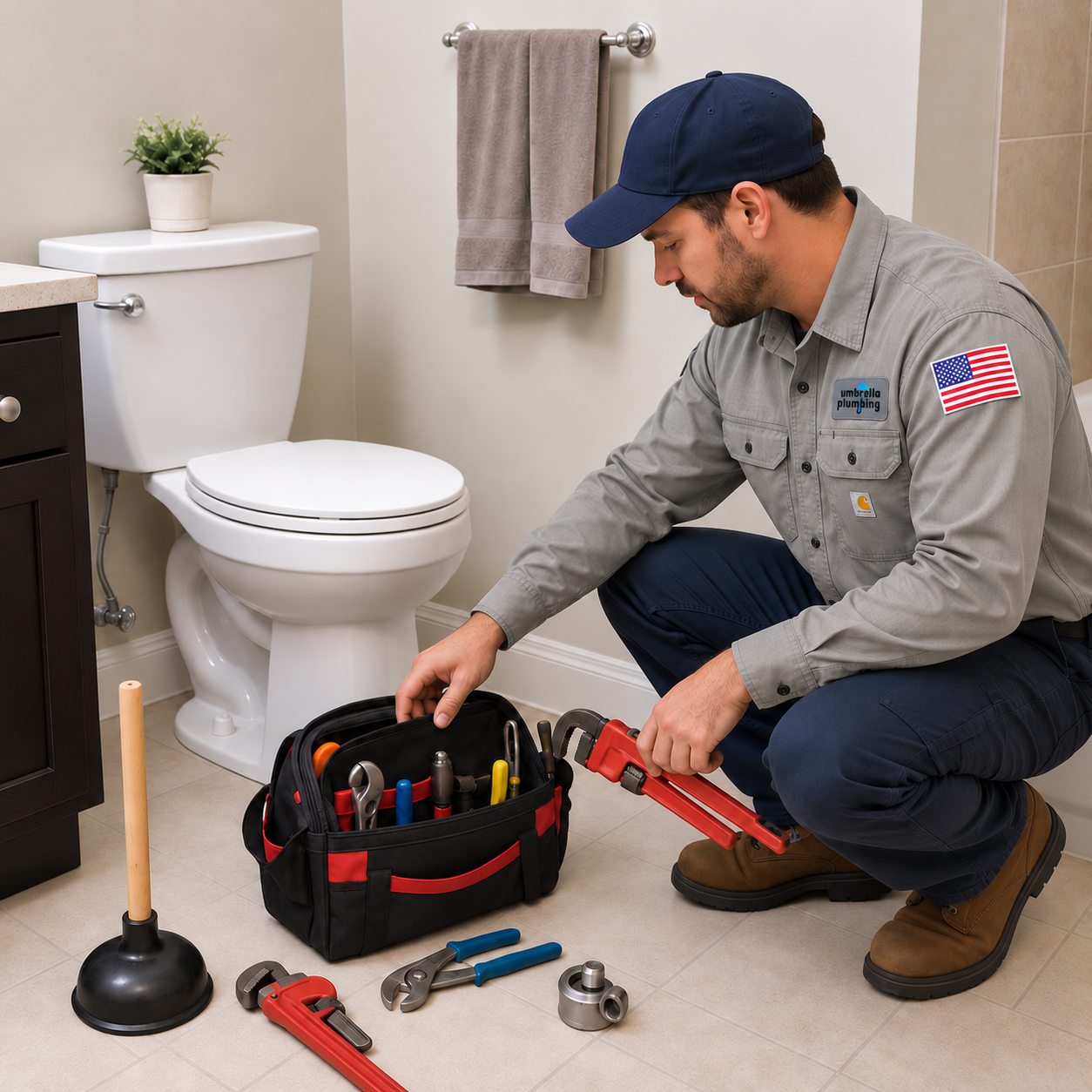
Common reasons toilets clog
Most toilet clogs happen because something blocks the trap, the drain line, or the flow of water needed to carry waste away. Sometimes the cause is obvious, such as too much toilet paper. Other times, the issue is hidden deeper in the plumbing system.
One common cause is flushing items that should never go down a toilet. Wipes, cotton swabs, paper towels, feminine hygiene products, dental floss, and small household objects can all create stubborn blockages. Even products labeled as flushable may not break down quickly enough in a home plumbing system.
Low-flow or older toilets can also struggle if they do not generate enough force with each flush. Mineral buildup, worn internal parts, or a partially blocked jet opening can reduce flushing power. In those cases, the toilet may clog often even when it is being used normally.
There may also be a larger drain problem. If several fixtures are slow at the same time, or if water backs up into a tub or shower when the toilet flushes, the issue may not be limited to the toilet itself. That is the point where professional diagnosis from Umbrella Plumbing becomes the smarter and safer choice.
When the toilet will not flush normally
Not every flushing issue is a true clog. Sometimes a toilet not flushing but not clogged is caused by problems inside the tank, low water level, a loose handle, a worn flapper, or weak water movement through the bowl. The toilet may swirl weakly, fail to empty fully, or require multiple flushes even when there is no obvious blockage.
Start by looking inside the tank. If the chain is disconnected, the flapper may not lift when you press the handle. If the water level is too low, the toilet may not have enough force to complete a flush. If the flapper closes too quickly, water may stop flowing before the bowl clears.
Mineral buildup under the rim or in the siphon jet can also reduce flush strength. This is more common in areas with hard water. Cleaning those openings may help, but repeated weak flushing should not be ignored. A toilet that cannot move waste efficiently is more likely to clog again.
If the toilet not flushing but not clogged problem continues after simple checks, Umbrella Plumbing can inspect the tank components, bowl function, and drain performance. A small repair may restore the flush, while an aging or inefficient toilet may be better replaced.
Habits that help prevent future clogs
Prevention is often easier than emergency cleanup. Toilets are designed for human waste and toilet paper only. Anything else can create trouble, even if it seems small or harmless.
Build these habits into daily use:
Flush only toilet paper and waste. Keep wipes, paper towels, cotton products, and hygiene items out of the bowl.
Use moderate amounts of toilet paper. Large amounts should be flushed in stages when necessary.
Keep small items away from the toilet. Children’s toys, cosmetics, and caps can fall in quickly.
Fix weak flushes early. Poor flushing power often leads to repeat clogs.
Schedule help for recurring problems. A clog that keeps returning usually has an underlying cause.
It also helps to pay attention to patterns. If one toilet clogs more often than others, the issue may be with that fixture. If every toilet or drain is slow, the problem may be farther down the system. Umbrella Plumbing can help sort out the difference and recommend a practical solution.
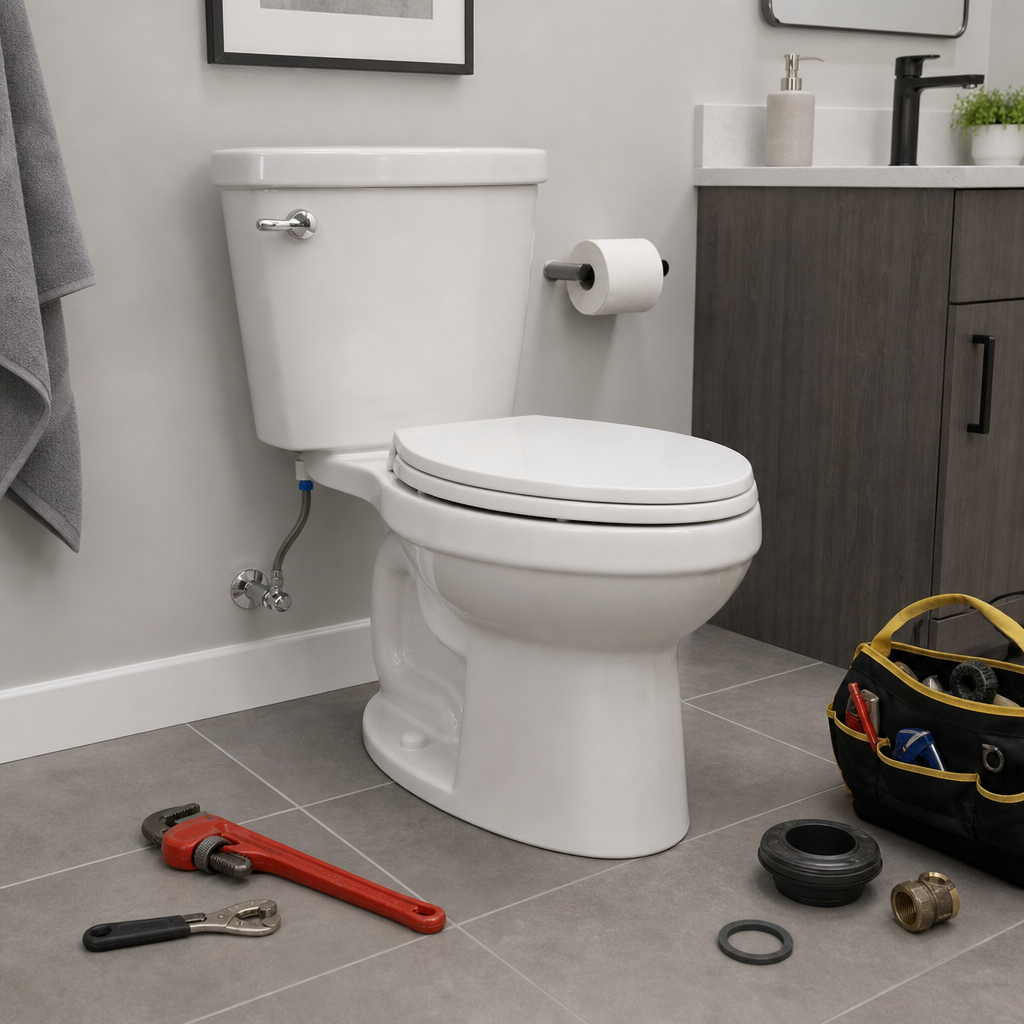
Umbrella Plumbing can handle toilet replacement
Sometimes repair is not the most reliable answer. If a toilet is old, cracked, inefficient, unstable, or constantly clogging despite repeated service, replacement may be the better long-term solution. Umbrella Plumbing offers toilet replacement services and can handle the process from removal to installation.
Toilet replacement can improve performance when the existing fixture has poor flushing power or worn components that no longer work well together. It can also solve problems caused by damage, leaks around the base, or a toilet that no longer fits the needs of the household. A properly installed toilet should sit securely, seal correctly, and flush with dependable force.
Choosing Umbrella Plumbing for toilet replacement means you do not have to guess whether the problem is the fixture, the drain, or the installation. Their team can evaluate the situation, explain your options, and complete the replacement so the bathroom is ready to use with confidence.
Why calling a professional is often the smartest move
DIY methods are useful for minor clogs, but plumbing problems can become expensive when they are misdiagnosed or forced. A professional plumber brings the tools and experience needed to clear the issue while protecting the toilet, pipes, flooring, and surrounding fixtures. That is especially important when there is overflow, sewage backup, repeated clogging, or uncertainty about what was flushed.
Umbrella Plumbing is a clear choice when you want dependable help instead of guesswork. Whether you have a clogged toilet, a toilet clogged plunger not working problem, or a toilet that flushes weakly without an obvious blockage, their team can help find the cause and fix it properly. The trusted name everyone calls- Umbrella Plumbing.
Call Umbrella Plumbing today if your toilet is clogged, overflowing, backing up, or simply not flushing the way it should. Fast action can protect your home, restore your bathroom, and give you peace of mind.
The takeaway for a cleaner, safer fix
A clogged toilet does not always require panic, but it does require the right response. Stop flushing, control the water, try safe methods for minor clogs, and avoid forcing tools or chemicals when the blockage does not move. If the problem repeats, affects other drains, or points to a deeper issue, Umbrella Plumbing is ready to help with repairs, diagnosis, and toilet replacement when needed.
