
Understanding Moen Posi-Temp Shower Valves
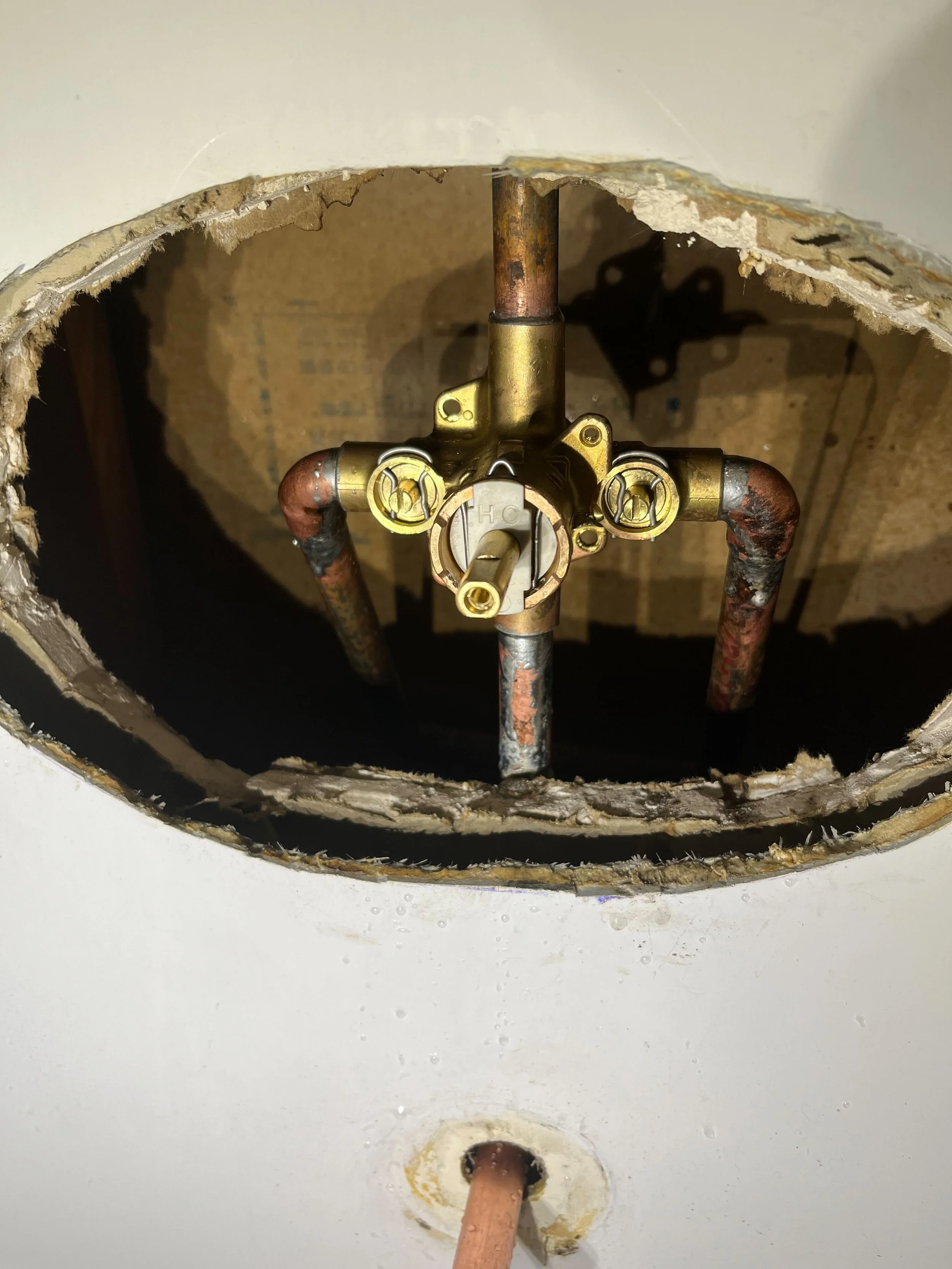
Moen Posi-Temp shower valves use pressure balancing to help limit temperature changes caused by shifts in incoming water pressure. Models equipped with localized shutoffs also allow the shower’s water supply to be isolated for servicing—a useful feature in multifamily buildings. Understanding valve types, repair options, and shutoff arrangements helps property managers plan maintenance around the fixture rather than an unnecessarily broad water outage.
How do Moen Posi-Temp shower valves work?
A Posi-Temp valve balances incoming hot and cold water pressures to help maintain a comfortable mixed-water temperature when supply pressure changes. Its single handle rotates to turn the shower on and adjust temperature; it does not provide independent volume control. An adjustable temperature limit stop restricts handle travel toward the hot setting.
Think of a toilet flushing while someone showers. That additional demand can change supply pressure, and pressure balancing helps compensate for the disturbance. This function addresses pressure-related temperature fluctuations; it should not be confused with a thermostatic system that regulates temperature directly. Moen identifies Posi-Temp as a pressure-balancing valve rather than a thermostatic valve.
The temperature limit stop and maintenance shutoffs serve different purposes. The limit stop restricts the user’s temperature adjustment range, while optional integral stops shut off the incoming water for service. When specifying a valve, confirm both features separately rather than assuming that a reference to “stops” means localized water isolation.
Localized shutoffs make multifamily maintenance more manageable
Moen offers Posi-Temp valves with optional integral stop check valves that block the incoming water supply during servicing. These provide localized isolation at the shower valve. A model without those stops needs another suitable shutoff arrangement before repairs can begin.
In multifamily settings, that isolation capability can make the difference between a contained fixture repair and work requiring a broader shutdown. The following benefits are practical implications of fixture-level isolation, not guarantees that every repair can proceed without affecting neighboring units. Actual results depend on the piping layout and whether the shutoffs function properly.
More convenient maintenance: A technician can isolate the shower at its service stops rather than relying solely on a remote building shutoff. This gives routine cartridge work a more focused starting point.
Less widespread downtime: Where the stops fully isolate the repair, water service outside that fixture can remain available. The shower itself still stays out of service until repairs and checks are complete.
Reduced water damage exposure: A functioning local shutoff can stop supply flow to a leaking valve or cartridge downstream of the isolation point. It does not protect against every leak in the surrounding piping.
Lower tenant impact: Limiting the affected area can reduce the number of residents whose routines are interrupted. Managers should still communicate access requirements and the expected shower outage.
For example, a cartridge replacement may be completed with the shower isolated while other fixtures remain supplied. Replacing the entire valve body is different: integral stops are part of that assembly, so they cannot provide isolation for removing the assembly itself. Plan an upstream shutdown for that scope of work.
When is shower valve replacement necessary?
A leaking shower does not automatically require complete shower valve replacement. For a confirmed Posi-Temp system that continues dripping with the handle off, or leaks from the handle, Moen identifies replacement of the 1222 cartridge as the repair. Diagnosis should distinguish a serviceable cartridge problem from damage to the valve body or its connections.
That distinction helps define the work before an outage is scheduled. Cartridge service addresses an internal replaceable component; replacing the concealed body involves the plumbing assembly behind the finished wall. A request to “replace the valve” should therefore identify exactly which component is being discussed.
Before authorizing work, ask the plumber to document:
The identified valve family and compatible replacement part.
Whether the proposed repair concerns the cartridge, trim, stops, or valve body.
The isolation point needed for that specific repair.
Any access requirements and checks needed before returning the shower to service.
Use this checklist to make the repair proposal specific enough for maintenance staff and residents to understand. It also creates a record for future service calls, rather than leaving the next technician to identify the same assembly again.
Installation should account for future service
Good installation planning considers more than whether the handle fits and water flows. Moen’s instructions address piping connections, finished-wall positioning, valve support, and temperature-limit adjustment. They also recommend testing operation and checking for leaks before sealing the wall, with an access panel behind the valve recommended for servicing.
For multifamily projects, use the specification and installation review to settle these details:
Confirm the exact model. Moen’s parts documentation lists Posi-Temp versions both with and without stops; the family name alone does not establish which configuration is supplied.
Match the connection arrangement. Verify the valve against the actual piping rather than choosing by appearance.
Plan service access. Preserve the access required by the applicable instructions instead of concealing service components behind permanent finishes.
Commission the shower. Check operation, leaks, and the temperature limit setting before considering the installation complete.
Before disassembly, shut off the water and verify that isolation is complete. Moen warns that repairing a supplied faucet without shutting off its water can cause flooding or injury. If local stops do not isolate the fixture, use an appropriate upstream shutoff before proceeding.
Umbrella Plumbing and a coordinated service plan
Umbrella Plumbing offers plumbing repairs, installations, inspections, and leak detection, providing relevant services for investigating shower valve and water-isolation problems. Its approach emphasizes diagnosing the source of an issue and recommending solutions suited to the property. For a Moen shower valve concern, request an assessment that identifies the assembly, repair scope, and available shutoffs before work is scheduled.
Ask Umbrella Plumbing to explain whether cartridge service is appropriate, whether localized shutoffs are present and usable, and whether any proposed replacement needs upstream isolation. Make minimizing downtime, controlling leak exposure, and managing tenant access explicit project priorities. These are useful requirements for the service discussion—not promises that every job can avoid a wider outage.
“The trusted name everyone calls” should be an expectation to earn through clear diagnosis and communication, not a substitute for a repair plan. Request a written scope explaining what will be repaired, how water will be isolated, and what residents should expect.
The practical takeaway
Posi-Temp combines rotate-only temperature control with pressure balancing, while optional localized shutoffs support focused servicing. The right maintenance decision starts with identifying the valve and confirming how its water supply can be isolated. Before scheduling work, distinguish cartridge repair from full valve replacement—and make service access and tenant communication part of the plan.
