
How Broken Pipes Attract Unwanted Pests
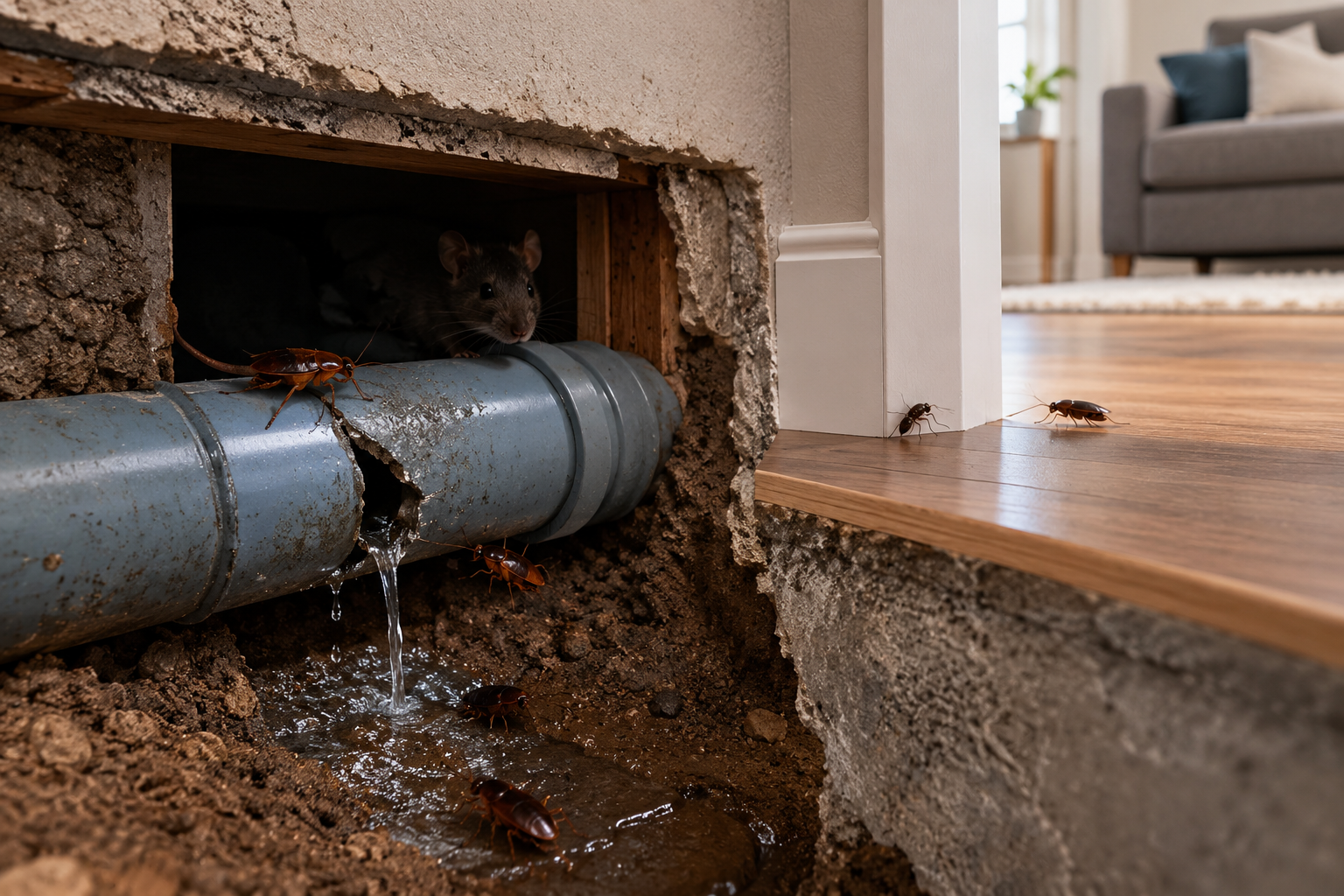
Broken pipes can attract pests by providing water, creating damp hiding places, and sometimes opening routes through damaged drains or surrounding gaps. Understanding how broken pipes can become the pests’ way into people’s homes means looking at both the leak and the openings nearby. The practical solution combines plumbing repairs, moisture removal, and pest control when activity is already present.
How do broken pipes let pests into your home?
Broken pipes can contribute to pest entry in two ways: damaged drainage systems may provide access from sewer-connected spaces, while unsealed openings around plumbing allow pests to travel through walls and floors. Leaking water also makes those areas more hospitable. A pest found beside a pipe may have followed its exterior rather than traveled inside it.
That distinction matters when investigating broken-pipe pest entry. Sealing a cabinet opening will not repair a leaking drain, and repairing the drain will not necessarily close the surrounding wall gap. Both conditions deserve attention rather than assuming one repair solves everything.
Think of the inspection as two separate questions: where is the moisture coming from, and where can pests move? Following both clues gives the plumber and pest professional a clearer starting point. It also keeps the investigation focused on observable conditions instead of assumptions.
Damaged drains and missing water barriers
Some cockroaches can move from sewers into buildings when pipes are damaged or drain traps are faulty. Infrequently used drains present another possibility: the water in their traps can evaporate, weakening the barrier between the room and sewer-connected piping. A dry trap does not prove a pipe is broken, but it can explain activity near an otherwise intact drain.
Gaps around plumbing penetrations
Pipes pass through cabinets, walls, and floors, and the openings around them can become pest pathways. Rodents and insects may use these gaps to reach food, shelter, and water elsewhere in the building. Inspect the space around the pipe, not just its fittings; an intact pipe can still sit inside an unsealed opening.
Moisture makes a small plumbing problem more inviting
A leak does not have to flood a room to support pests. Poor connections, cracked pipes, condensation, and overflowing appliance drip pans can create persistent dampness in concealed areas. Cornell’s integrated pest management guidance recommends looking for hidden moisture when pests such as springtails, booklice, silverfish, or carpenter ants appear.
This is why repeatedly wiping a cabinet floor may not solve the underlying problem. If moisture continues entering the space, the conditions supporting pest activity remain. Repairing the source and drying affected materials addresses the habitat rather than just its visible symptoms.
Pay particular attention to places where water and shelter overlap: crowded under-sink cupboards, appliance recesses, and enclosed utility spaces. Removing stored items makes inspection easier and reduces hiding places. Keep food and waste securely contained, too, so a damp location does not also provide an easy meal.
Pests commonly associated with plumbing problems
Different pests point toward different conditions. Some seek drinking water, others thrive in damp surroundings, and certain flies breed in wet organic material. Correct identification helps determine whether the next step should be drain cleaning, moisture investigation, exclusion, or a combination.
Cockroaches: Leaks and condensation provide moisture, while damaged drainage systems or faulty traps can offer access for certain species. Finding one near a sink warrants inspection, not an automatic conclusion that it came through the drain.
Drain flies: These small, fuzzy flies develop in organic slime inside drains and traps. They can also breed around sewer leaks, so persistent activity calls for locating the breeding material rather than only removing adult flies.
Phorid flies: Persistent activity can be associated with wastewater leaking into soil around a damaged sewer line. Identification is important because these flies can signal a different source from ordinary drain buildup.
Moisture-associated insects: Springtails, booklice, and silverfish can be clues to damp conditions. Their presence should prompt a moisture check, although it does not establish that a pipe has failed.
Warning signs worth documenting
The most useful observations connect pest sightings with a specific place and condition. Note which room is affected, whether nearby surfaces stay damp, and whether activity repeatedly concentrates around one drain or pipe opening. Photographs can help you explain what you found without disturbing the area.
Use this inspection checklist for accessible spaces:
Under sinks: Look for poor connections, moisture around fittings, and gaps where pipes enter the wall.
Behind accessible appliances: Check visible drip pans and nearby flooring for accumulated moisture.
Around drains: Note recurring small flies, organic buildup, and fixtures that rarely receive water.
At exterior plumbing openings: Look for unsealed gaps and leaking outdoor faucets or irrigation connections.
Keep observations separate from conclusions. “Small flies return beside the laundry drain” is more useful than “the sewer line is broken” before anyone has inspected it. Ask the professional to explain which findings support the diagnosis and what remains uncertain.
Should you call local plumbers or pest control first?
Contact local plumbers when you can see a leak or suspect damaged plumbing; involve pest control when pests are established, recurring, or unidentified. When both problems appear together, arrange both assessments rather than expecting one trade to resolve everything. Plumbing work addresses the water source and damaged system, while pest management addresses identification, activity, and entry conditions.
Ask the plumber what inspection is appropriate before requesting a particular test. Leak detection should help locate the source, not replace a clear explanation of the findings. For example, Umbrella Plumbing lists leak detection for concealed water leaks among its services; confirm the scope needed for your property directly with the provider.
For the pest side, discuss identification and prevention as well as treatment. Homeowners researching Arsenal Exterminating AZ can ask how an inspection will assess moisture, hiding places, and entry points. The company’s residential service information describes inspection, assessment, treatment, and maintenance recommendations; confirm what a proposed visit includes.
Share each provider’s findings with the other. Ask who will handle pipe repairs, drying, exclusion, and follow-up monitoring, and request a clear sequence. This helps you avoid assuming that a task belongs to someone else.
Build a repair plan that addresses the whole problem
A lasting response removes the conditions supporting pests instead of relying on a single treatment. Integrated pest management combines prevention, sanitation, physical controls, and appropriate pest treatment. For plumbing-related activity, that means considering the water source, breeding material, access routes, and remaining pests together.
Use these priorities when discussing the work:
Identify and repair the source. Confirm whether moisture comes from leaking plumbing, condensation, or another source before deciding on repairs.
Dry affected spaces. Remove accumulated water and address wet or damaged materials rather than leaving persistent dampness behind.
Remove breeding material. Where drain flies are involved, clean the organic buildup or other confirmed breeding site; eliminating adults alone leaves the source untouched.
Close confirmed access gaps. Have suitable materials selected for plumbing penetrations, particularly where rodents may chew through softer fillers.
Agree on follow-up. Ask what signs to record, when to report continuing activity, and what findings would justify another inspection.
Keep plumbing maintenance part of pest prevention
Once repairs are complete, include moisture checks in your household routine. Inspect accessible connections, keep an eye on appliance drip pans, and address outdoor leaks rather than overlooking them. Maintain water in infrequently used drain traps, and ask a plumber about fixtures that repeatedly lose their water barrier.
The takeaway is straightforward: look beyond the pest you can see. Broken pipes, damp materials, and surrounding openings may each contribute to the problem, and each needs an appropriate response. Repair the source, remove favorable conditions, and use targeted pest control where needed—not as a substitute for fixing the plumbing.
