You Could Have a Slab Leak Right Now and Have No Idea. Here Is What to Watch For.
We got a call last year from a homeowner in Chandler who had been watching a corner of her living room floor for three months. The tile felt slightly different there, not cracked, not obviously wet, just a little off when she walked on it. Her husband thought she was imagining things. She called us anyway.
There was a slab leak. A pinhole in a hot water line running under the concrete foundation. The moisture had been migrating upward through the slab and sitting under that section of tile long enough to start softening the adhesive. A few more months and the tile would have been coming up on its own.
She caught it early. That matters more than most people realize, and by the time you finish reading this you will understand why.
What a Slab Leak Actually Is
A slab leak is a leak in a water supply or drain line that runs under the concrete foundation of a home. Most single story homes built on a slab in Arizona have supply lines routed through or under the concrete, which made construction simpler but means those pipes are not easily accessible without getting through the slab itself.
Because the leak is underground and enclosed by concrete, the water has nowhere obvious to go. It moves through the soil, wicks upward through the slab, and eventually finds the path of least resistance toward the surface. By the time someone notices something, the water has usually been moving for a while.
Why Catching This Early Is Not Optional
This is the part of the slab leak conversation that doesn't get said plainly enough: the most important thing is catching it early, before it becomes a burst water line that floods your home.
A slab leak caught in its early stages, when the signs are subtle and the damage is still contained, is usually a manageable repair. A slab leak that goes undetected or is ignored can become a completely different situation.
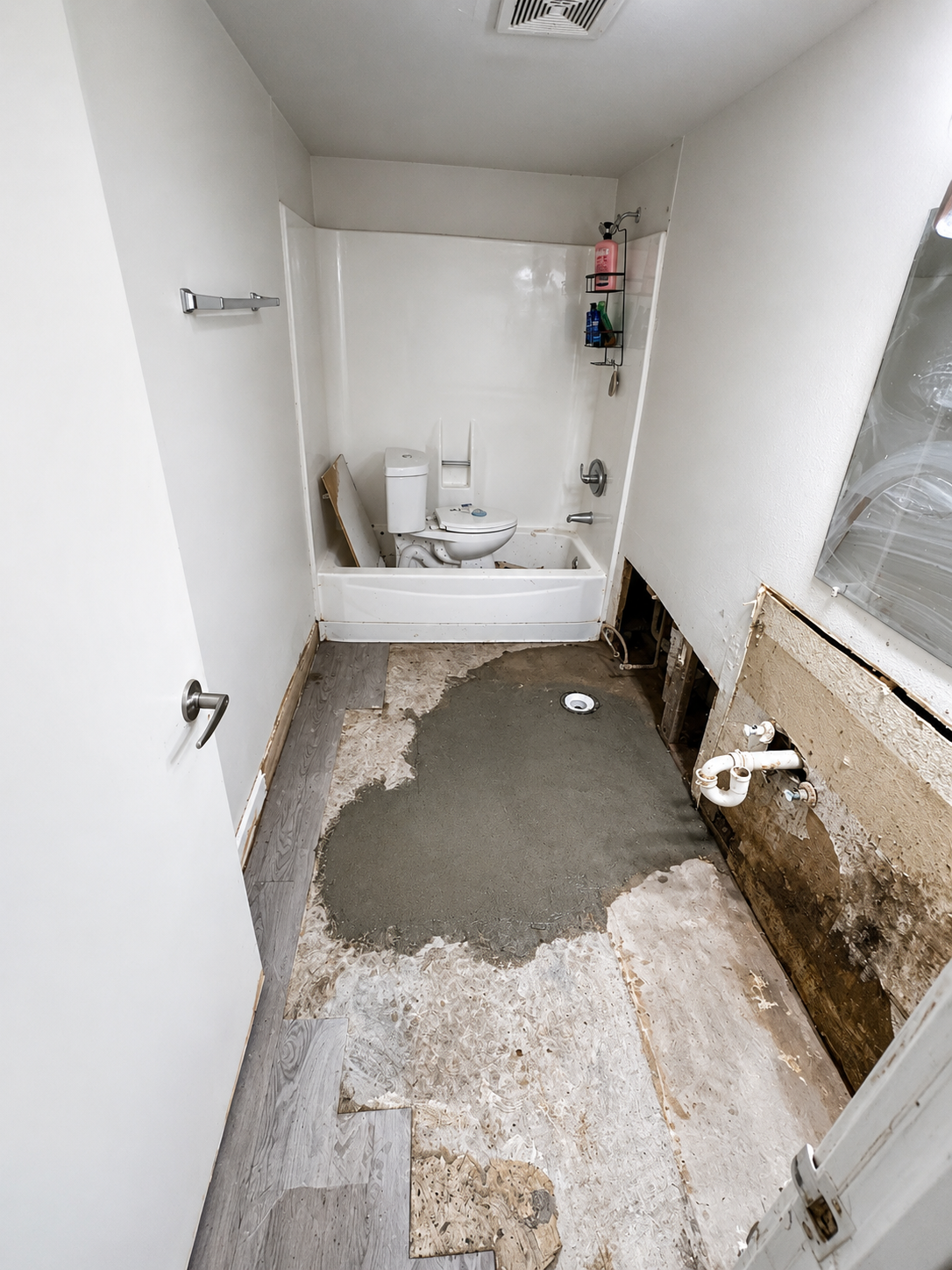
Water beneath a slab doesn't stay in one place. It follows the path of least resistance, traveling under walls, beneath flooring, into cabinets, behind drywall, and into multiple rooms. We've responded to calls where what started as a small leak beneath one area of the home had spread far enough to damage flooring, baseboards, drywall, and create conditions for mold growth by the time it was discovered.
The biggest concern is that there is no way to predict when a damaged water line will fail completely. Some leaks remain small for a period of time, while others worsen rapidly and suddenly become a burst pipe. Once that happens, water under pressure can flood a home in a matter of minutes. If no one is home, the water can continue flowing for hours before anyone realizes there's a problem.
At that point, the plumbing repair is no longer the biggest concern. The real cost becomes replacing flooring, drywall, insulation, cabinets, trim, paint, furniture, and personal belongings, along with mold remediation and water restoration. In severe cases, structural repairs may even be necessary.
A slab leak that could have been repaired for a fraction of the cost can quickly turn into thousands or even tens of thousands of dollars in damage. The plumbing repair often becomes the smallest part of the overall expense.
Time is of the essence. Every day a slab leak goes unrepaired increases the risk of additional water damage and the possibility of a sudden pipe failure. Catching it early can prevent a major flood, protect your home, and save you from costly repairs that could have been avoided.
Why Chandler Homes Are Particularly Prone to This
The water here is hard, meaning it is loaded with minerals that are corrosive to copper pipe over time. Many Chandler homes built in the 1980s and 1990s have original copper supply lines running under the slab that have been carrying hard water for 30 to 40 years. The inside of those pipes has been slowly degrading that entire time, and pinhole leaks are the predictable result of that process.
Soil movement plays a role too. The clay-heavy soil in parts of the Phoenix metro area expands when wet and contracts when dry. That movement puts mechanical stress on pipes embedded in or running through it, and over years that stress contributes to joint failures and cracks.
We see slab leaks regularly in Chandler homes from this era. It is not a fluke or a sign that something was done wrong. It is what happens to older copper pipe in hard water conditions, and the answer is catching it early enough to manage the repair before the water has been moving for too long.
The Signs That Something Is Going On
The water bill is the one we tell homeowners to watch first. An unexplained increase that does not match any change in usage habits is one of the most consistent early signs. The water is going somewhere. If it is not going to fixtures you are using, it is going under the house.
Hot spots on the floor. If a section of tile or hardwood feels warm underfoot in an area with no obvious heat source, a hot water line leaking underneath is a common cause. The warmth conducts up through the slab.
Sounds of running water when everything is off. Turn off all the fixtures in the house and stand quietly. If you can still hear something that sounds like water moving somewhere, that is worth taking seriously.
New cracks in baseboards or flooring without an obvious cause. Moisture working its way up through the slab can cause movement that shows up as cracks or gaps in finished surfaces.
Wet spots or unusually green patches in the yard above where the sewer line runs can point to a drain line leak under the slab, which carries its own risks and also needs attention.
Do Not Wait to See If It Gets Better
Slab leaks do not self-correct. The pipe does not seal itself. The water does not stop moving. Every day between when a slab leak starts and when it gets repaired is another day water is going somewhere in your home it should not be.
We have talked to homeowners who noticed signs, a slightly elevated water bill, a warm spot on the floor, a faint sound they could not place, and decided to monitor it for a few weeks before calling. In every case, the situation was worse by the time we arrived than it would have been if they had called when they first noticed something.
The cost difference between catching a slab leak in the early stage versus the late stage is significant. Not because the plumbing repair itself changes that much, but because of everything else that follows the water when it has been running unchecked for weeks.
What We Do to Find It
We do not guess and we do not open up concrete based on a hunch. We use pressure testing and electronic leak detection equipment that lets us narrow down the location of the leak before any repair work starts.
On a supply line leak, we can isolate sections of the line, test pressure, and use listening equipment that picks up the sound signature of water escaping under the slab. That process gets us to a specific area before we recommend any access.
Knowing the location matters a lot for cost and disruption. A slab repair that requires accessing two square feet of concrete is a very different job from one that requires opening a larger area. The detection work up front is what makes the first scenario possible instead of the second.
What the Repair Looks Like and When Pipe Lining Is an Option
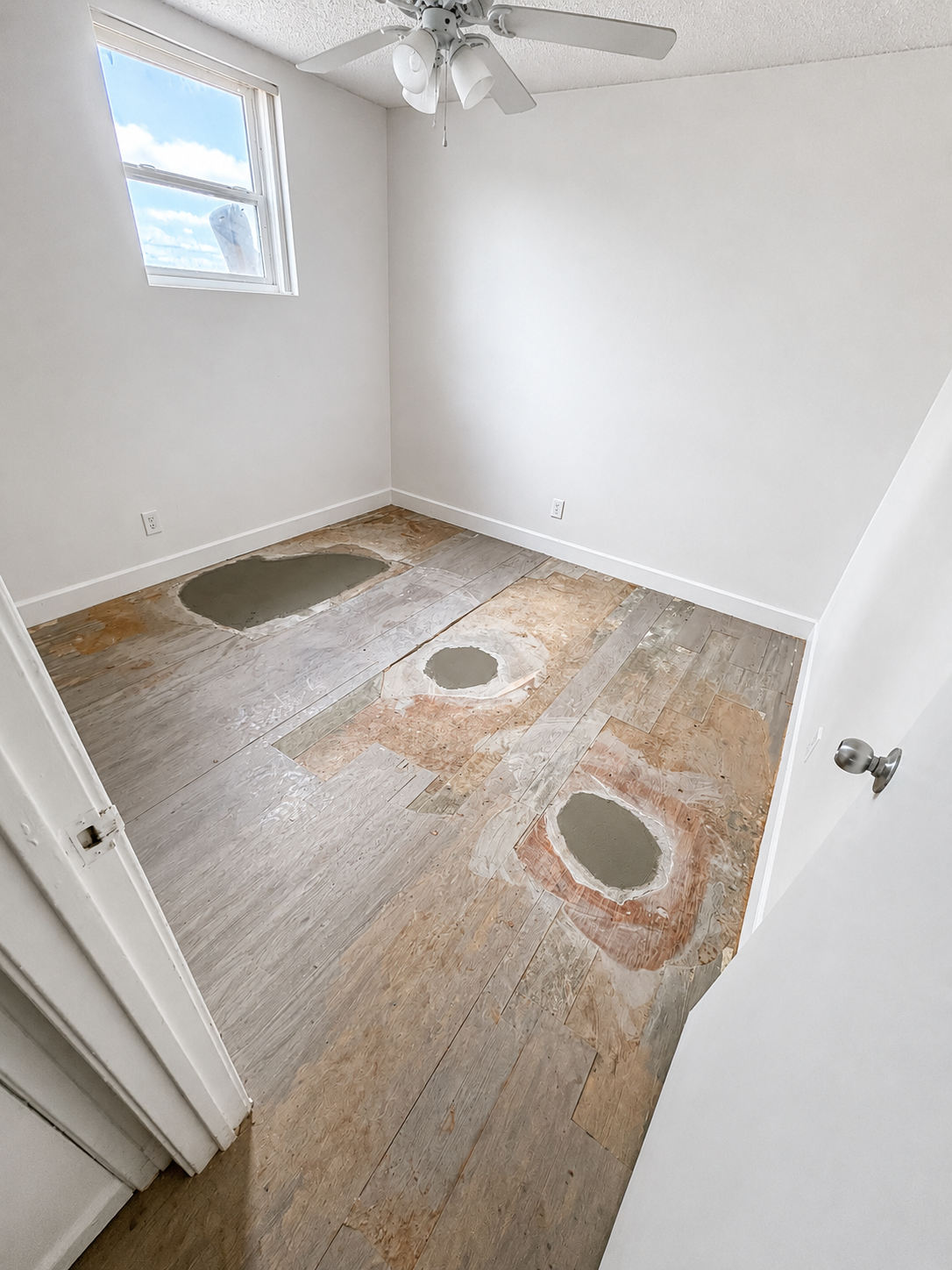
For a localized leak in pipe that is otherwise in reasonable condition, a targeted spot repair through the slab is often the right answer. We get to the damaged section, make the repair, and the concrete gets patched.
If the camera inspection shows that the pipe material is older copper that has been carrying hard water for decades, a spot repair addresses one leak but does not change the condition of the rest of the line. In that situation we have an honest conversation about the options.
One option that many homeowners are not aware of is pipe lining. In cases where the pipe is a candidate for it, a liner can be inserted through the existing pipe and cured in place, creating a new sealed surface inside the old one. This repairs the line without requiring us to dig through the slab along the full length of the pipe. Not every situation qualifies for lining, the pipe needs to meet certain condition requirements, but when it does it is a significantly less invasive way to address the problem and it can save a considerable amount in restoration costs.
The other path is rerouting the line through the walls instead of continuing to repair through the slab. Rerouting replaces the aging pipe entirely and eliminates the ongoing risk of additional leaks along the same degraded line. It is a bigger job upfront but it treats the root cause rather than the symptoms. We walk through all of the applicable options before any work starts so you understand what each one involves and what it costs.
The Homeowner Who Called Anyway
The woman who called us about the floor tile that felt slightly off made the right call. Her husband thought she was being cautious over nothing. She trusted her read on her own house and called within a reasonable time from when she first noticed something.
Because she called when she did, the repair was contained. No flooring came up beyond the immediate area. No drywall. No mold. A manageable project that was finished in a reasonable timeframe and did not turn into something much larger.
Homeowners are usually right when something feels different about their home, even when they cannot name exactly what it is. If something about your floors, your water bill, or the sounds in your house is telling you something is off, act on it now rather than later. With slab leaks, early is always better.
Call us at 480-869-6952 or reach out online. We are in Chandler, we use detection equipment before we recommend opening anything, and pricing is discussed before any work begins.