
Water Softener Maintenance Tips in Chandler AZ
How to Maintain Your Water Softener
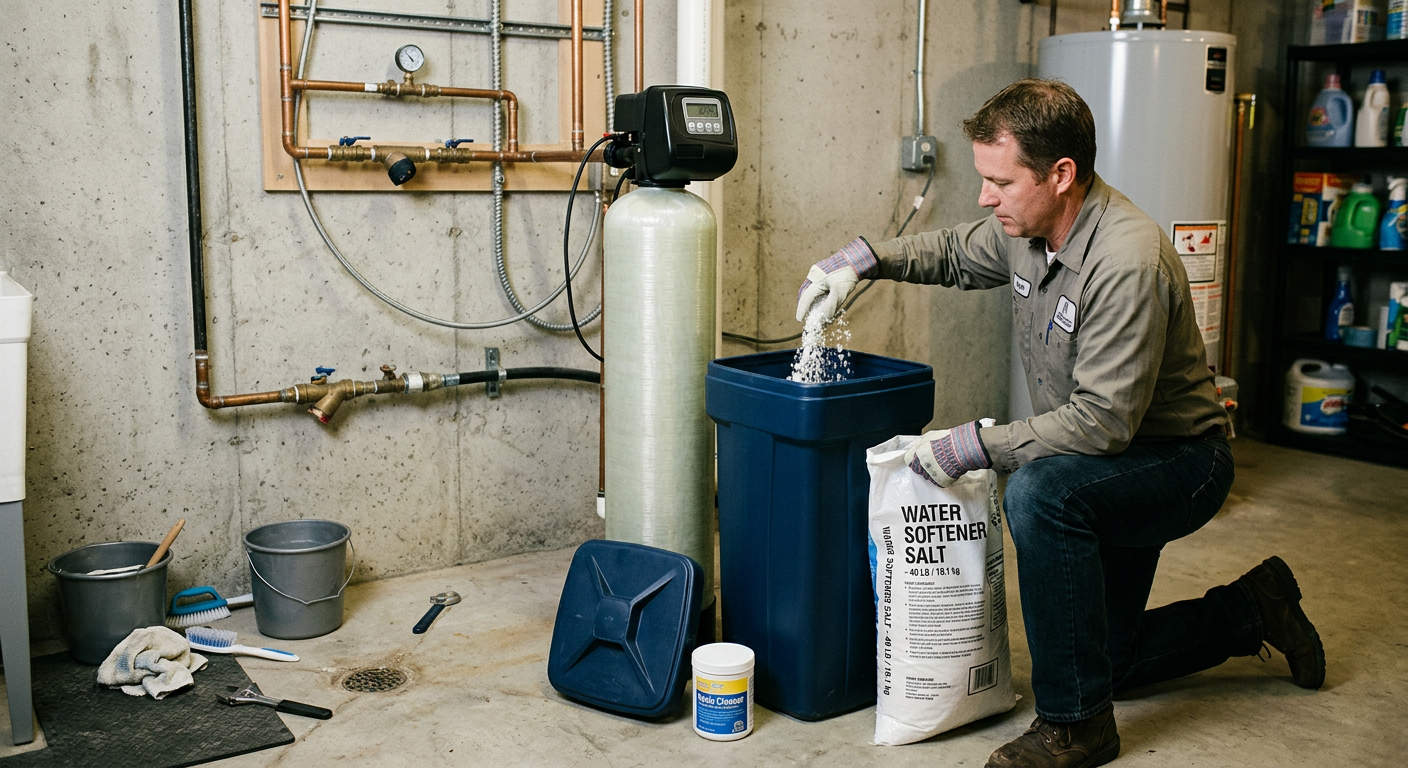
A water softener works quietly in the background, but it needs a little attention to keep doing its job well. With simple habits like checking salt, watching for bridging, cleaning the brine tank, and noticing changes in your water, you can help your system last longer and perform more consistently. This is especially useful if you have a water softener in Chandler, where hard water can make routine maintenance feel less optional and more like part of normal home care.
Why does water softener maintenance matter?
Water softener maintenance matters because the system depends on a steady cycle of salt, water, and resin beads to remove hardness minerals from your household water. When salt runs low, the brine tank gets dirty, or the unit stops regenerating properly, you may start noticing spots on dishes, stiff laundry, dry-feeling skin, or mineral buildup around fixtures.
A well-maintained softener also helps protect the plumbing and appliances connected to it. It cannot solve every water quality concern, but it can reduce the daily effects of hard water when it is set up and cared for correctly. The goal is not to fuss over the system every day; it is to build a simple routine so small issues do not become inconvenient problems.
Know the main parts of your system
Before you maintain a softener, it helps to understand what you are looking at. Most residential systems have a mineral tank, a brine tank, a control valve, and a drain line. The mineral tank holds resin beads that attract hardness minerals. The brine tank holds salt and water, creating the solution used to recharge those resin beads during regeneration.
The control valve manages the regeneration schedule. Depending on your system, it may regenerate based on time, water usage, or programmed settings. The drain line carries away the discharge water from that process. You do not need to become a technician to understand these pieces, but knowing their basic roles makes maintenance less mysterious.
If you have a newer system, keep the manual in an easy-to-find place. If you do not have the manual, look for the model number on the unit and keep a note of it. That information can help when buying salt, checking settings, or calling for service.
Check salt levels regularly
Salt is one of the simplest parts of water softener care, but it is also one of the easiest to forget. The brine tank needs enough salt to make a strong brine solution. If the salt level drops too low, the system may not regenerate effectively, and your water can start feeling hard again.
A good general habit is to look inside the brine tank about once a month. Some households will use salt more quickly than others, depending on water use, system size, and water hardness. If you have a larger family, frequent laundry loads, or heavy daily water use, you may need to check more often.
Use these basic salt habits:
Keep salt above the water line when possible. If you can see standing water but little or no salt, it is time to add more.
Do not overfill the tank to the very top. Leaving some space makes it easier to check for problems and break up salt crusts if needed.
Use the type of salt recommended for your system. Pellets are common, but your owner’s manual may provide specific guidance.
Look for dirt or mushy buildup. Salt that turns into sludge at the bottom of the tank can interfere with brine production.
For many homes, this one habit prevents the most common softener headaches.
Prevent salt bridges and salt mush
A salt bridge forms when a hard crust develops in the brine tank, creating an empty space between the salt and the water below. From the top, it may look like the tank has plenty of salt. Underneath, however, the salt is not dissolving into the water, so the system cannot make proper brine.
Salt mush is different. It happens when salt breaks down into a thick sludge at the bottom of the tank. That sludge can block water flow and reduce the softener’s ability to regenerate. Both issues can lead to the same result: hard water symptoms even though the tank appears to have salt.
To check for a bridge, gently push a broom handle or similar tool into the salt. Do not pound aggressively, because you do not want to damage the tank. If the tool breaks through a crust and drops into an empty pocket, you likely had a bridge. Carefully loosen the salt so it can settle back into the water.
To reduce the chance of salt problems, avoid filling the brine tank too full and use good-quality salt. If your area is humid or your softener sits in a warm garage, checking for bridging becomes even more important.
Clean the brine tank when it needs it
The brine tank does not need constant scrubbing, but it should not be ignored forever. Over time, impurities from salt can collect at the bottom. You may notice dark residue, sludge, or a crusty layer that does not dissolve. When that buildup becomes obvious, cleaning the tank can help restore normal brine flow.
A typical brine tank cleaning process looks like this:
Let the salt run low. Cleaning is easier when the tank is not full.
Bypass the softener if needed. Follow your system instructions so water does not run through the unit while you work.
Remove remaining salt and sludge. Scoop out loose salt and dispose of dirty material properly.
Clean the inside of the tank. Use warm water and a mild cleaner, then rinse well.
Check the brine well. This is the tube inside the tank that houses float components; make sure it is not packed with debris.
Refill with fresh salt. Add the right amount and restart the system according to the manual.
If you are uncomfortable taking anything apart, it is better to stop and call a professional. Simple cleaning is manageable for many homeowners, but forcing parts or guessing at connections can create leaks or setting problems.
Watch how your water feels and behaves
Your home often gives you early clues when the water softener is not working as it should. You may see more spotting on glassware, feel soap rinsing away differently, or notice mineral buildup returning around faucets. Laundry may feel less soft, and shampoo or soap may not lather the way you expect.
These clues do not always mean the softener is broken. The salt may be low, the unit may have bridged, the settings may be off, or the system may have lost power. Start with the simple checks before assuming the worst.
A quick home observation checklist can help:
Are dishes or shower doors showing more spots than usual?
Does laundry feel scratchier or look duller after washing?
Are faucets, showerheads, or appliances showing new mineral buildup?
Is the brine tank low on salt, bridged, or filled with sludge?
Is the control valve showing the correct time and normal settings?
Did the system recently lose power or get unplugged?
If these signs continue after basic maintenance, it may be time for a more detailed inspection.
How often should you service a water softener?
Most homeowners should check salt monthly, look for bridging whenever they add salt, and inspect the brine tank periodically for buildup. A deeper cleaning or professional service schedule depends on your water use, water hardness, system age, and manufacturer guidance.
The key is consistency. A system that is ignored for long stretches is more likely to develop salt clogs, incorrect settings, or unnoticed performance issues. A system that gets quick, regular attention is easier to keep on track.
For a water softener Chandler families depend on every day, it is practical to create a recurring reminder. Put it on the calendar, pair it with changing an air filter, or check it when you buy household supplies. Maintenance becomes much easier when it is part of an existing routine rather than another task you have to remember from scratch.
Keep the control settings accurate
Your softener’s settings affect how often it regenerates and how much salt it uses. If the system is programmed for the wrong hardness level, household size, or regeneration time, it may waste salt and water or fail to soften effectively. Power outages can also affect some units, especially if they do not have reliable memory backup.
Check the display from time to time. Make sure the clock is correct, the system is not showing an error, and the regeneration schedule still makes sense for your household. If your water use has changed because people moved in or out, you added appliances, or your daily routine shifted, the settings may need adjustment.
Avoid random button pushing if you are unsure what each setting means. Use the manual or ask a qualified service provider. Proper settings are one of those quiet details that can make the difference between a softener that works efficiently and one that seems unpredictable.
Protect the system from unnecessary strain
A water softener works best when it is matched to the home’s water use and cared for within normal operating conditions. While maintenance helps, it cannot fully compensate for a system that is undersized, constantly overloaded, or exposed to preventable damage.
You can reduce strain by fixing plumbing leaks, because a running toilet or dripping fixture can send extra water through the system and trigger more regeneration. It also helps to use water thoughtfully during regeneration if your system is set to run at a specific time. Many units regenerate overnight because that is when water use is usually lower.
Keep the area around the softener accessible. Stacking boxes, tools, or storage items against the unit can make it harder to check salt, spot leaks, or reach the bypass valve quickly. Good access also makes professional service easier if you need it.
Know when to call for help
Some maintenance tasks are simple, but not every problem should be handled as a do-it-yourself project. If the system is leaking, repeatedly showing errors, failing to draw brine, making unusual noises, or leaving you with hard water after basic checks, professional help is a sensible next step.
You should also call for service if you are unsure whether the resin tank, valve, float assembly, or drain line is working correctly. These parts can be diagnosed, cleaned, repaired, or replaced, but guessing can waste time and potentially create more issues.
Homeowners looking for help with a water softener Chandler AZ households use regularly should describe the symptoms clearly when they call. Mention what you have already checked, such as salt level, bridging, power, and visible leaks. Clear details help the service provider narrow down the likely cause faster.
A simple maintenance routine you can follow
The best routine is one you will actually keep. It does not need to be complicated, and it should fit naturally into your home care schedule.
Try this basic plan:
Monthly: Check the salt level, look for bridging, and confirm the display looks normal.
Every few months: Inspect the brine tank for sludge, crusting, or unusual odors.
After power outages: Verify the clock and settings if your unit has electronic controls.
When water feels hard: Check salt, salt bridges, power, bypass valve position, and recent water use changes.
As needed: Clean the brine tank or schedule professional service if performance does not improve.
This kind of routine keeps maintenance manageable. It also gives you a better sense of what is normal for your system, so changes stand out sooner.
Small habits make the biggest difference
Maintaining a water softener is mostly about paying attention before there is a major inconvenience. Keep salt at a healthy level, prevent bridges, clean out buildup when needed, and make sure the settings match your household. Those small steps can help your softener deliver more consistent results and reduce the everyday frustrations of hard water.
If your system has been neglected, start with the basics rather than feeling overwhelmed. Check the brine tank, look at the controls, and note what has changed in your water. With a steady routine and timely help when needed, your water softener can remain a reliable part of your home’s comfort and care.
