Plumbing Problems Chandler Homeowners Deal With More Than They Should
Something comes up on almost every call we go on in Chandler. Not the same repair, but the same underlying reason. The water. The heat. The age of the home. After enough years working in the same community you stop being surprised by it and start being able to predict it.
This is not a general homeowner tips article. It is specifically about what we see here, why it happens in Chandler more than a lot of other places, and what is worth paying attention to before it turns into something you have to deal with on a bad day.
The Water Coming Into Your Home Is Working Against It
You have seen the evidence. The white crusty ring around the base of your faucets. The calcium streaks on the glass shower door that come back a week after you clean them. The showerhead that used to have real pressure and now kind of sprays sideways out of half the holes.
That is all the same thing. Chandler's water is loaded with dissolved calcium and magnesium, and it leaves a deposit on every surface it touches. What you can see and wipe down is the easy version of the problem. The harder version is what is happening inside the pipes and appliances where you cannot see it at all.
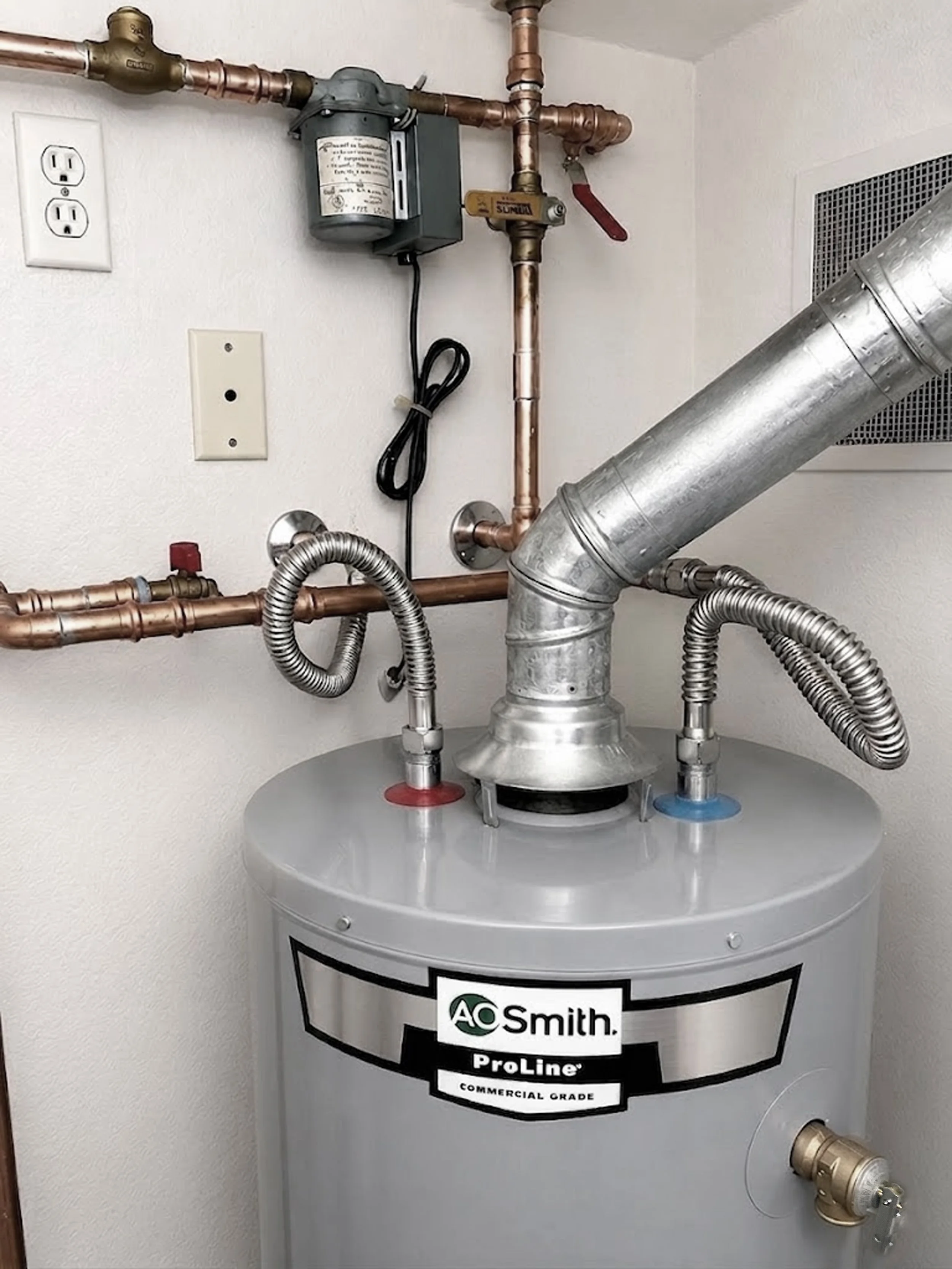
We have opened up water heater tanks in Chandler homes where the sediment layer at the bottom was a couple of inches thick. That layer sits between the burner and the water, and the heater has to work significantly harder and longer to heat through it. The unit runs more often, uses more gas or electricity, wears faster, and people wonder why their water heater died at nine years old when it was supposed to last twelve.
The mineral content in Chandler water typically runs between 200 and 350 milligrams per liter depending on the season and the source blend. Anything above 180 is classified as very hard. Most of the country is well below that mark. We are not.
Tankless water heaters have their own version of this issue. The heat exchanger inside, which is what actually heats the water, gets coated by mineral deposits the same way everything else does. We tell every customer who installs a tankless unit that annual descaling is not optional. It is not a suggestion. Skip it in Chandler water and you will get a fraction of the lifespan the unit is rated for. We have seen it enough times to say that with total confidence.
The homeowners we know who have had water softeners installed for five or more years almost never call us for the kinds of repairs that used to come up regularly. Their water heaters are hitting full lifespan. Their fixtures stay clear. The pipes are not slowly narrowing from scale buildup. A softener does not fix everything but it removes the thing that was quietly causing a lot of it.
There Are Roots in More Sewer Lines Than People Know
Chandler grew fast starting in the late 1980s and through the 1990s. A lot of those neighborhoods have been lived in for 30 or 35 years now. The trees and landscaping that went in when those homes were built have been in the ground the entire time, and the root systems have been spreading.
Sewer lines carry moisture and warmth. Roots follow both. They find pipe joints, which is where two sections of pipe connect and where the seal is never perfectly solid after decades underground. The root pushes through a tiny opening, finds what it is looking for inside the pipe, and starts growing toward it. This takes years. Nobody notices it while it is happening. By the time a homeowner calls us about a backup, the roots that caused it have been growing inside their line for maybe five or seven years.
What makes it frustrating is that snaking the line fixes the symptom without touching the cause. The snake punches through the blockage, water flows again, and three to six months later the same drain backs up. We hear this story regularly. Two snaking jobs, sometimes three, before someone thinks to put a camera in and see what is actually going on in there.
When we show people the camera footage and they see actual root growth inside their sewer line, it is usually the first time the whole pattern makes sense to them. The fix from there is hydrojetting to fully clear the line and pipe lining to seal the entry points against regrowth. It is more involved than a snake job but it actually resolves the problem rather than buying a few more months before the next call.
If you live in an established Chandler neighborhood with mature trees in the yard and you have had a main line backup more than once, there is a real chance roots are involved. A camera inspection is the only way to know for certain.
The Heat Here Does Things to Plumbing That Most Guides Never Cover
Almost everything written about protecting your home's plumbing is aimed at cold climates. Freeze protection. Insulating pipes. Draining outdoor lines before winter. None of that is our problem.
Our problem is the opposite end of the scale. When Chandler hits 110 degrees in late June and stays there for weeks, the pipes running through unconditioned spaces are dealing with serious heat stress. PVC expands when it heats up and contracts when it cools down. That movement happens every day through an Arizona summer, and it happens repeatedly over the life of the home.
Joints that were not installed with enough room to flex, or that were sealed with materials not quite rated for this temperature range, start to show wear. We find hairline cracks and weeping joints in homes that are only ten or twelve years old, not because the pipe material failed but because the joint has been moving back and forth through too many desert summers.
The outdoor plumbing takes the worst of it. A hose bibb on a west-facing exterior wall that gets full afternoon sun for six months a year is aging faster than anything inside the house. Irrigation manifolds, valve boxes, any supply connection in an unconditioned garage. These are the things we see failing most often when we get called out for an exterior leak, and most of the time the homeowner has no idea what caused it.
Before summer every year is a good time to take a walk around the outside of the house and look at the plumbing connections you can see. A bibb that is already slightly cracked or weeping at the fitting is a cheap repair in April. It is a worse situation when it lets go in August.
The Age of Your Home Matters More Than People Realize
A big stretch of Chandler housing was built between 1995 and about 2008. Those homes are now anywhere from 17 to nearly 30 years old. They do not look old. The kitchens and bathrooms have probably been updated. But the original plumbing components that were installed at build are still there behind the walls and under the sinks, aging quietly.
The main shut-off valve for the house is a good example. Most homeowners have never touched it. If that valve has not been turned off and back on in 25 years, there is a meaningful chance it will not close properly if you ever actually need it. We go out on water heater replacements and ask the homeowner to close the main, and sometimes it gets about halfway before it sticks. That is not a good thing to discover when water is already going somewhere it should not be.
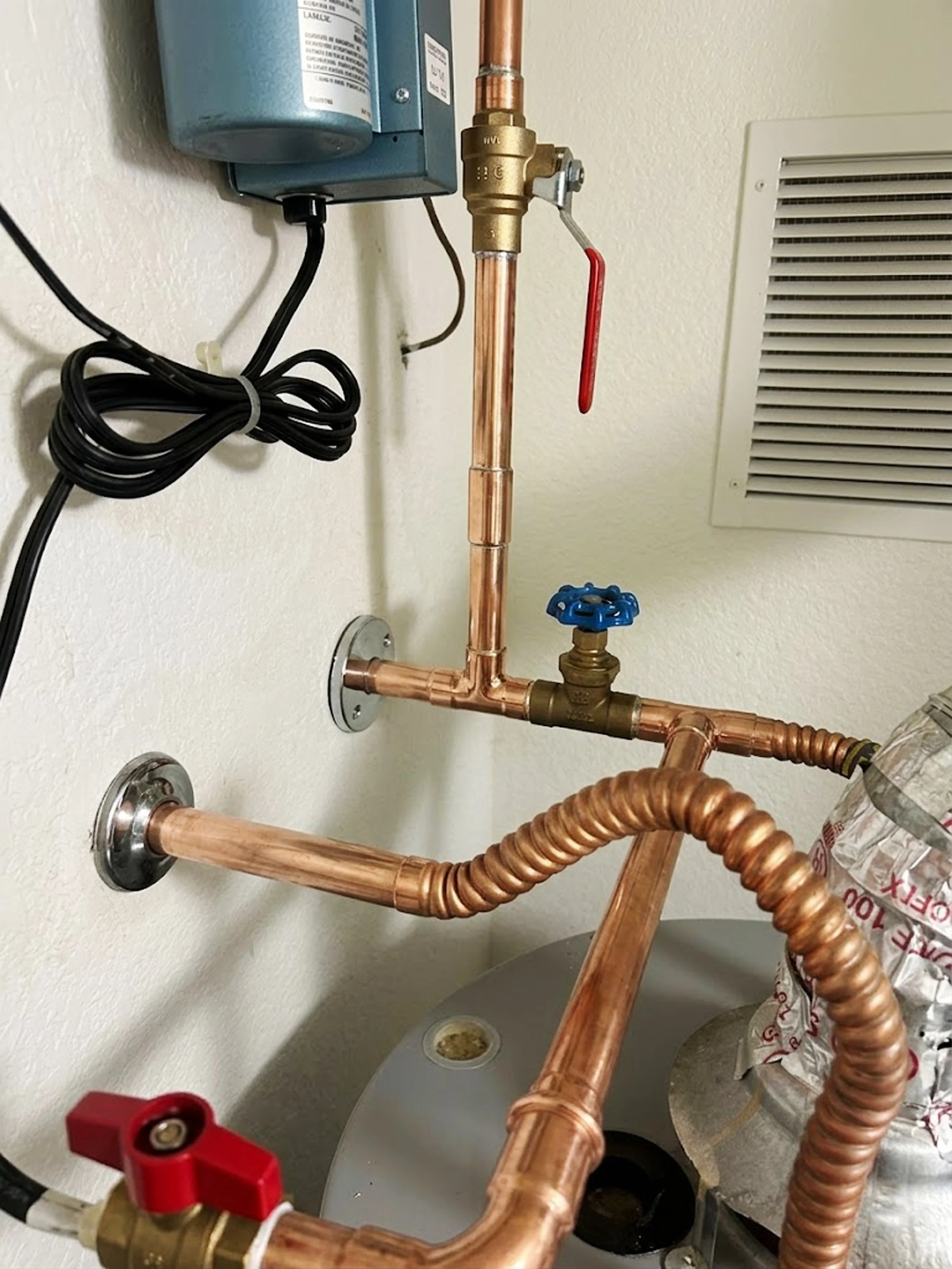
Pressure reducing valves are another one. They typically last ten to fifteen years and they fail without much warning. A failed PRV lets full street pressure into your home's plumbing, which can be 80 to 100 PSI or higher. Your fixtures and supply lines are rated for lower than that. We have gone out on calls where a toilet supply line had failed and caused significant water damage, and the underlying reason was a PRV that had been gone for a while without anyone knowing.
The braided supply lines under sinks and behind toilets also have a service life. The ones original to a 1999 build are 25 years old. We check these when we are under a sink for any reason and we flag the ones that look like they are approaching the end.
None of this is meant to alarm anyone. These things do not all fail at the same time and most of them give some kind of indication before they go completely. But in a home this age, having someone run through the plumbing once to see what the current situation is just makes sense.
One Thing We Would Tell Every Chandler Homeowner
Call before something is actively broken if you can. The repairs that end up being straightforward are almost always the ones where someone called when they first noticed something was off. The ones that turn into a bigger project are usually the ones where a slow drain was ignored for a year, or a small drip under the sink went unnoticed, or a water heater was showing signs for months before it finally gave out on a Sunday morning.We are in Chandler and this is what we do. Upfront pricing, honest assessment, no work starts until you know what it is and what it costs.
Call us at 480-869-6952 orreach out online.