
Comprehensive Home Plumbing Inspection Checklist for Maintenance
Essential Home Plumbing Inspection Checklist Guide
A good plumbing inspection is not just for emergencies or home purchases. It is a practical way to spot leaks, slow drains, weak water pressure, aging fixtures, and moisture problems before they become expensive repairs. This guide walks you through a clear home plumbing inspection checklist you can use room by room, plus simple plumbing maintenance habits that help keep your home running smoothly.
What should a home plumbing inspection checklist include?
A home plumbing inspection checklist should include every visible part of your water supply, drainage, fixtures, appliances, and exterior plumbing. The goal is to confirm that water flows where it should, drains away properly, and does not leave behind signs of leaks, corrosion, mold, unusual sounds, or hidden damage. A useful inspection checklist also helps you separate simple homeowner tasks from issues that should be handled by a licensed plumber.
At a minimum, your checklist should cover:
Water pressure and flow at sinks, showers, tubs, and outdoor spigots
Visible leaks under sinks, around toilets, near appliances, and along exposed pipes
Drain performance in kitchens, bathrooms, laundry areas, basements, and utility rooms
Water heater condition, including age, visible corrosion, leaks, and unusual noises
Toilet performance, such as running water, weak flushing, rocking, or water around the base
Fixture condition, including faucets, showerheads, supply lines, valves, and seals
Signs of moisture damage, including stains, warped flooring, musty smells, or soft drywall
Exterior plumbing, such as hose bibbs, irrigation connections, and visible drainage issues
Think of this process as preventive care. You are not trying to perform a full professional diagnostic exam. You are gathering clues, catching early warning signs, and creating a reliable record of what looks normal in your home.
Start with a whole-home visual scan
Before turning on faucets or checking drains, walk through your home slowly and look for evidence of moisture. Many plumbing problems leave subtle signs before they become obvious leaks. A stain beneath a sink, a soft spot near a toilet, or a faint musty odor can be the first indication that something needs attention.
Begin in areas where plumbing is concentrated: bathrooms, kitchens, laundry rooms, basements, crawl spaces, utility closets, and garages. Use a flashlight to inspect dark cabinets and corners. If you see water marks, peeling paint, swollen trim, bubbling flooring, or rust-colored stains, add them to your inspection checklist and monitor whether they change over time.
Pay attention to smell as well as sight. A persistent sewer-like odor may point to a dry trap, venting issue, or drain problem. A damp, earthy smell may suggest a slow leak or poor ventilation. Odors alone do not identify the exact cause, but they are worth investigating.
Quick visual scan checklist
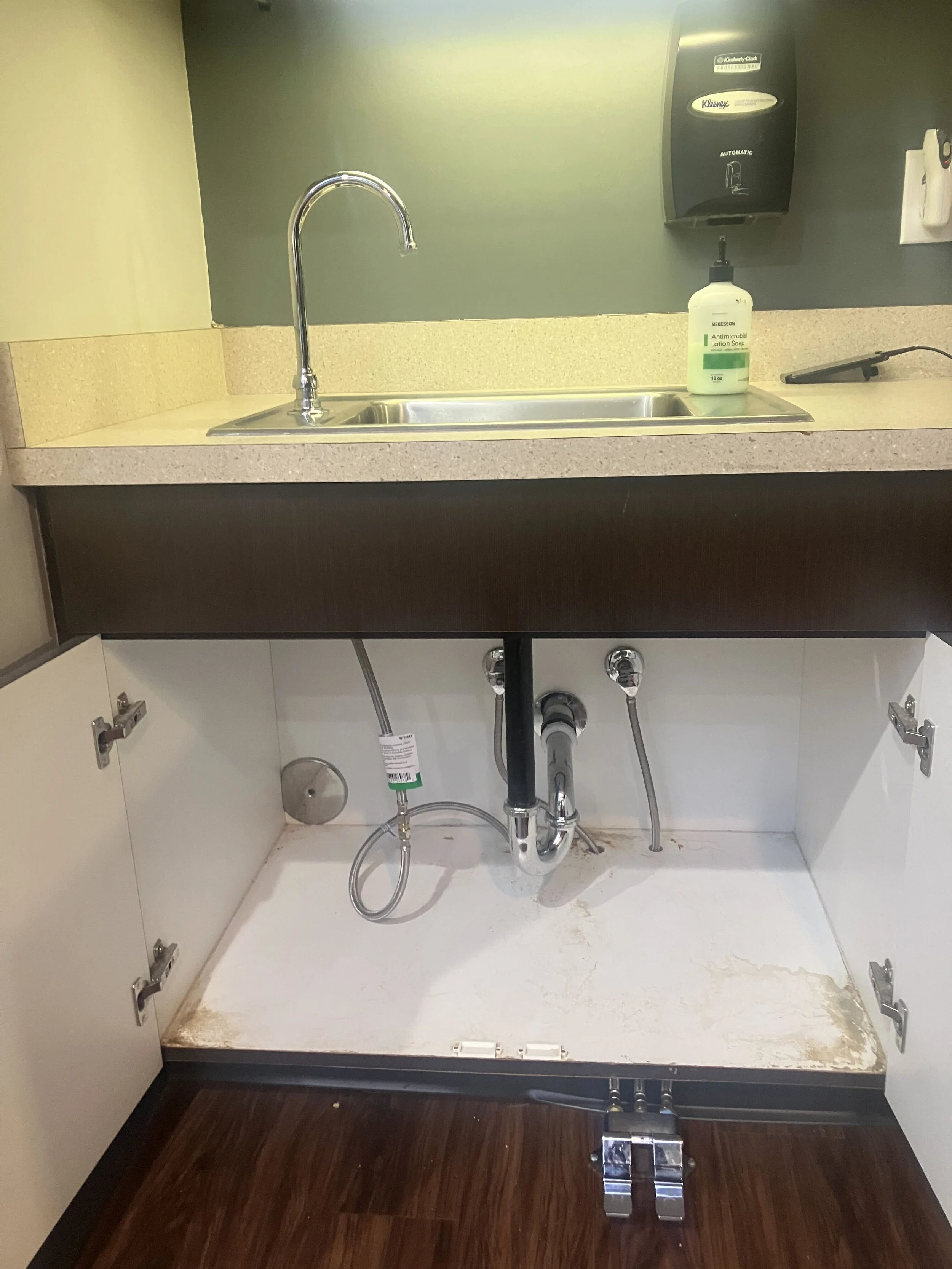
Use this first pass to create a simple baseline:
Look under every sink for drips, stains, or damp cabinet floors.
Check ceilings below bathrooms and laundry areas for discoloration.
Inspect walls behind toilets, tubs, and washing machines for softness or stains.
Look around baseboards for swelling, gaps, or peeling paint.
Note any musty smells in cabinets, closets, basements, or crawl spaces.
Check exposed pipes for rust, greenish staining, condensation, or mineral buildup.
Look for standing water around appliances, drains, or floor penetrations.
If something looks suspicious, take a photo and date it. A simple photo record can help you see whether a stain is old and stable or actively spreading.
Check faucets, sinks, and supply lines
Faucets and sinks are some of the easiest plumbing components to inspect because they are used daily and usually accessible. Start by turning each faucet on and off. Water should flow steadily, stop fully when shut off, and drain without backing up into the basin.
Look closely at the base of each faucet. Moisture around the fixture may come from splashing, but it can also signal a failing gasket or loose connection. Under the sink, inspect the hot and cold supply lines, shutoff valves, drain trap, and cabinet floor. Run the faucet for a minute while watching the pipes below. Some slow leaks only appear when water is actively flowing.
Also test the shutoff valves if they are accessible and not visibly damaged. A valve that will not turn, leaks when moved, or feels frozen may not help you during an emergency. Do not force a stuck valve. If it does not move with gentle pressure, note it for service.
Signs a sink area needs attention
A sink may need repair or closer inspection if you notice:
Drips from the faucet after it is turned off
Water collecting around the faucet base
Dampness, staining, or mold inside the cabinet
A loose faucet, drain, or supply line
A slow drain that returns soon after cleaning
A shutoff valve that leaks or does not turn
Gurgling sounds after water drains
Mineral buildup around the aerator or spout
Small sink issues are easy to ignore because the fixture may still function. However, a tiny leak inside a cabinet can damage wood, flooring, and nearby walls over time. Make sink checks a regular part of your plumbing maintenance routine.
Inspect toilets for leaks, movement, and running water
Toilets deserve careful attention because leaks can be hidden and waste significant water. Start by listening. A toilet that runs after flushing, refills randomly, or makes hissing sounds may have a worn flapper, fill valve issue, or water level problem.
Next, look around the base of the toilet. Water on the floor may come from condensation, poor aim, cleaning, or a failing wax ring. If the flooring feels soft, stained, or uneven, the issue may have been present for a while. Gently try to rock the toilet from side to side. It should feel stable. A rocking toilet can break the seal at the floor and allow leaks to develop.
Check the tank as well. Remove the lid carefully and look for water level problems, corroded parts, or makeshift repairs. The flush should be clean and consistent. Weak flushing, frequent clogs, or water rising too high in the bowl can point to drain or venting concerns.
A simple dye test can help identify a hidden tank-to-bowl leak. Place a few drops of food coloring in the tank, wait without flushing, and see whether color appears in the bowl. If it does, internal parts may need adjustment or replacement.
Test showers, tubs, and bathroom drains
Showers and tubs combine water supply, drainage, caulking, tile, and ventilation, so they should be inspected from several angles. Turn on the shower and tub faucet, then watch the flow. Weak pressure, uneven spray, sudden temperature changes, or noisy pipes may indicate mineral buildup, valve issues, or broader pressure concerns.
While the water is running, watch how quickly it drains. Standing water around your feet during a short shower often points to hair, soap buildup, or a deeper drain restriction. If multiple fixtures drain slowly at the same time, the issue may be beyond a single drain.
Inspect caulk and grout around tubs, shower pans, and tile walls. Cracked caulk can allow water to slip behind surfaces. Missing grout, loose tiles, or soft walls may suggest moisture damage. Also look at the ceiling or room below an upstairs bathroom for stains, especially after the shower has been used.
Ventilation matters too. A bathroom that stays damp long after use can encourage mold and mildew. While ventilation is not a pipe issue, it affects the condition of surrounding materials and can make small plumbing leaks harder to identify.
Examine the kitchen plumbing carefully
Kitchen plumbing often works harder than any other area in the home. It may include a sink, garbage disposal, dishwasher, refrigerator water line, filtration system, and multiple shutoff valves. Because food particles, grease, and frequent use all pass through this space, a focused inspection is worthwhile.
Start at the sink. Run hot and cold water, check under the cabinet, and watch the drain trap while water flows. If you have a garbage disposal, listen for unusual grinding, humming, or vibration. Never place your hand inside a disposal. If it smells bad, drains slowly, or trips repeatedly, it may need cleaning, repair, or replacement.
If your dishwasher is nearby, inspect the area around it after a wash cycle if possible. Look for water at the toe kick, under the sink where the drain hose connects, and around the supply line. For refrigerators with water dispensers or ice makers, check behind and beneath the appliance when accessible. A small supply line leak can go unnoticed because it is often hidden.
Avoid treating the kitchen sink like a catch-all. Grease, coffee grounds, fibrous scraps, and starchy foods can contribute to clogs. Good habits are an important part of plumbing maintenance, especially in kitchens.
Review laundry room and appliance connections
Laundry rooms can create sudden plumbing problems because washing machines use pressurized supply hoses and discharge large amounts of water quickly. Inspect the hot and cold hoses behind the washing machine for bulges, cracks, corrosion, or dampness at the fittings. If hoses are kinked or tightly stretched, they may be under stress.
Watch the washing machine drain during a cycle if you can do so safely. Water should discharge without backing up, overflowing, or producing sewer odors. If the drain pipe gurgles or the standpipe overflows, there may be a blockage or venting problem.
Also inspect the floor around the appliance. Staining, warped flooring, or a musty smell can signal past leaks. If the laundry area is upstairs or near finished spaces, a drain pan and accessible shutoff valves can reduce damage during an unexpected leak.
Other appliances deserve the same attention. Check water softeners, humidifiers, boilers, utility sinks, and any equipment connected to a water line. Look for drips, salt bridging, corrosion, clogged discharge tubing, or unexplained moisture nearby.
Water heater inspection basics
Your water heater is one of the most important components in a plumbing inspection. Whether it is tank-style or tankless, it should be checked for leaks, corrosion, unusual sounds, and reliable hot water delivery. If you are not comfortable around gas, electricity, pressure relief valves, or combustion equipment, limit your inspection to visible signs and call a qualified professional for service.
For a tank-style water heater, look around the base for water, rust, or mineral deposits. Check visible connections at the top and sides. Listen for rumbling, popping, or banging sounds, which can be associated with sediment buildup or heating issues. Also note whether hot water runs out faster than expected or takes unusually long to reach fixtures.
For a tankless unit, inspect visible pipes, valves, vents, and the surrounding wall or floor. Error codes, fluctuating temperatures, or reduced flow may indicate a service need. Tankless systems often require periodic descaling depending on water quality and manufacturer guidance.
Do not ignore the temperature and pressure relief valve area on a tank water heater. If you see active dripping from the discharge pipe, moisture around the valve, or signs of past discharge, have it evaluated. This valve is a safety component, not just another fitting.
Look for drain and sewer warning signs
Drain issues can start small and become disruptive quickly. A single slow sink might be a local clog, but several slow drains can indicate a larger problem. During your inspection, test drains throughout the home and pay attention to sound, smell, speed, and backup patterns.
Run water in sinks, tubs, and showers long enough to see whether drainage slows. Flush toilets while nearby fixtures are draining and listen for gurgling. If water appears in a tub or shower when a toilet flushes, or if a floor drain backs up, stop using the affected plumbing and seek professional help.
Sewer odors should also be taken seriously. Sometimes the cause is simple, such as a dry trap in an unused drain. Pouring water into the drain may restore the trap seal. However, persistent odors can point to venting problems, cracked pipes, or sewer line issues.
Drain concerns to document
Add these items to your inspection checklist if you notice them:
More than one slow drain in the home
Gurgling sounds from toilets, tubs, or sinks
Water backing up into a lower fixture
Sewage smells that return after cleaning
Frequent clogs in the same location
Floor drain backups during laundry or heavy water use
Wet spots or unusually green patches in the yard near sewer or drain lines
Documenting patterns helps a plumber diagnose the issue more efficiently. Instead of saying “the drains are slow,” you can explain which fixtures are affected and when the problem happens.
How often should you perform plumbing maintenance?
Most homeowners benefit from a basic plumbing inspection at least once or twice a year, with quick checks after severe weather, long trips, freezing temperatures, renovations, or any unexplained change in water performance. Plumbing maintenance should also happen whenever you notice new sounds, odors, stains, pressure changes, or repeated clogs. The best schedule is one you will actually follow, so pair it with seasonal home tasks such as changing HVAC filters or testing smoke alarms.
A seasonal approach works well because different parts of your plumbing face different risks throughout the year. Cold weather may stress outdoor hose bibbs and exposed pipes. Warm weather can reveal irrigation leaks, yard drainage problems, or increased water use. Heavy rain may expose sump pump issues or basement drainage concerns.
Simple seasonal plumbing maintenance plan
Use this plan as a practical rhythm:
Spring: Check outdoor spigots, irrigation connections, hose bibbs, and basement moisture after winter.
Summer: Watch for high water use, running toilets, slow drains, and appliance leaks during heavier household activity.
Fall: Disconnect hoses, inspect exposed pipes, and prepare vulnerable areas before freezing weather.
Winter: Monitor for frozen pipe risks, low pressure, unusual sounds, and leaks near exterior walls.
You do not need to complete a full inspection every month. Short, consistent checks are often more useful than waiting until a major problem appears.
Inspect exterior plumbing and drainage
Outdoor plumbing is easy to overlook until a hose bibb leaks, a sprinkler line breaks, or water starts pooling near the foundation. Walk around the outside of your home and inspect every visible water connection. Turn on hose bibbs briefly and check for leaks at the handle, wall penetration, and hose connection.
Look at how water drains around the property. Plumbing and drainage are not always the same system, but they affect each other. Poor grading, clogged downspouts, or standing water near the foundation can create moisture issues that are mistaken for plumbing leaks. If you have a sump pump discharge line, make sure water is directed away from the home.
If your home has irrigation, inspect sprinkler heads, valves, and visible lines. Broken sprinkler heads or underground leaks may show up as soggy patches, unusually green areas, or water running along sidewalks. These problems can waste water and damage landscaping or hardscaping.
Exterior checks are especially important after freezing weather. A damaged outdoor spigot may not leak until it is used again, and the water may show up inside the wall rather than outside.
Know when to call a professional plumber
A homeowner checklist is valuable, but it has limits. Some problems require tools, training, code knowledge, and diagnostic equipment. Calling a professional is the safer choice when the issue involves hidden leaks, sewer backups, water heater safety components, main water lines, gas-connected equipment, or repeated failures.
You should also call for help if you cannot identify the source of a leak. Water can travel along pipes, framing, and flooring before it appears. The visible stain may be far from the actual problem. Guessing can lead to unnecessary repairs while the real leak continues.
Situations that deserve professional attention
Contact a qualified plumber if you notice:
Active leaking that does not stop after shutting off a fixture valve
Sewage backing up into tubs, showers, toilets, or floor drains
Water stains that spread or return after drying
A water heater leak, discharge, error code, or persistent noise
Repeated clogs despite careful use and cleaning
Sudden whole-home pressure loss
Pipes that appear severely corroded, cracked, or damaged
A toilet or fixture that leaks into flooring or walls
Any plumbing issue you are not comfortable inspecting safely
Professional service is not only about repairs. A plumber can confirm whether a concern is minor, identify hidden risks, and help prioritize work so you do not spend money on the wrong fix.
Keep records and build your own inspection checklist
The best home plumbing inspection checklist is the one tailored to your actual home. A house with three bathrooms, a basement, a sump pump, and irrigation needs a different list than a condo with one bathroom and shared exterior systems. Start with a general inspection checklist, then customize it as you learn where your home is most vulnerable.
Create a simple document or note on your phone with sections for each room. Include the date, what you checked, what looked normal, and what needs follow-up. Add photos of valves, water heater labels, appliance connections, and previous problem areas. If you ever need a plumber, this record can make the conversation clearer.
It is also useful to know where your main water shutoff valve is located. Everyone in the household who is old enough to respond in an emergency should know how to shut off the water. In a serious leak, quick action can limit damage while you wait for help.
Printable-style homeowner checklist
Use this condensed list as a starting point:
Confirm the location and operation of the main water shutoff.
Check every sink faucet, drain, supply line, and shutoff valve.
Inspect toilets for running water, leaks, rocking, and weak flushing.
Test tubs and showers for drainage, pressure, caulk condition, and stains below.
Review kitchen sink, disposal, dishwasher, and refrigerator water line areas.
Inspect washing machine hoses, laundry drain, and nearby flooring.
Look at the water heater for leaks, corrosion, noises, and hot water issues.
Test floor drains, basement plumbing, sump pump areas, and utility sinks.
Walk the exterior to check hose bibbs, irrigation, drainage, and wet spots.
Record anything unusual with notes and photos.
Schedule professional help for safety concerns, recurring issues, or hidden leaks.
This checklist is not a substitute for a professional inspection, especially during a home purchase or major renovation. It is a practical homeowner tool for staying aware and acting early.
Small habits that prevent bigger plumbing problems
Good plumbing maintenance is often about everyday behavior. Avoid flushing wipes, paper towels, cotton products, grease, or anything not intended for toilets and drains. Use strainers in bathroom and kitchen drains to catch hair and food particles. Clean faucet aerators and showerheads when flow begins to weaken.
Be mindful of what goes into the garbage disposal. Run cold water while using it, feed waste gradually, and avoid fibrous, greasy, or hard materials that can clog or damage the system. If a drain begins to slow, address it early instead of relying repeatedly on harsh chemical cleaners, which may not solve the underlying issue and can be rough on some plumbing materials.
Finally, respond quickly to small changes. A faucet that drips, a toilet that runs, or a cabinet that smells musty may seem minor, but these are often the first warnings your home gives you. The earlier you investigate, the more options you usually have.
Final takeaway
A thorough home plumbing inspection checklist helps you protect your home by turning vague concerns into clear observations. When you know what to inspect, where to look, and which warning signs matter, plumbing maintenance becomes less stressful and more routine. Walk through your home seasonally, keep notes, and call a professional when a problem is active, recurring, hidden, or outside your comfort level.
