
Benefits of Rheem Electric Tankless Water Heaters
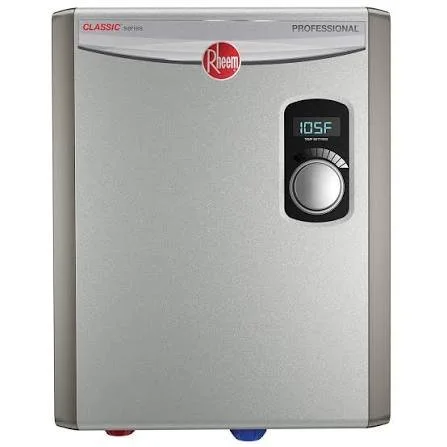
Rheem electric tankless water heaters heat water on demand without keeping a storage tank hot. Their main benefits include a compact footprint, continuous hot water within the unit’s capacity, and less energy wasted maintaining stored water. For homeowners weighing a replacement or addition, the key is matching those advantages to household demand and electrical capacity. (rheem.com)
How does a Rheem electric tankless water heater work?
A Rheem electric tankless water heater uses electric heating elements to warm water as it flows through the unit. Rather than drawing from a stored supply, it heats incoming water when a hot-water fixture is running. That means there is no tank to empty, although the heater can only deliver a limited amount of hot water at once. (files.myrheem.com)
Think about the difference between back-to-back showers and simultaneous showers. A properly sized tankless water heater can support successive showers without waiting for a storage tank to recover. Running several showers and appliances together, however, may exceed its heating capacity. The benefit is continuous delivery at a suitable flow rate—not unlimited hot water throughout the house. (www1.eere.energy.gov)
For your comparison, focus on the busiest part of your day. Write down which fixtures overlap rather than choosing a heater solely by the number of bedrooms or people in your home.
Less energy spent keeping water hot
A storage water heater loses some heat while hot water sits in its tank. Tankless equipment avoids that storage-related standby loss because it heats water as needed. This is the central efficiency advantage over a conventional storage electric water heater, rather than a promise that every household will see dramatic savings. (www1.eere.energy.gov)
Some Rheem models also use self-modulating technology, which adjusts electrical power to match hot-water demand. Instead of treating every use as a maximum-output job, the heater regulates its input as conditions change. Check the specifications of the particular model you are considering, since controls and capabilities vary. (files.myrheem.com)
If your goal is an energy-efficient heater, keep the comparison broad. Heat pump water heaters move heat rather than generating it directly and can use substantially less electricity than conventional electric-resistance equipment. Tankless offers a different combination of space savings and on-demand operation; it is not automatically the lowest-energy choice for home water heating. (bsesc.energy.gov)
More usable space and flexible placement
Rheem’s compact, wall-mounted electric tankless units avoid the footprint of a bulky storage tank. Electric models also do not need combustion venting, giving installers more placement flexibility than equipment that must exhaust combustion gases. That can be useful where floor space is tight or a renovation makes the existing heater location inconvenient. (rheem.com)
Placement still needs planning. Rheem’s installation instructions call for an appropriate indoor location, protection from freezing, and access for servicing. Before imagining extra shelving or reclaimed storage, have the installer confirm the unit’s required clearances and a practical maintenance route. (files.myrheem.com)
Hot water closer to the fixture
You do not necessarily need to replace your whole-house system to benefit from tankless technology. A suitably sized point-of-use electric unit can serve a specific fixture or area, bringing the heat source closer to where water is used. Shorter delivery distances can reduce the wait associated with long pipe runs. (rheem.com)
Consider these applications when discussing your options:
A remote bathroom: Ask whether local heating could address a long wait for hot water.
A utility sink or wet bar: Compare a dedicated unit with extending the existing hot-water supply.
An addition: Evaluate local heating alongside the capacity and layout of your current system.
Rheem identifies point-of-use applications including bathrooms, sinks, and additions, but each still needs its own sizing and installation assessment. A small sink heater should not be assumed capable of serving a shower. (rheem.com)
Will it handle your household’s hot-water needs?
A Rheem electric tankless unit can meet household demand when its output matches the required flow rate and temperature rise. Temperature rise means the difference between incoming water temperature and the desired outlet temperature. Colder incoming water requires more heating, so the same unit cannot necessarily support the same flow in every climate or season. (files.myrheem.com)
Use this checklist before selecting a model:
List simultaneous uses. Include showers, faucets, and appliances likely to run together.
Check fixture flow rates. Ask the installer to calculate demand from your actual fixtures.
Account for cold incoming water. Compare performance at your expected temperature rise, not just an advertised maximum flow.
Confirm electrical capacity. Have a qualified electrician assess the heater alongside the home’s other electrical loads.
These checks reflect the main limits of tankless performance: flow, incoming temperature, heating power, and available electrical service. Rheem warns that converting from an electric tank may require service-panel upgrades. (www1.eere.energy.gov)
Installation and upkeep belong in the decision
Water heater installation involves more than finding wall space. Rheem recommends qualified electrical installation and confirmation that the home can support the equipment’s maximum load. Ask for an itemized proposal covering the heater, plumbing work, electrical work, and any necessary upgrades before comparing purchase prices. (files.myrheem.com)
Plan for maintenance, too. Rheem’s care instructions address connection inspections and hard-water conditions, including treatment or flushing where needed to manage scale. Ask the installer what your water quality means for upkeep, and follow the manual for the exact unit rather than assuming tankless means maintenance-free. (files.myrheem.com)
A practical upgrade when the fit is right
Rheem electric tankless water heaters offer useful advantages, especially when compact placement and on-demand delivery solve a specific household problem. Their value depends on correct sizing, suitable electrical infrastructure, and sensible installation planning. (rheem.com) Start with your everyday routine, get a complete installation estimate, and compare alternatives before deciding. The best choice is the one that fits your home—not simply the smallest box.
