
How trenchless pipe repair can reduce excavation around your property
Trenchless pipe repair can restore or replace a damaged sewer line without digging a continuous trench along its entire route. Depending on the pipe’s condition and available access, this approach can leave more landscaping, paving, and other surfaces undisturbed, although some excavation may still be necessary. For Arizona property owners, Umbrella Plumbing offers pipe lining and video inspection services that can help identify a less disruptive repair option.
How does trenchless pipe repair reduce excavation?
Trenchless pipe repair reduces excavation by using the existing pipe’s route to install a liner or replacement pipe through limited access points. Instead of exposing the full damaged section from above, crews work through suitable existing openings or smaller excavated pits. The practical benefit is a smaller surface work area and less property restoration afterward.
Traditional dig-and-replace work requires access along the section being replaced. If that route crosses a driveway or landscaped yard, excavation can mean removing surface materials before reaching the pipe, then rebuilding those areas after installation. Trenchless methods can avoid much of that continuous disturbance by keeping the repair work underground.
The important distinction is less digging, not guaranteed zero digging. Ask the contractor to identify every anticipated access opening before approving work, rather than relying on a general “no-dig” description.
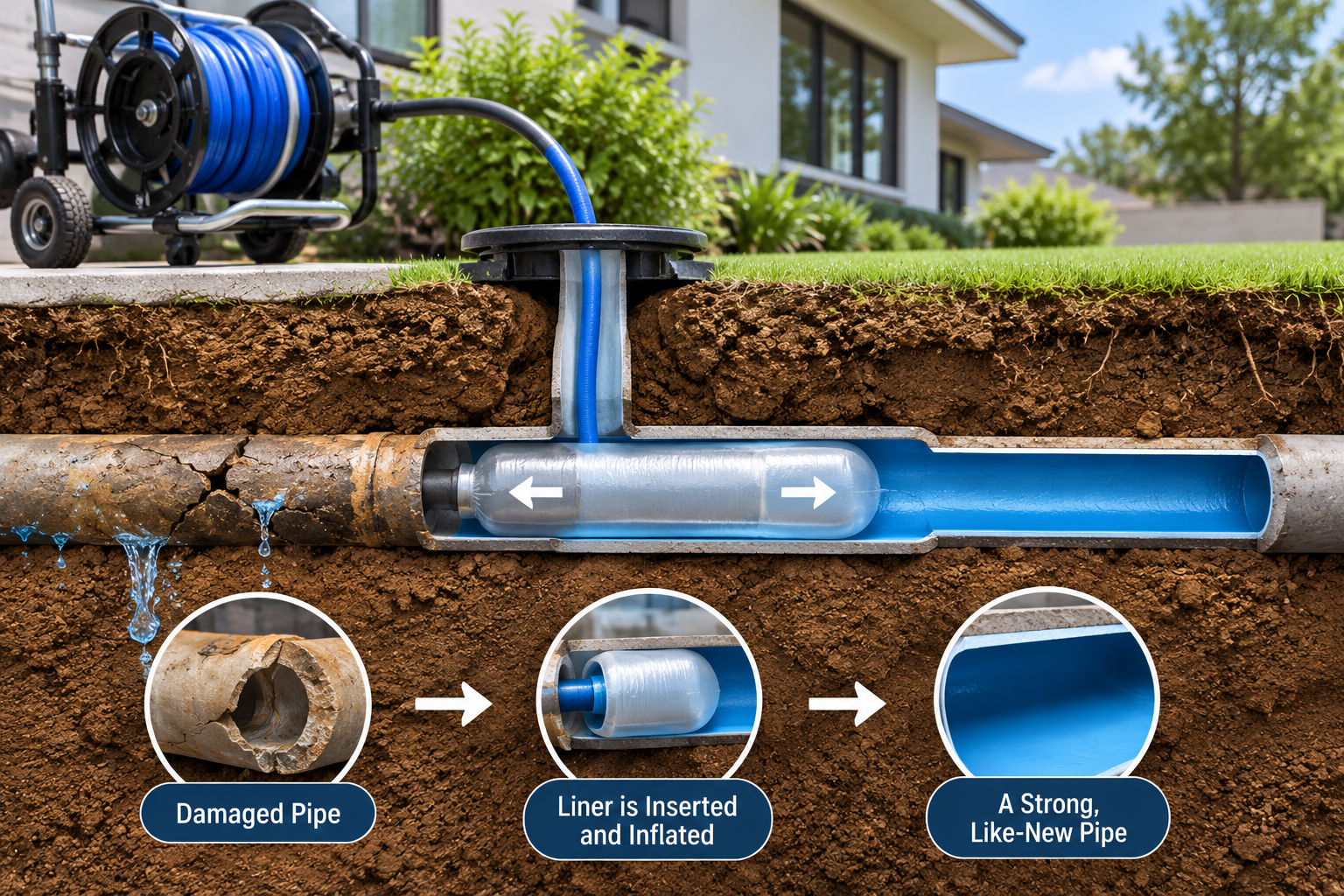
Pipe lining and pipe bursting work differently
Trenchless is a category of repair and replacement methods, not one procedure. Two approaches you may encounter are cured-in-place pipe lining and pipe bursting. Both reduce the need for a continuous trench, but they address the existing pipe differently.
Pipe lining creates a new interior pipe
With cured-in-place pipe lining, technicians place a resin-saturated liner inside the existing pipe, expand it against the interior, and cure it until it hardens. Depending on the system, curing can use heat or light. The result is a renewed interior pipe without excavating the entire run.
Lining can be appropriate for pipes with cracks, fractures, or holes that have generally retained their shape. It is not simply a coating poured into an unprepared drain; the condition of the host pipe and the installation process matter.
Pipe bursting replaces the existing line
Pipe bursting pulls a tool through the existing line, breaking the old pipe outward while drawing a new pipe into place behind it. This approach generally uses insertion and receiving pits rather than a trench running the full length of the replacement. Connections may also require excavation.
Ask which method your sewer repair proposal includes and why. A recommendation should explain whether the goal is to rehabilitate the existing pipe or replace it, along with the access requirements for that specific method.
Less excavation means less property to restore
The value of trenchless work extends beyond moving less soil. Reducing surface disturbance can also reduce the restoration required after the pipe work is complete. The EPA identifies less disruption and reduced restoration as benefits of trenchless sewer rehabilitation compared with traditional excavation.
When discussing your property, identify the surfaces and features you most want to protect:
Driveways and walkways: Ask whether access points can stay outside paved areas and what patching would remain necessary.
Landscaped areas: Point out established plants, decorative gravel, edging, and irrigation components along the suspected pipe route.
Patios and outdoor living spaces: Request a clear explanation of equipment placement and access, not just the underground repair location.
Daily access routes: Discuss how people, vehicles, and pets will move safely around the work area.
For example, if a sewer line runs beneath a finished patio, ask the plumber to compare a lining plan with an excavation plan. Request a simple sketch showing access openings, equipment areas, and any surfaces each approach would disturb.
When is trenchless sewer repair a suitable choice?
Trenchless sewer repair is suitable when the pipe’s condition, configuration, and access allow the selected method to resolve the actual defect. Lining is generally appropriate for damaged pipes that retain their shape, while pipe bursting can replace some lines that are too deteriorated for rehabilitation. Neither option should be selected solely because it promises less digging.
A camera inspection helps reveal internal damage and blockages so the repair recommendation can respond to what is actually present. Ask to review the findings with your plumber rather than making a decision from symptoms alone.
Pay particular attention to these limitations:
Collapsed or severely distorted sections: Ask whether the pipe remains suitable for lining or needs excavation or replacement first.
Slope problems: Do not assume lining will correct the pipe’s slope. Trenchless rehabilitation generally follows the existing line and grade.
Difficult configurations: Tight bends, diameter changes, access restrictions, and nearby infrastructure can affect method selection.
Site conditions and the defects being repaired determine what is practical. A limited excavation combined with trenchless work may be more appropriate than either lining everything or replacing everything through an open trench.
What to expect before and during the work
For a lining project, preparation can include removing roots and debris, managing wastewater flow, installing and curing the liner, reopening affected connections, and inspecting the completed work. The details depend on the selected system and the pipe being repaired.
Use this sequence to organize your discussion with local plumbers:
Review the diagnosis. Ask where the defect begins and ends, what the inspection shows, and why cleaning alone would or would not solve it.
Confirm the preparation. Request an explanation of cleaning, access creation, and any localized repair needed before installation.
Understand household restrictions. Ask exactly when toilets, showers, sinks, laundry equipment, and dishwashers must remain unused.
Agree on completion checks. Ask how the finished repair will be inspected and what records you will receive.
Clarify restoration. Confirm who closes access openings, replaces disturbed materials, and handles final cleanup.
Water and sewer use may need to be restricted during lining. Follow the project-specific instructions and wait for the crew’s confirmation before resuming normal use; less excavation does not mean uninterrupted plumbing service.
Compare the complete project, not just the pipe repair
Trenchless work should be evaluated alongside conventional excavation using the same repair objective and scope. The EPA recommends considering site constraints, system characteristics, project goals, and economic feasibility when selecting rehabilitation methods. Less surface disturbance is valuable, but it does not establish the best option by itself.
Request written estimates that separate diagnosis, preparation, installation, access work, and restoration. Avoid comparing a lining proposal that includes cleaning and inspection with an excavation quote that leaves paving or landscaping repairs to you. Ask each contractor to identify exclusions so you can compare the full job.
Useful questions include:
What pipe length and defects does this proposal cover?
Where will digging or concrete removal still be required?
What discovery could change the method or scope?
How will additional work be authorized?
What written warranty terms and maintenance instructions apply?
Treat broad claims such as “always cheaper,” “finished immediately,” or “no digging under any circumstances” as reasons to request specifics. Ask for a property-specific explanation before signing, and keep the agreed scope with your inspection records.
Professional Plumbing Support for a Well-Maintained Property
Umbrella Plumbing offers video plumbing inspections and trenchless pipe lining in Arizona. Its inspection service examines pipe interiors to help identify damage and blockages, supporting a repair recommendation without unnecessary exploratory digging. The company also uses video inspection to verify repairs and document pipe condition.
For suitable pipes, Umbrella Plumbing advertises the LightRay LR3 LED UV lining system, which repairs the pipe internally using light-cured lining technology. This provides an option to discuss when your priority is addressing pipe damage while limiting disruption to floors, yards, or other finished surfaces. Suitability and remaining access work still need to be established for your property.
When contacting Umbrella Plumbing, describe the problem and identify any driveway, patio, or landscaping above the suspected line. Ask the team to explain the inspection findings, lining suitability, necessary excavation, and restoration responsibilities before you approve the repair.
Start with the pipe condition, then choose the method
The best starting point is a clear diagnosis, not a commitment to either digging or lining. Request an inspection from Umbrella Plumbing and ask for a property-specific comparison of available approaches. Choose the plan that addresses the defect, explains its limitations, and makes the remaining disruption clear.
