
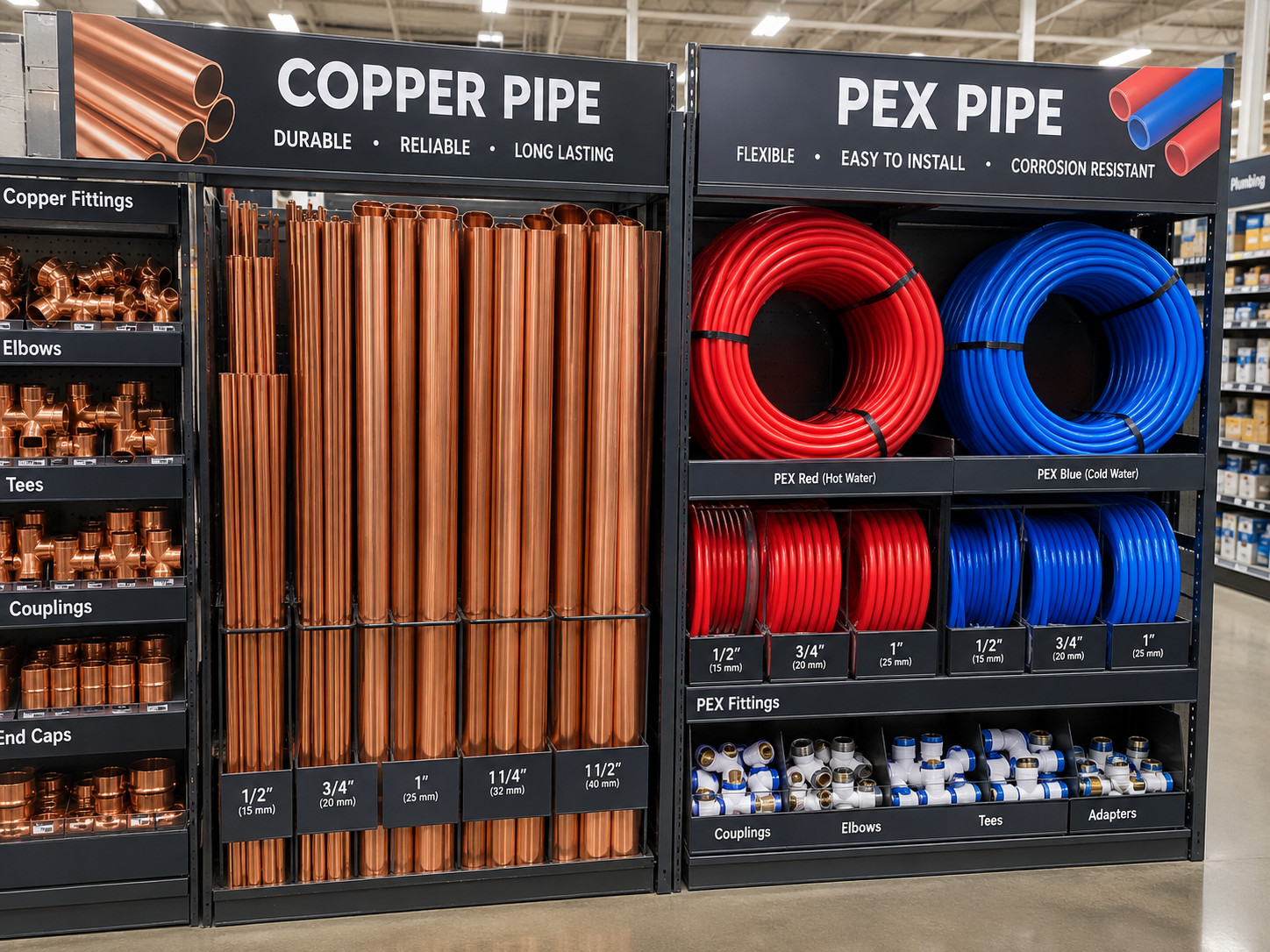
Copper and PEX are both options for commercial water distribution, but neither is automatically the better choice. PEX offers flexible routing and potential installation savings, while copper requires careful attention to water chemistry, flow velocity, and joining methods. The right decision starts with your building’s operating conditions—not a blanket preference for metal or plastic.
Which is better for your commercial building: copper or PEX?
PEX is worth considering where flexible routing and installation efficiency matter; copper deserves consideration where the project specifications and operating conditions favor a copper system. Either choice needs verification against local requirements, design temperatures, pressures, and installation instructions. A material approved for one application is not automatically suitable for every location or service within the building.
Start by defining the scope. This comparison concerns domestic hot- and cold-water distribution, not a universal replacement strategy for drainage, process piping, or fire protection. Ask the design team to evaluate each service separately rather than extending one material choice across the entire property.
For an initial discussion, bring these project details:
Building use: Identify offices, guest rooms, kitchens, or other areas with different demand patterns.
Operating conditions: Document expected pressures, temperatures, and hot-water recirculation schedules.
Installation constraints: Note occupied spaces, access limitations, and proposed pipe routes.
Maintenance expectations: Explain how staff will isolate, inspect, and repair the system.
Installation differences that affect the project
PEX pipes can bend around obstacles and reduce the number of directional fittings needed. That flexibility can simplify routing through constrained spaces and create opportunities for faster pipe installation. Those advantages depend on the layout: a straightforward open route presents different labor demands from a renovation with limited access.
Copper systems offer several joining approaches. Soldering and brazing use heat, but press-connect fittings provide a flameless alternative when appropriate for the application. Comparing PEX only with soldered copper overlooks an important option, particularly when planning work in an occupied building.
Do not treat flexible tubing as permission for improvised installation. PEX still needs manufacturer-specified supports and provisions for thermal movement. Have bidders explain their support approach, connection system, and installation sequence rather than quoting tubing and labor alone.
Durability depends on the whole system
Copper pipes can provide long service when correctly designed and installed, but they are not immune to corrosion. Aggressive water chemistry, excessive velocity, turbulence, and workmanship problems can contribute to failures. If an existing copper system has recurring leaks, investigate the cause before specifying an identical replacement.
PEX avoids the metal-corrosion mechanism affecting copper, but its operating limits still matter. For hot-water service, evaluate the selected product’s chlorine-resistance classification and its suitability for the intended recirculation schedule. Do not assume that every PEX product carries the same approval for continuous hot-water exposure.
Construction exposure also deserves attention. PEX is not intended for unprotected aboveground outdoor use, and permissible sunlight exposure during storage or construction depends on manufacturer guidance. Include delivery, storage, and protection practices in the installation plan—not just the finished routing.
These differences make universal lifespan promises unhelpful. Ask suppliers to explain the conditions behind their recommendations, and request product documentation for the actual system being proposed.
What should you check for hot-water recirculation?
Check the complete operating profile: water temperature, disinfectant exposure, circulation duration, flow velocity, and the ratings of the selected tubing and fittings. PEX chlorine-resistance classifications distinguish between different hot-water exposure conditions, while copper guidance connects erosion-corrosion risk with velocity, temperature, and turbulence. Neither material makes an oversized pump or unsuitable operating conditions harmless.
For a building with recirculation, request a written design review rather than accepting “suitable for hot water” as sufficient. Have the designer confirm that normal operation and planned disinfection procedures remain within the selected system’s requirements. Record the intended settings so maintenance staff can evaluate future changes against the original design.
Compare installed value, not just pipe prices
PEX can offer installation savings through easier handling and fewer directional fittings. However, that does not establish a fixed percentage saving for your project. Copper press-connect systems also change the labor comparison by eliminating heat-based joining at those connections.
Request bids against the same scope so a cheaper proposal does not quietly exclude essential work. Use this comparison checklist:
Design basis: Require the same fixture demands and performance expectations in both proposals.
Complete materials: Include fittings, valves, supports, insulation, and specified protective details.
Access and restoration: Identify responsibility for opening and repairing walls or ceilings.
Testing and handover: Specify required inspections, testing records, and system documentation.
Future repairs: Ask which tools, fittings, and replacement components maintenance staff will need.
Keep material preference separate from commercial clarity. A detailed proposal makes trade-offs visible; a single lump-sum price makes them harder to judge.
Confirm approvals before committing
PEX appears in model plumbing codes, but local jurisdictions can impose additional requirements. Fire-rated penetrations and plenum installations also require attention to applicable assemblies and restrictions. Confirm the proposed product and installation details with the authority having jurisdiction before purchasing materials.
Hydraulic design deserves the same scrutiny. Evaluate actual tubing dimensions and fitting pressure losses rather than assuming nominally equivalent products perform identically. The design should establish required flow and available pressure before the final material schedule is approved.
The practical takeaway
The copper vs. PEX pipes decision should follow the building’s requirements, not precede them. Compare documented suitability, complete installed scope, and maintenance needs with your plumbing designer and contractor. Choose the system they can justify for your operating conditions—and support with clear installation and handover documentation.
