
How Tree Roots Invade Underground Plumbing (And Solutions to Prevent Whole-Property Backups)
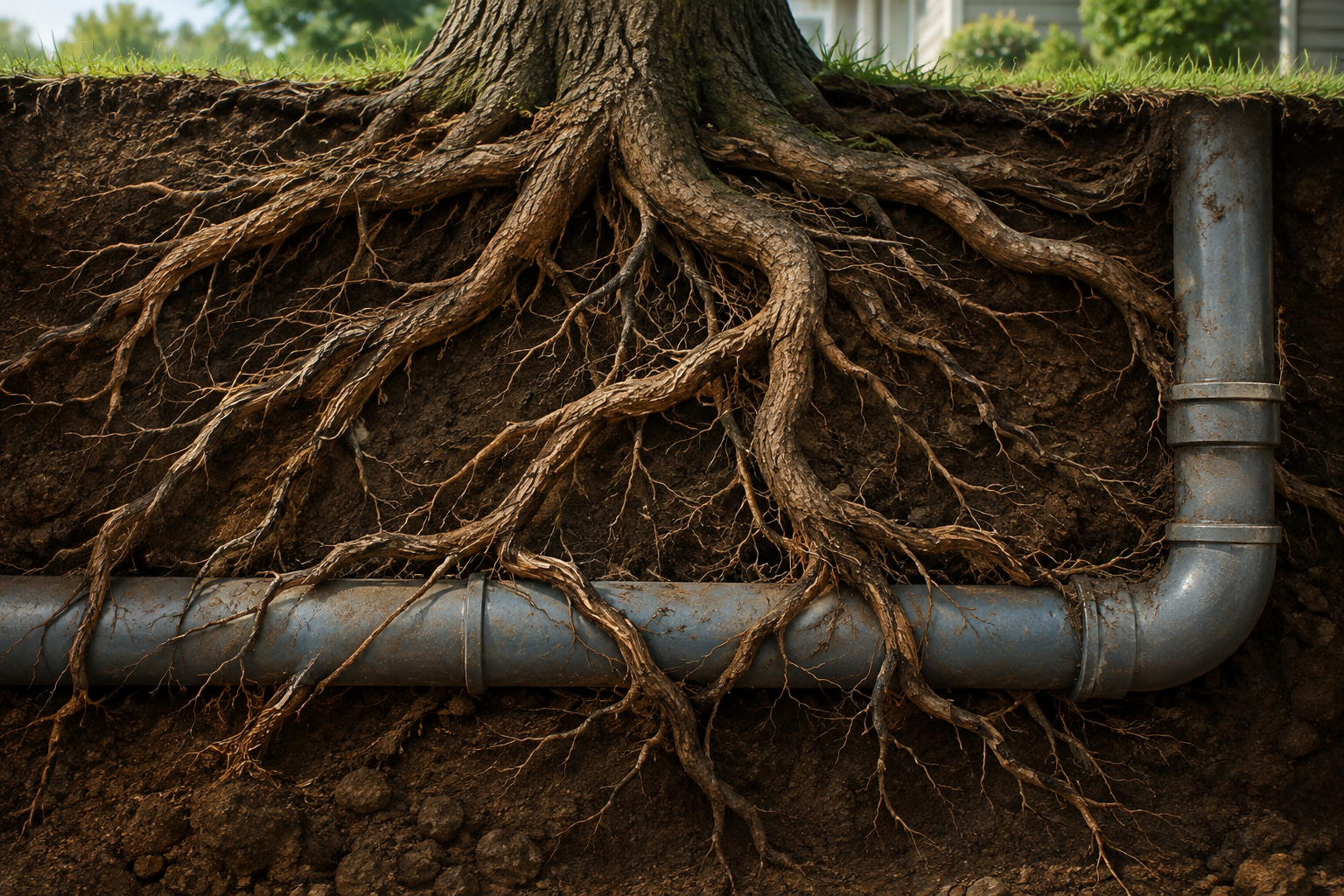
Tree roots enter underground sewer pipes through cracks, loose joints, and other openings, then grow into blockages that restrict wastewater flow. When that blockage sits in a shared main line, the consequences can reach well beyond one bathroom. Understanding the warning signs, removal options, and lasting repairs helps property owners address roots in pipes before sewage backs up indoors.
How do tree roots get into underground plumbing?
Tree roots typically exploit existing weaknesses rather than punch through sound sewer pipes. Moisture and nutrients encourage small roots to enter cracks or poorly sealed connections. Once inside, those roots grow larger, widen openings, and interfere with drainage.
That distinction matters: removing the roots does not necessarily fix the opening that let them in. A line may drain normally after cleaning but remain vulnerable to regrowth. Recurring tree roots plumbing issues deserve an inspection and a repair discussion, not simply another round of clearing the same blockage.
A main-line blockage can affect the whole property
A property's main sewer line collects wastewater from connected fixtures and carries it toward the public sewer or another disposal system. If roots obstruct that shared route, wastewater cannot leave normally. It can back up through connected drains and fixtures instead.
In a duplex, apartment building, or property with several connected buildings, that means a blockage can affect multiple units or sections—not just the room nearest the tree. Depending on the plumbing layout, sewage may overflow into several bathrooms, laundry areas, or lower-level spaces. Root intrusion can therefore become a whole-property backup and multi-unit flooding emergency, although which areas flood depends on the connections and elevations. This follows from how shared sewer connections carry wastewater and how blocked lines overflow.
During an active backup, take these steps:
Stop water use: Pause showers, laundry, dishwashing, and toilet flushing throughout the affected property.
Notify residents or management: Explain that continued water use can feed the overflow.
Keep people and pets away: Avoid contact with sewage and arrange professional cleanup when needed.
Call for help: Contact a plumber and notify the sewer utility if a public-line problem is suspected.
When should you call a professional plumber?
Call a professional when drains repeatedly slow down, sewer odors develop, or wastewater backs up. These symptoms can indicate sewer trouble, but they do not prove roots are responsible. A plumber can investigate the obstruction rather than treat every recurring clog as the same problem. Active sewage overflow warrants urgent attention.
Before the visit, note which fixtures are affected, whether neighboring units have problems, and when the symptoms occur. Share previous inspection reports and cleaning records, if available. Ask the plumber to explain both the immediate clearing plan and what evidence would justify a longer-term repair.
Practical solutions for roots in sewer pipes
The right approach separates three tasks: identifying the problem, restoring flow, and addressing the damaged pipe. Cleaning and repair serve different purposes, so ask which result each recommendation is intended to achieve.
Camera inspection: A sewer camera lets the plumber look inside the line to identify roots, damaged connections, and other obstructions. Ask to review the footage and have the problem location documented. If the blockage prevents a useful view, some clearing may be needed before the inspection can be completed.
Hydro jetting: This cleaning method uses pressurized water to remove obstructions and flush debris through the line. It can help restore flow, but the plumber should first assess whether the pipe's condition makes it a suitable choice. Jetting does not seal cracks or stop roots from returning through damaged openings.
Mechanical cutting: Specialized cutting equipment trims roots inside the pipe to reopen the drainage path. It addresses the obstruction, not the surrounding tree or the defective connection. Ask whether follow-up cleaning and camera inspection are needed to evaluate the remaining damage.
Trenchless repair or lining: For suitable pipes, lining creates a new interior surface within the existing line, sealing entry points without digging up its entire length. Suitability depends on the damage and pipe condition. Have the contractor explain which sections and connections the proposed repair will address.
Pipe replacement: Treat replacement as the last-resort option when severe damage or collapse makes cleaning or lining inadequate. Depending on the findings, the work may involve a damaged section rather than every underground pipe. Request a clearly defined scope before approving excavation.
Prevention starts with the pipe and the landscape
Landscaping choices can reduce risk, but they cannot repair an already leaking sewer. Combine planting decisions with attention to pipe condition rather than assuming tree removal alone will solve recurring tree root problems.
Consider root barriers: Properly planned underground barriers can redirect growth away from vulnerable areas. Discuss placement with a qualified tree professional; installation involves digging near roots and utilities.
Plan landscaping around utilities: Locate the sewer before planting. Choose trees and shrubs with lower root-damage potential, and leave room for future sewer access.
Set a maintenance schedule: Ask the plumber to recommend inspection and cleaning intervals based on documented pipe condition and past root growth. Keep footage and service records so future decisions reflect changes, not guesswork.
Make the next step a lasting one
Clearing roots restores drainage; repairing their entry points addresses the reason they returned. Keep those goals separate when comparing proposals. Contact Umbrella Plumbing—“the trusted name everyone calls”—to discuss your symptoms and ask about inspection, clearing, and repair options.
