
How Hydrojetting Improves Restaurant Drainage Systems
Hydrojetting uses pressurized water to remove grease, sludge, and other deposits from inside drainpipes, helping restaurant wastewater flow more freely. It can address accumulated buildup, but it does not replace grease management or repair damaged plumbing. Understanding where it fits helps restaurant owners make better drain cleaning decisions instead of repeatedly treating the same blockage.
How does hydrojetting improve restaurant drainage?
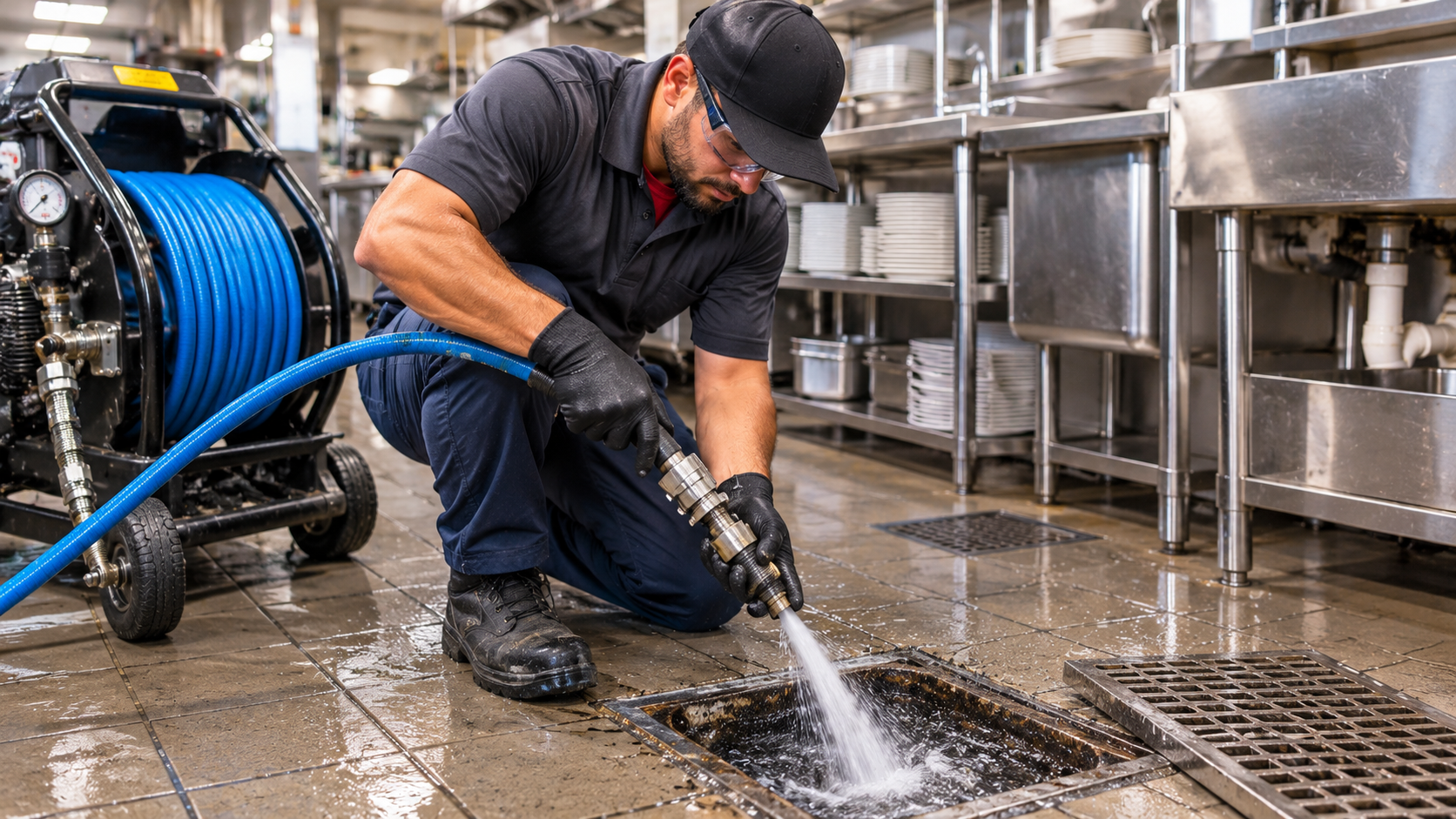
Hydrojetting improves restaurant drainage by breaking up deposits and washing residue from pipe interiors. A specialized nozzle directs water through the line, while rear-facing jets help move the hose and flush loosened material away. This combination of pressure and flow makes water jetting useful for grease and sludge blockages.
The distinction is between getting water through a blockage and cleaning the affected pipe. Jetting equipment is designed to scrub the line as the hose is retrieved, addressing deposits along the cleaning path rather than only the immediate obstruction. That makes it worth discussing when grease buildup is the diagnosed problem—not simply because a drain runs slowly.
For restaurant managers, the practical objective is straightforward: restore usable drainage and understand what caused the restriction. Ask the technician to explain which line needs cleaning, what material is blocking it, and how the result will be checked. A recommendation should connect the proposed work to an identified problem.
Why restaurant drains need more than occasional attention
Restaurant wastewater can contain fats, oils, and grease from meat, dairy products, sauces, and dishwashing residue. These materials can accumulate in kitchen drains and sewer lines, eventually slowing drainage or causing a backup. The issue is not limited to fryer oil; everyday food preparation and cleanup also contribute.
That is why commercial plumbing maintenance should address both deposits already in the pipes and the practices allowing more material to enter. Cleaning a line without improving grease handling leaves the source of the problem untouched. Grease interceptors, proper waste disposal, and routine maintenance work together to reduce what reaches the sewer.
Before booking another cleaning, gather information that helps the plumber investigate:
Affected fixtures: Record whether the problem involves one sink, several fixtures, or a floor drain.
Timing: Note when drainage changes, including whether it happens during dishwashing or cleanup.
Previous work: Share cleaning reports, available camera footage, and any known pipe repairs.
Grease maintenance: Have interceptor inspection and service records ready for review.
This gives the conversation a starting point. Instead of asking only for a drain to be cleared, you can ask why that particular problem keeps returning.
When is hydrojetting the right choice?
Hydrojetting is a potential choice when inspection indicates grease, sludge, or other removable deposits in a pipe suitable for the equipment. It is not automatically appropriate for every slow drain, every pipe material, or every blockage. The decision should follow an assessment of the line rather than a blanket recommendation.
Pipe condition matters. RIDGID’s operating guidance identifies camera inspection as a way to assess a drain before cleaning and warns that improper use can damage the drain. Industry guidance also notes that cleaning methods must account for different pipe materials and lined sections.
For a restaurant owner, this means asking for an explanation before approving the work. What evidence points to grease buildup? Can the technician inspect the relevant section? Are there known defects or access limitations? If visibility is restricted, ask what remains uncertain and how that affects the proposed approach.
Be cautious about promises that hydrojetting will solve every recurring problem. A cleaning tool cannot substitute for identifying structural defects, and the equipment manufacturer explicitly notes that jetting may not clear all blockages.
What a well-planned service visit should cover
A useful service discussion goes beyond equipment pressure. Ask how the technician will assess the drain, choose suitable equipment, protect the work area, and verify the outcome. Equipment selection and safe operation should follow the manufacturer’s instructions, with operators trained for the work.
Use this checklist when discussing the scope:
Assessment and access: Identify the affected line, available cleanouts, and any known pipe conditions before deciding on the cleaning approach.
Inspection limitations: Establish whether a camera can examine the pipe and what the technician cannot confirm before cleaning.
Equipment selection: Ask how the nozzle, hose, pressure, and flow suit the pipe and the material being removed.
Work-area controls: Agree on access restrictions and precautions around staff, equipment, and drain contents.
Completion checks: Request an explanation of what was cleaned, how drainage was checked, and whether further investigation is recommended.
These questions reflect the importance of inspection, equipment compatibility, and controlled operation in manufacturer and industry guidance. They also help you compare proposals on scope rather than on a single headline price.
Hydrojetting should not become a kitchen staff task. High-pressure water can cause serious injury, and drain contents can expose workers to chemicals and infectious material. Leave equipment operation to trained personnel and keep employees outside the designated work area.
Hydrojetting and grease interceptor maintenance do different jobs
Hydrojetting cleans drain lines; a grease interceptor captures fats, oils, and grease before they travel farther into the sewer system. The interceptor needs regular maintenance to continue separating and retaining that material. Cleaning connected pipes does not remove the need to service the interceptor itself.
Keep the two tasks distinct in your maintenance plan. An interceptor service record should document that device’s maintenance, while a drain cleaning report should identify the lines addressed. When discussing a proposal, ask which task is included rather than assuming that “grease cleaning” covers both.
Local requirements also matter. EPA guidance explains that interceptor performance depends on appropriate design, installation, and maintenance, while sewer authorities may impose their own grease-control requirements. Check with the relevant local authority rather than treating a general maintenance recommendation as proof of compliance.
Be wary of additives marketed as an easy substitute. An EPA-hosted brochure cautions that some products claiming to dissolve grease merely move it downstream, where it can cause another blockage. The goal is proper capture and disposal—not shifting the problem elsewhere.
How can restaurants keep drains clearer after cleaning?
Restaurants can help keep drains clearer by reducing the grease and food solids entering them, maintaining grease-control equipment, and reviewing service findings. Hydrojetting for restaurant plumbing—preventing and solving drainage problems—works best as one part of that broader maintenance approach. Cleaning addresses existing deposits; kitchen practices address the continuing source.
Build these habits into opening, service, and closing routines:
Scrape and dry-wipe first: Remove food residue and visible grease from cookware and dishes before washing.
Use drain screens: Capture food scraps and dispose of them through the appropriate waste stream.
Collect waste oil separately: Use suitable covered containers instead of pouring cooking oil into sinks or floor drains.
Maintain the interceptor: Arrange inspections and cleaning suited to the equipment, grease load, and local requirements.
Keep records accessible: Retain maintenance reports so managers can review what was done and when.
Municipal guidance recommends these source-control and maintenance practices to help prevent grease-related sewer problems.
Avoid choosing a fixed hydro jetting interval without discussing the restaurant’s actual conditions. Ask the plumber what findings justify a return visit and what changes would prompt an earlier assessment. Separately, follow applicable interceptor maintenance requirements; EPA guidance notes that servicing needs depend substantially on grease generation and management practices.
Choose a plan, not another temporary response
When considering Umbrella Plumbing or another commercial plumbing provider, request a clear diagnosis, a defined cleaning scope, and practical follow-up recommendations. Ask for those details in writing so whoever manages the next shift or service visit has the same information. A provider earns a reputation as “the trusted name everyone calls” through accountable work, not a slogan alone.
The takeaway is simple: hydro jetting restaurant plumbing can address grease and sludge deposits, but lasting drainage management also requires source control and maintained grease equipment. Start with an assessment, use cleaning where appropriate, and make the findings part of the restaurant’s maintenance plan.
