How Do You Know When It Is Time to Replace a Toilet or Fixture Instead of Fixing It Again?
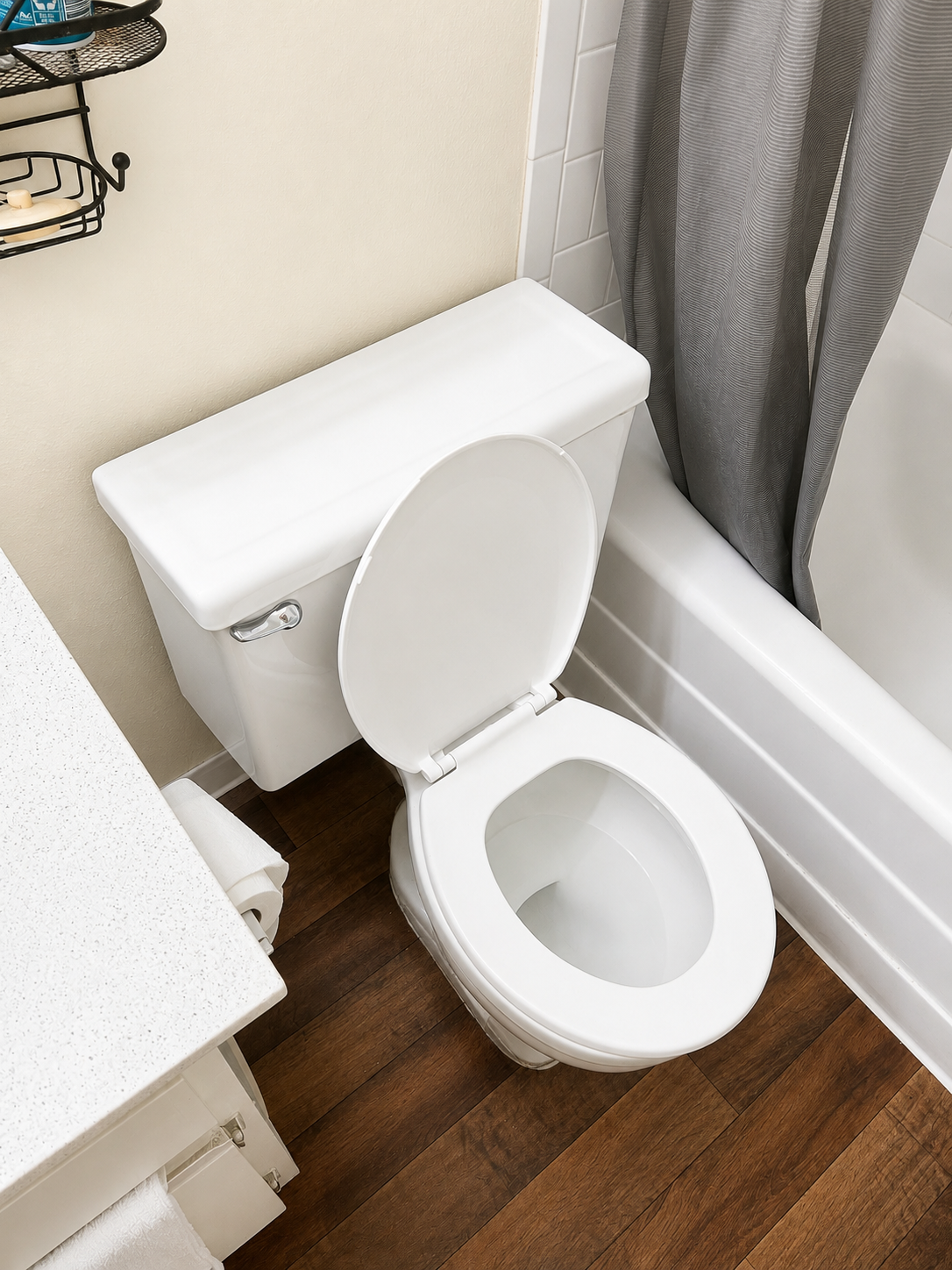
A customer called us last spring about a toilet that had been running. We had actually been out to that same house two years earlier for the same toilet. New flapper that time. This time the fill valve. She asked us point blank whether she should just replace the whole thing.
That question comes up more than you would think. People patch things, and patch them again, and at some point the patching stops feeling like the right answer but nobody has told them what the right answer is. We have an opinion on this and it is worth sharing because the repair versus replace conversation is one we have almost every week.
The Toilet Situation
With toilets specifically, the tipping point is usually the third repair. By then the homeowner has typically replaced the flapper, the fill valve, and maybe the handle assembly, and the toilet is still the original unit from whenever the house was built. The parts that get replaced are cheap. The labor adds up. And none of it addresses the fact that an older toilet uses three to five gallons per flush when a current model uses 1.28.
That efficiency gap is real in Chandler. Water bills here are not trivial, and the difference between what an old toilet uses and what a new one uses shows up on the bill within the first month. We have had homeowners call after a toilet swap just to mention that their bill dropped, unprompted. It happens often enough that we bring it up now when someone is on the fence.
Something people do not always associate with the toilet is the flange underneath it. The flange is what connects the toilet to the drain pipe in the floor, and when it cracks or deteriorates, you cannot fix it by swapping internal parts. A bad flange means the seal fails no matter how many times you replace the wax ring. It is not a DIY repair either. Getting to the flange means pulling the toilet, assessing the floor drain connection, and making sure the repair is properly sealed and set before anything goes back together. Trying to patch around a failing flange is one of those fixes that looks like it worked until it very clearly did not.
The other toilet issue that needs faster action than people give it is any movement at the base. A toilet that rocks even slightly when you sit on it has a failed wax seal. Where it goes from there depends on how long it has been happening. Catch it early and it is a pull and reseat. Let it go for a year and we sometimes find subfloor damage that turns a simple job into something much larger.
One habit we have when we pull a toilet for any reason: we check the shut-off valve behind it. In a lot of Chandler homes from the 1990s and 2000s, that valve has never been turned in 20 or 25 years. A valve that has not moved in that long may not fully close when you actually need it. We replace those while we are already there. It costs almost nothing extra at that point and it means you have a shut-off that works rather than one that just looks like it should.
Faucets Are a Bit Different
A dripping faucet is usually a cartridge. That repair makes sense in most cases, and most faucets have replaceable parts available if they are a recognizable brand.
Where it gets complicated is age and water quality. In Chandler, the mineral content in the water is hard on internal components and finish alike. A faucet that might last 20 years somewhere else can look and feel well past its prime after 10 or 12 years here. The finish pits. The body corrodes around the base. Replacement cartridges for older models become hard to source or stop being made entirely.
We went out on a kitchen faucet call not long ago where the homeowner wanted the drip fixed. When we looked at it, the body had corrosion at the base and the finish was flaking. The cartridge repair would have cost most of what a new faucet costs and would not have fixed the condition of the fixture itself. We told her that. She replaced it and was glad she did.
There is also the remodel situation. A lot of people replace faucets because the kitchen or bathroom is being refreshed and the old fixture looks dated. That is a completely valid reason. We always check the supply lines and angle stops when we do a faucet swap. A new faucet sitting on top of a 20-year-old braided supply line is a job half finished.
Shower Valves: The Hidden Leak Nobody Sees Coming
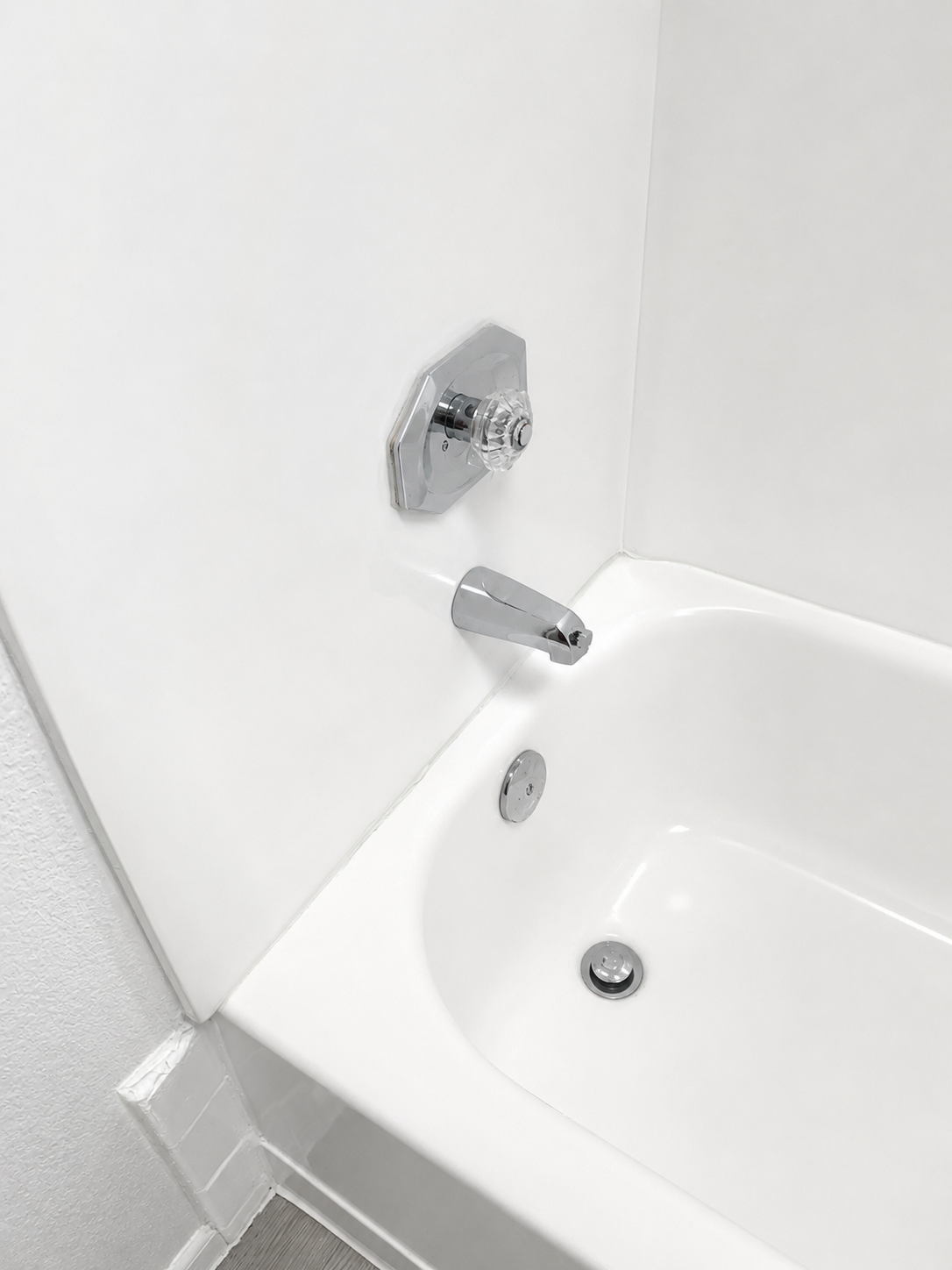
This is a mix-up we see pretty often. Someone replaces a showerhead because the pressure is weak or the spray pattern is uneven, and then wonders why things still feel off. The showerhead is the part you can reach. The valve is inside the wall and it is what actually controls the water.
If the shower runs cold too fast, or the temperature is hard to hold steady, or hot and cold seem to be mixing when they should not, that is a valve issue. What happens with an aging shower valve is that the cartridge inside starts to fail, and when it does, it does not always announce itself dramatically. Sometimes water gets past the cartridge and starts going somewhere inside the wall instead of out the showerhead. That leak can run for months without anyone knowing.
By the time someone notices dampness behind the wall, or the drywall starts to bubble, or there is a soft spot near the shower, the water has typically been sitting in there for a while. Mold follows moisture. So does wood rot. A failing shower valve that goes unaddressed long enough stops being a plumbing repair and becomes a wall repair on top of it.
Sometimes a cartridge replacement is enough. But if the cartridge was already replaced and the leak continued, or if the valve body itself is corroded or cracked, the whole valve assembly needs to go. This is not a situation where trying another cartridge first is the right call if symptoms persist. The damage that builds up in the meantime is not worth the gamble.
Getting to a shower valve means opening the wall. That is why most people put it off, and also why a bathroom renovation is the obvious time to address an aging one. If the wall is already getting touched, there is no reason to tile over a valve that is going to need attention in two years.
Disposals Get Ignored Until They Fail and Then They Take the Dishwasher With Them
Garbage disposals run daily and nobody thinks about them until something goes wrong. A disposal that hums but does not spin has a jammed plate. A disposal that trips the reset button repeatedly has a motor that is starting to go. A disposal that leaks from the bottom is done entirely, the seals inside the motor housing cannot be repaired.
What a lot of homeowners do not realize is that the disposal and the dishwasher share a drain connection. The dishwasher drains into the disposal. When a disposal starts backing up or fails, it affects the dishwasher too. Standing water in the dishwasher after a cycle, water not draining fully, a dishwasher that suddenly smells bad, these can all trace back to the disposal. Replacing a disposal that has been limping along also tends to fix dishwasher drainage issues that the homeowner did not even connect to the disposal.
The typical lifespan is somewhere between 8 and 15 years. We tell people doing any kitchen work that if the disposal is over 10 years old, replacing it while we are already under the sink makes sense. Coming back for the disposal later means pulling everything out again.
Why Getting a Technician Involved Matters More Than It Might Seem
We get called out on fixture problems that turn out to be installation problems from work someone else did. A toilet leaking at the base even though the wax ring is new. A faucet with poor flow because the supply lines were kinked. A disposal vibrating because the mounting ring was not tightened properly.
These are not fixture failures. They are installation errors, and they are common when the work was done by a homeowner or a handyman who does it occasionally rather than every day.
Beyond installation quality, there is also the second-consequence problem. When we go out on a fixture call, we are not just looking at the fixture. We are looking at everything around it. A corroded angle stop that needs to go. A supply line that should not stay connected to a new faucet. Evidence of moisture where there should not be any. A homeowner replacing a showerhead on their own has no way of knowing whether there is a slow leak at the valve behind the wall. We see it because we know where to look.
The repairs that get caught early are always the cheaper ones. The ones that turn into bigger projects almost always had a warning sign that went unnoticed. Having someone with experience do the work means those second consequences get found at the same time instead of six months later when the situation is worse.
If You Have Been Patching Something More Than Twice, It Is Worth a Conversation
We are not trying to talk anyone into an unnecessary replacement. But we have seen enough repeat repairs to know that some things have a natural end point, and recognizing that earlier rather than later saves people money and frustration.
Call us at 480-869-6952 or reach out online. We are at 434 N. San Marcos Place in Chandler and we will give you a straight answer on whether repair or replacement makes more sense for your situation.