
Understanding Corrosion in Metal Water Pipes
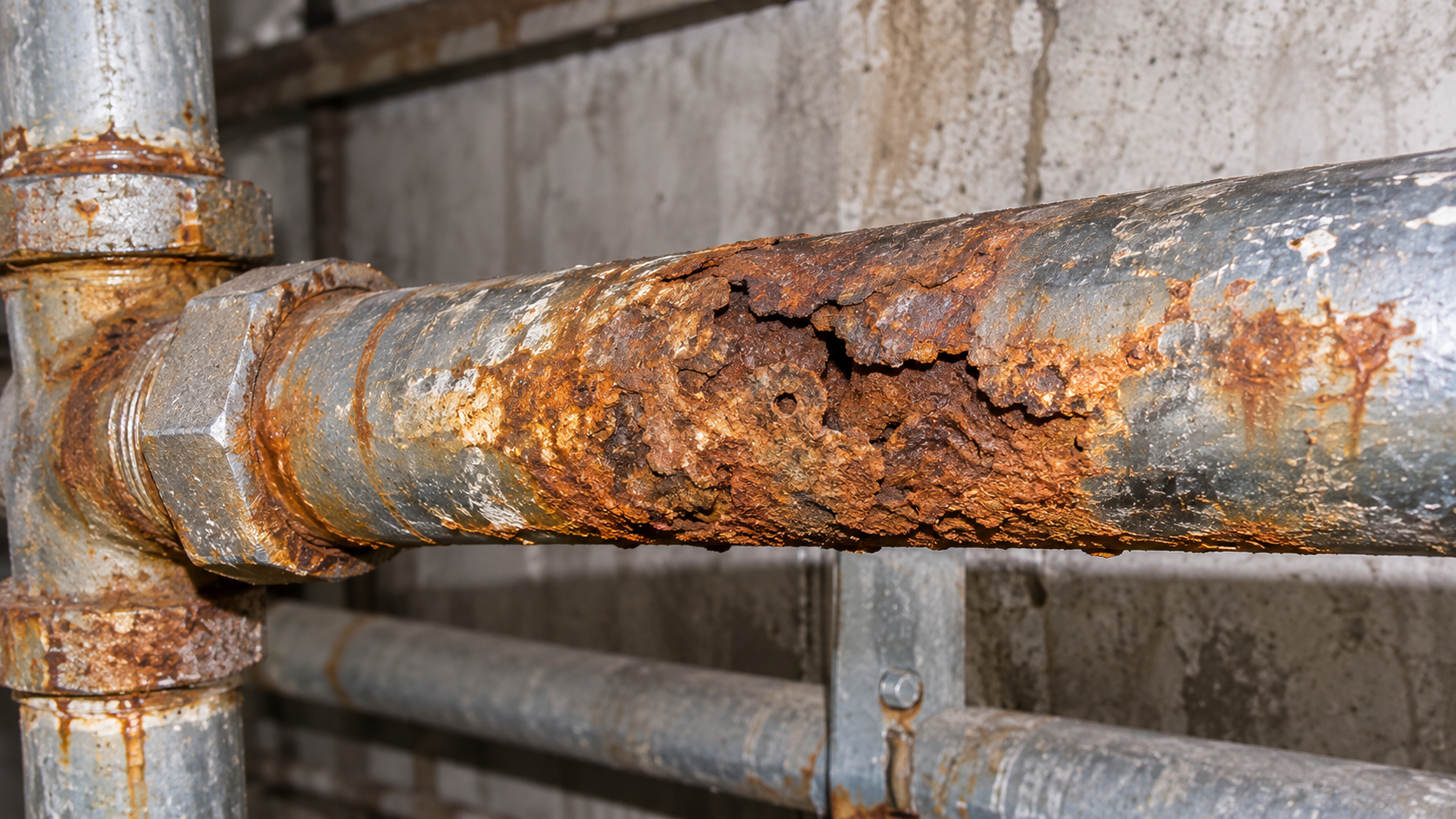
Corrosion in metal water pipes is the gradual deterioration of plumbing through reactions between metal, water, and surrounding conditions. For multifamily properties, managing it requires more than fixing leaks: water chemistry, hot water circulation, and maintenance all matter. This article explains the causes and prevention of pipe corrosion, with water treatment solutions for multifamily buildings and practical guidance for property teams.
What causes corrosion in metal water pipes?
Corrosion occurs when electrochemical reactions cause metal to deteriorate or dissolve into water. Water chemistry influences those reactions, while pipe materials, temperature, and operating conditions determine where damage develops. Rust specifically involves iron or steel; copper and other plumbing metals corrode differently, so not every corrosion problem produces rusty water.
Important contributors include:
Unstable water chemistry: Low pH and insufficient alkalinity can make corrosion control difficult. Alkalinity helps water resist changes in pH.
Dissimilar metals: Direct connections between certain metals can create galvanic corrosion, accelerating deterioration of one material.
Temperature and flow: Hot water and excessive velocity or turbulence can worsen corrosion under certain conditions.
Changing water conditions: Changes in disinfectants, source water, or treatment can alter existing pipe scales and metal release.
For property managers, the implication is straightforward: pipe age alone cannot explain every failure. An investigation should consider water conditions alongside the location and history of damage, rather than assuming that every affected building needs the same treatment.
Warning signs residents and maintenance teams can spot
Orange or brown water, metallic tastes, and staining can indicate iron-related problems. Blue-green staining may point toward copper corrosion. However, appearance alone cannot establish the source or confirm drinking-water safety; these observations should trigger investigation rather than a diagnosis.
Create a reporting checklist covering:
Discolored water, including whether it affects hot water, cold water, or both.
Stains around fixtures and sediment collected in aerators.
Recurring pinhole leaks, damp areas, or visible deterioration at connections.
Reduced flow or repeated complaints from the same riser or floor.
Ask residents to record timing, location, and photographs where possible. Comparing reports across apartments gives the investigating professional useful context. Treat repeated rust in pipes as a reason to examine the system, not simply replace stained fixtures.
Which water treatments help control corrosion?
Effective water treatment matches the building’s water chemistry and plumbing materials. The main corrosion-control approaches are pH/alkalinity adjustment and suitable corrosion inhibitors; sequestration, softening, and filtration address related problems but are not interchangeable substitutes. Treatment selection should account for what the utility already adds to the incoming water.
pH and alkalinity adjustment
Adjusting pH can reduce metal dissolution, while appropriate alkalinity helps stabilize conditions. Depending on the supply, professionals may use alkaline chemicals or suitable neutralizing equipment. There is no universal target: the right operating range depends on pipe materials, existing inhibitors, and other water characteristics.
Avoid treating a single pH reading as a complete assessment. A professional should evaluate variability, hardness, and scaling potential before recommending changes. Increasing pH without considering the wider treatment process can create operational problems, including effects on disinfection.
Orthophosphate and silicate inhibitors
Orthophosphate can encourage formation of low-solubility protective compounds, particularly where lead-bearing materials are present. Silicate may be applicable to certain systems, including iron-corrosion problems. Neither product rebuilds weakened pipe walls, and successful treatment depends on suitable chemistry and consistent delivery.
An inhibitor program therefore needs controlled dosing and verification that the intended residual reaches representative outlets. Product selection should distinguish orthophosphate from polyphosphate rather than treating all phosphate products as equivalent. Their purposes and effects differ.
Sequestration, softening, and filtration
These treatments can improve water quality or equipment performance, but each has limits:
Sequestration: Polyphosphates can hold certain dissolved metals in solution, reducing some discoloration and staining. They do not remove those metals or prove that corrosion has stopped; polyphosphate alone is not recommended for lead control.
Water softening: Ion exchange removes hardness-forming calcium and magnesium, commonly exchanging them for sodium or potassium. This addresses scale, not the full range of corrosion mechanisms. Softening should not be prescribed as a stand-alone corrosion cure.
Filtration: Appropriate filters can remove particulate rust or metals after suitable oxidation. A basic sediment filter does not necessarily remove dissolved metals, so selection must follow testing.
Chlorine and chloramine considerations
Disinfectants protect against microbial hazards, but they also influence plumbing chemistry. A change from free chlorine to chloramine can destabilize certain existing lead scales. Elevated chlorine exposure can also damage metals under some conditions.
Do not remove disinfectant building-wide merely to address corrosion. Coordinate any change with the utility and treatment professional, protecting both chemical and microbial water quality. Monitor disinfectant residuals alongside the corrosion program.
Implement treatment around the building’s layout
Start by distinguishing utility-level treatment from treatment installed on the property. For a multi-building complex, compare a shared centralized installation with separate building-level systems. As a planning principle, shared treatment should be considered only where supplies and treatment needs align; differing plumbing or operating conditions may justify separate designs. Coordinate this decision with the water supplier and qualified designer.
Hot water deserves its own assessment. Recirculation loops return water toward the heating equipment, helping maintain circulation and temperature, but treatment performance must be checked beyond the plant room. Evaluate return conditions, remote outlets, low-use branches, and balancing as part of the water-management plan.
Do not lower hot water temperatures solely to reduce corrosion. Temperature management must also address Legionella growth and scald prevention. Domestic drinking-water systems require appropriate treatment products; a closed heating-loop chemical program should not be assumed suitable for potable water.
Verify performance and maintain the plumbing
Establish baseline conditions before treatment, then repeat measurements at consistent locations. Include incoming water, representative apartments, and hot water return points where relevant. A useful monitoring plan combines chemistry, physical evidence, and maintenance records rather than relying on clearer-looking water alone.
Recommended elements include:
Water testing: Track pH, alkalinity, relevant metals, temperature, disinfectant residual, and inhibitor residual where used.
Coupon or rack monitoring: Expose representative metal coupons to controlled water flow, then examine weight loss and surface damage. Coupons help assess trends but cannot reliably predict tap-water lead or copper concentrations alone.
Maintenance checks: Inspect treatment equipment, service filters, document leaks, and clean water-system components according to the management plan.
Practical corrosion prevention also includes managing low-use branches, reviewing problematic metal connections, and replacing structurally compromised piping. Water treatment and physical repairs should support each other. Set review dates so a dosing change does not become an unverified permanent arrangement.
Address compliance before installation
Before adding chemical treatment, consult the water utility and the state drinking-water authority. Building-level treatment can create regulatory obligations, and applicability depends on the installation and jurisdiction. Confirm permitting, plumbing-code requirements, approved materials, monitoring responsibilities, and operator requirements before purchasing equipment.
Keep the approved design, operating limits, test results, and maintenance records together. Assign responsibility for reviewing them and responding to deviations. This makes the program easier to manage when staffing or contractors change.
Keep residents informed and involve professionals early
Give residents clear notices explaining the work, expected interruptions, apartment-access needs, and whom to contact. Separate planned maintenance information from any official drinking-water advisory. Avoid promising that discoloration is harmless or that treatment has solved the problem before results support that conclusion.
Use notices to request specific observations rather than general complaints: affected fixture, hot or cold water, timing, and recurrence. Share confirmed findings in plain language, including what remains under investigation. Provide translated or accessible versions when needed.
Contact a licensed plumber promptly for active leaks, recurring failures, damaged connections, or suspected pipe deterioration. Involve a qualified water treatment professional before chemical dosing, significant treatment changes, or interpretation of abnormal metals results.
Whether considering Umbrella Plumbing or another provider, ask for a documented assessment, clear responsibilities, and follow-up testing. Being “the trusted name everyone calls” should mean accountable work—not an unsupported promise. Start with evidence, select treatment carefully, and verify the outcome.
