
Preventing Pinholes: Pipe Maintenance Tips
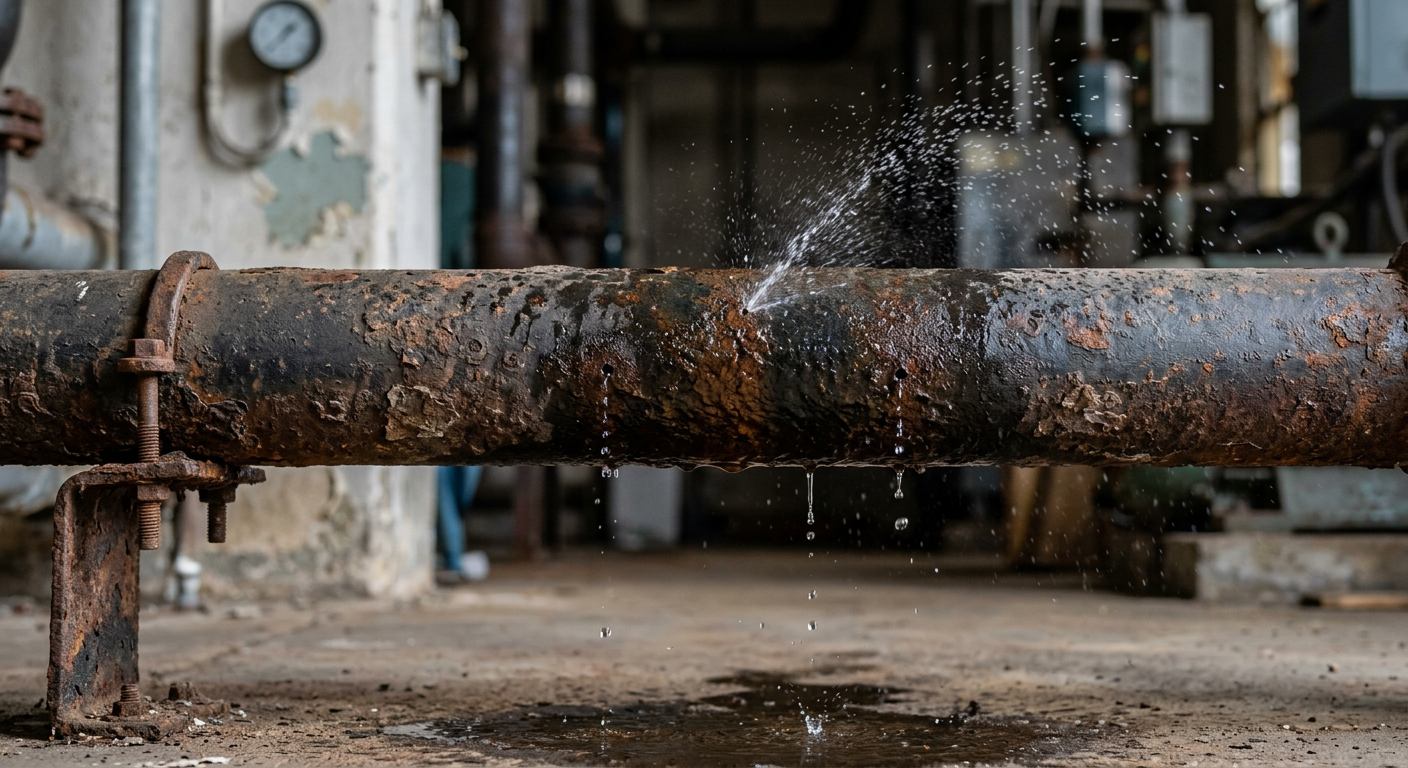
Preventing pinholes in pipes starts with understanding why leaks develop, checking plumbing conditions, and responding before small problems spread. For multi-family and commercial buildings, that means combining inspections, leak detection, and maintenance rather than relying on emergency repairs alone. Umbrella Plumbing provides inspections, leak detection, and pipe repairs that can support this approach.
What causes pinholes in pipes?
Pinholes are tiny openings through a pipe wall, commonly associated with localized corrosion in copper plumbing. Water chemistry, installation workmanship, and operating conditions can contribute to their development. In both multi-family and commercial buildings, identifying the cause matters because repairing one opening does not necessarily address the conditions affecting nearby pipe.
Pitting corrosion attacks concentrated areas rather than wearing the entire pipe wall evenly. Erosion-corrosion involves deterioration associated with water movement; excessive velocity and localized turbulence can contribute. Installation problems, including excessive residual soldering flux or unremoved burrs at cut ends, can also encourage damage. These mechanisms require different corrective actions, so a visual guess is not enough.
Do not assume every copper leak means the building needs immediate repiping. Instead, ask the plumber to consider the failed section, previous leak locations, water conditions, and system operation together. WSSC Water’s technical review emphasizes that examining the pipe itself is an important part of investigating failures.
Make early warning signs part of routine rounds
In a multi-family building or commercial property, add plumbing observations to existing maintenance rounds. Look and listen for unexpected water use, wet areas, and water movement that does not match normal operations. EPA recommends combining visual and auditory inspections with meter monitoring rather than waiting for a water bill to reveal a problem.
Give staff a reporting checklist:
Record the location precisely. Include the apartment, suite, floor, room, and nearest accessible plumbing.
Describe what changed. Note new dampness, dripping, or water sounds and when they appeared.
Photograph accessible conditions. Capture the affected area without opening walls or disturbing piping.
Check related reports. Flag previous repairs or similar complaints nearby for the plumber.
Assign ownership. Identify who receives the report, arranges access, and confirms follow-up.
Use the same process for resident and business-tenant reports. Ask occupants to report suspected leaks promptly rather than deciding whether a symptom is serious themselves. EPA identifies occupant education and prompt attention to reported leaks as useful parts of facility leak management.
Control operating conditions without guessing
Prevention in both multi-family and commercial buildings should address how the plumbing operates, not just how it looks. Pressure checks, circulation review, and an informed assessment of water conditions can help direct the investigation. Avoid treating a symptom with an equipment adjustment before the cause is understood.
Check pressure and circulation together
Have a qualified plumber evaluate pressure and, where applicable, hot-water recirculation. Excessive water velocity can contribute to copper erosion-corrosion, while turbulence can concentrate wear around installation defects or fittings. Pressure and velocity are related but are not interchangeable measurements; simply lowering pressure is not a diagnosis.
Ask for findings that connect operating conditions to the actual pipe layout and observed damage. For example, request an explanation of whether recurring failures follow a circulation loop or cluster around particular fittings. Keep proposed adjustments documented so future technicians can understand what changed and why.
Investigate water chemistry before selecting treatment
Water chemistry can influence copper corrosion, but a generic filter or softener is not a universal pinhole-prevention solution. A useful investigation considers the water, pipe material, and failure pattern together. Treatment decisions should follow an assessment rather than an assumption that hardness or acidity alone explains every leak.
For either building type, ask what testing would help answer a specific diagnostic question. Request an explanation of the proposed treatment’s purpose and maintenance requirements before approving it. Keep those findings with the property’s plumbing records.
How can leak detection find small leaks sooner?
Leak detection combines water-use monitoring with targeted investigation to identify leakage that routine observation may miss. For multi-family and commercial buildings, meter trends can flag unusual consumption, while professional testing helps narrow the source. Neither a high bill nor a moisture spot, by itself, identifies a pinhole’s exact location.
Start by establishing expected consumption. Compare readings with occupancy, seasonal demand, irrigation, and equipment schedules before labeling an increase a plumbing leak. Where a genuine no-use period is practical, meter movement can indicate leakage; in continuously occupied buildings, arrange a suitable monitoring approach instead of assuming overnight use should be zero.
Umbrella Plumbing offers acoustic leak detection and pressure testing, alongside investigation of concealed water leaks. Acoustic equipment listens for escaping water, while pressure testing helps establish whether a tested section is losing pressure. Ask which methods suit the pipe material, access conditions, and suspected location at your property.
Consider monitoring devices where an unnoticed leak would be particularly disruptive. Specify who receives alerts, who responds after hours, and how devices will be tested. EPA recommends maintaining detection devices according to manufacturer instructions and routing alerts to multiple employees so they receive attention.
Turn Umbrella Plumbing’s findings into a repair plan
Umbrella Plumbing’s inspections assess pipes, fixtures, water pressure, water heaters, and other system components. For pinholes and small leaks in multi-family and commercial buildings, request an inspection focused on the affected piping and relevant operating conditions. Its annual maintenance inspections include checking for leaks and evaluating pressure.
For corrosion assessment, ask Umbrella Plumbing to connect its inspection findings with its corrosion-related pipe repair and replacement services. Request a review of visible deterioration, previous failures, and any removed pipe section. Confirm whether additional water testing or specialist analysis is needed before deciding the problem is isolated or widespread.
Umbrella Plumbing also repairs and replaces damaged pipe sections, providing a basis for repair or repiping discussions. Ask for planning assistance that distinguishes immediate leak control from longer-term replacement needs. Its commercial services include maintenance, repairs, and system upgrades.
For either building type, request a written scope addressing:
Repair boundaries: Which sections need attention now, and which require further investigation?
Replacement options: What supports localized repair, staged repiping, or broader replacement?
Access and shutdowns: Which apartments, suites, or shared facilities will be affected?
Project responsibilities: Who handles access notices, permits where required, and finish restoration?
Verification: How will the completed work be checked and documented?
Keep plumbing repair separate from building-material restoration when reviewing proposals. Ask who will evaluate and address affected finishes and concealed spaces, rather than assuming that stopping the leak completes every part of remediation.
Build a preventive maintenance program around the property
Umbrella Plumbing lists preventive maintenance among its services for commercial and multifamily properties. Ask about a program aimed specifically at pinholes and small leaks, with the inspection scope, monitoring responsibilities, and follow-up process agreed in writing. Confirm the actual service schedule rather than assuming every property receives the same package.
Use this framework when discussing the program:
Establish a baseline. Assemble pipe information, past repairs, inspection findings, and available water-use records.
Set inspection priorities. Identify areas with previous failures and locations where access requires advance coordination.
Assign monitoring duties. Name the people responsible for readings, alerts, occupant reports, and service requests.
Track corrective work. Record what was repaired, what remains unresolved, and the next review date.
Revisit replacement planning. Review new findings before approving another isolated repair or changing the capital plan.
Apply these steps to both multi-family and commercial buildings, adapting access arrangements to residents or business operations. Include a request for clearly labeled isolation information and an agreed shutdown process. Ask Umbrella Plumbing which tasks belong in the service agreement and which remain with on-site management.
Make the next small leak a source of information
A useful response does more than close an opening: it records the failure, investigates likely causes, and establishes follow-up. That approach gives managers of multi-family and commercial buildings a clearer basis for maintenance and replacement decisions.
Contact Umbrella Plumbing to discuss an inspection for pinholes and small leaks, targeted leak detection, corrosion assessment needs, and repair or repiping planning. Bring your repair history and water-use records, and ask how preventive maintenance can support the property’s next steps.
