
Choosing the Best Propane Tankless Water Heater
How to Choose a Propane Water Heater
A propane water heater can be a smart fit when you want reliable hot water, strong recovery, and flexibility in homes that use LP gas. The right choice depends on your household’s demand, fuel supply, venting options, installation location, and budget. This guide focuses on propane tankless water heater decisions, while also comparing related gas options so you can shop with more confidence.
Is a propane tankless water heater right for your home?
A propane tankless water heater is right for your home if you have access to propane, want hot water only when you use it, and can support the unit’s gas, venting, and maintenance needs. Unlike a storage tank, propane on demand water heaters heat water as it flows through the unit, so sizing is based on simultaneous use rather than tank capacity. ENERGY STAR describes whole-home gas tankless units as systems that heat water on demand, and notes that certified condensing models use a secondary heat exchanger to capture more heat from combustion gases. (energystar.gov)
This makes tankless propane hot water especially appealing for households that dislike running out of hot water during back-to-back showers. It may also save space because many propane tankless water heaters are wall-mounted. However, a tankless water heater is not automatically the best choice for every home. Long pipe runs, undersized gas lines, hard water, or a low-capacity propane setup can reduce performance or increase installation complexity.
Start with hot water demand, not equipment size
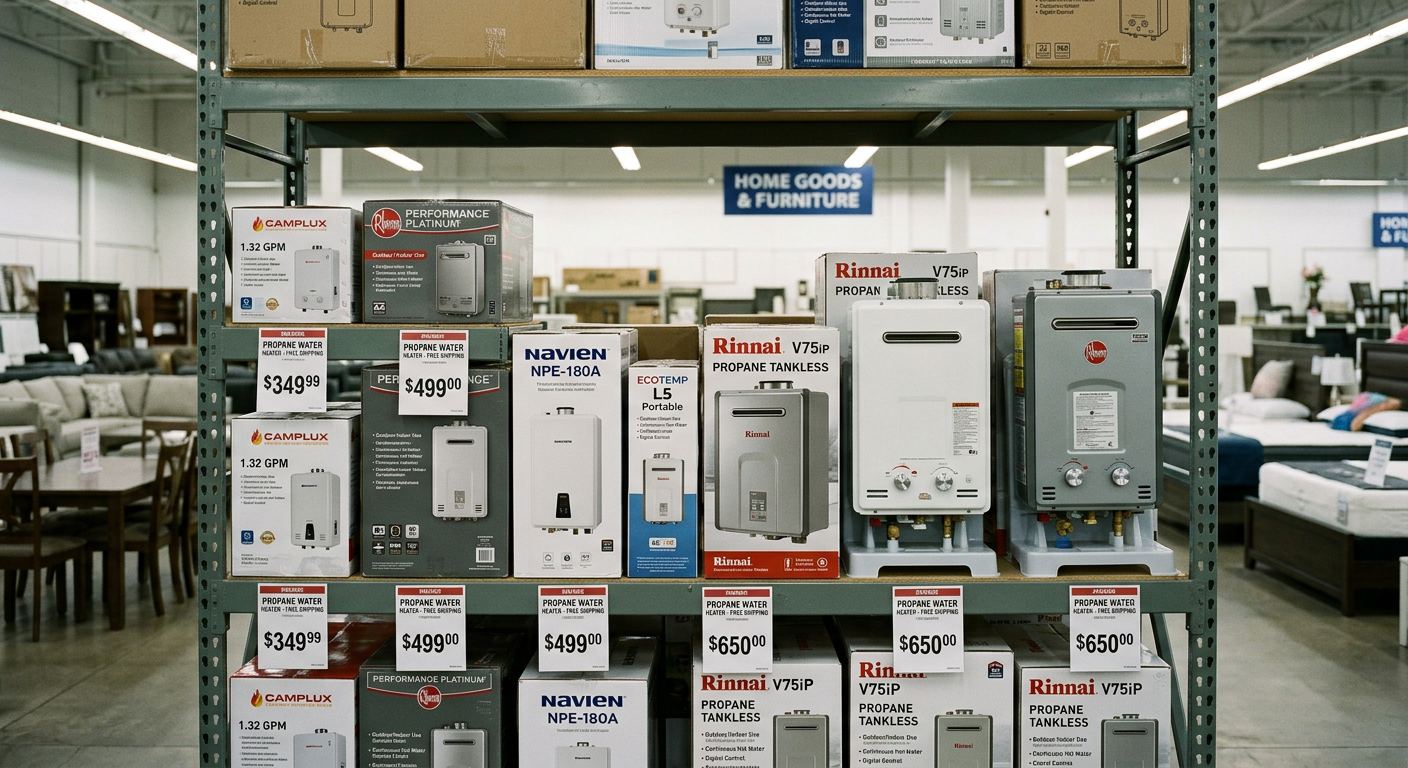
The biggest mistake is choosing a propane gas tankless water heater by brand or advertised gallons per minute alone. First, think through how many fixtures might run at the same time. A shower, dishwasher, laundry machine, and kitchen faucet all create demand, and winter groundwater temperatures can make the heater work harder.
A tankless water heater for entire house use must be sized for peak demand. For example, a 10 gpm tankless water heater may sound generous, but actual output depends on the temperature rise required in your climate. A unit that delivers strong flow in a warm region may deliver less in a colder area because it must raise incoming water temperature more.
Useful planning checklist:
List every fixture that may need hot water at once.
Estimate whether your home needs whole-house service or a point-of-use sink water heater.
Check the manufacturer’s flow-rate chart for your expected temperature rise.
Confirm propane line size, regulator capacity, and venting path with a licensed installer.
Consider whether recirculation is needed for distant bathrooms.
Indoor, outdoor, and point-of-use placement
Placement affects cost, convenience, and the model you can use. An outdoor tankless water heater can reduce indoor venting needs, while an outdoor propane tankless water heater may work well when the location is protected and approved for your climate. Always use a model listed for outdoor installation; an indoor unit should not simply be mounted outside.
Indoor propane tankless hot water heaters usually need proper combustion air and exhaust venting. ENERGY STAR notes that condensing gas tankless units require venting and a condensate drain, which matters when planning the installation area. (energystar.gov) In cold climates, freeze protection and pipe insulation are important, especially for exterior walls or outdoor locations.
A point-of-use setup is different. A sink water heater can help with a remote bathroom, garage sink, or small workspace where waiting for hot water wastes time and water. It will not replace a properly sized whole-house propane tankless heater, but it can solve a specific comfort problem.
How much does a tankless water heater cost?
The honest answer is that the price of tankless water heater installation depends on the unit, fuel line work, venting, labor, permits, location, and whether you are replacing a tank or changing system type. HomeAdvisor’s 2025 cost guide lists a broad tankless project range from $384 to $6,000, which shows why a site-unseen estimate can be misleading. (homeadvisor.com)
If you are asking, “how much is a tankless water heater?” separate the equipment price from the installed price. If you are asking, “how much is a tankless hot water heater with propane conversion work?” expect the answer to depend heavily on gas supply and venting. And if your question is “how much are tankless water heaters compared with tank models?” remember that tankless hot water heaters often cost more upfront but may offer space savings and on-demand operation.
Cost drivers often include:
Fuel readiness: An lp tankless water heater may require gas line upgrades if the existing line was sized for a tank unit.
Venting: Condensing and non-condensing models have different venting requirements.
Water quality: Hard water may require filtration or more frequent flushing.
Location: Moving the heater can add plumbing, gas, electrical, and wall work.
Capacity: Higher-output propane tankless hot water heaters generally cost more than smaller point-of-use units.
Propane, natural gas, and electric options
Propane and natural gas models are both forms of tankless water heater gas equipment, but they are not interchangeable unless the manufacturer specifically allows conversion. A propane on demand water heater is built for LP gas pressure and combustion characteristics. A natural gas tankless water heater, natural gas on demand hot water heater, or natural gas tankless hot water heater is built for utility natural gas.
If your home already has natural gas, tankless natural gas water heaters may be easier to fuel. If you are rural, off-grid, or already using propane for cooking or heating, a propane instant water heater can be the more practical option. What matters is choosing the fuel your home can supply safely and consistently.
Electric models exist too, but whole-house electric tankless systems can require major electrical capacity. For many homes comparing a tankless hot water heater gas model against electric, fuel availability and installation requirements decide the issue.
Efficiency features and comfort details
Look beyond basic flow rate. ENERGY STAR’s criteria page explains that water heater certification is based on Uniform Energy Factor, or UEF, a standardized efficiency metric. (energystar.gov) Higher-efficiency condensing propane tankless water heaters can be attractive, but they may require a condensate drain and compatible venting.
Comfort features can matter just as much. Some models include recirculation compatibility to reduce wait time at distant fixtures. Others have digital controls, freeze protection, Wi-Fi monitoring, or service reminders. These features do not replace proper sizing, but they can improve everyday use.
Also consider maintenance. Tankless systems commonly need periodic flushing, especially in hard-water areas. Ask the installer what service schedule is appropriate, where isolation valves will be placed, and whether warranty coverage requires professional maintenance.
Make the final choice with an installer’s input
Before buying a propane tankless hot water heater online or from a store shelf, have a qualified professional confirm the installation conditions. The best unit on paper can disappoint if the gas line is undersized, the vent route is impractical, or the selected location is exposed to freezing. A short site visit can clarify whether you need a compact unit, a high-output model, an outdoor installation, or multiple heaters.
A good final decision balances four things: enough hot water for peak demand, safe fuel and venting design, realistic installation cost, and maintenance you are willing to keep up with. If you compare propane tankless water heaters through that lens, you will be more likely to choose a system that fits your home rather than simply chasing the largest flow rate or lowest sticker price.
Call us at 480-869-6952 or contact us online. We are at 434 N. San Marcos Place in Chandler and we are set up to work with business and commercial accounts directly.
