
Signs You Need a Whole Property Repipe
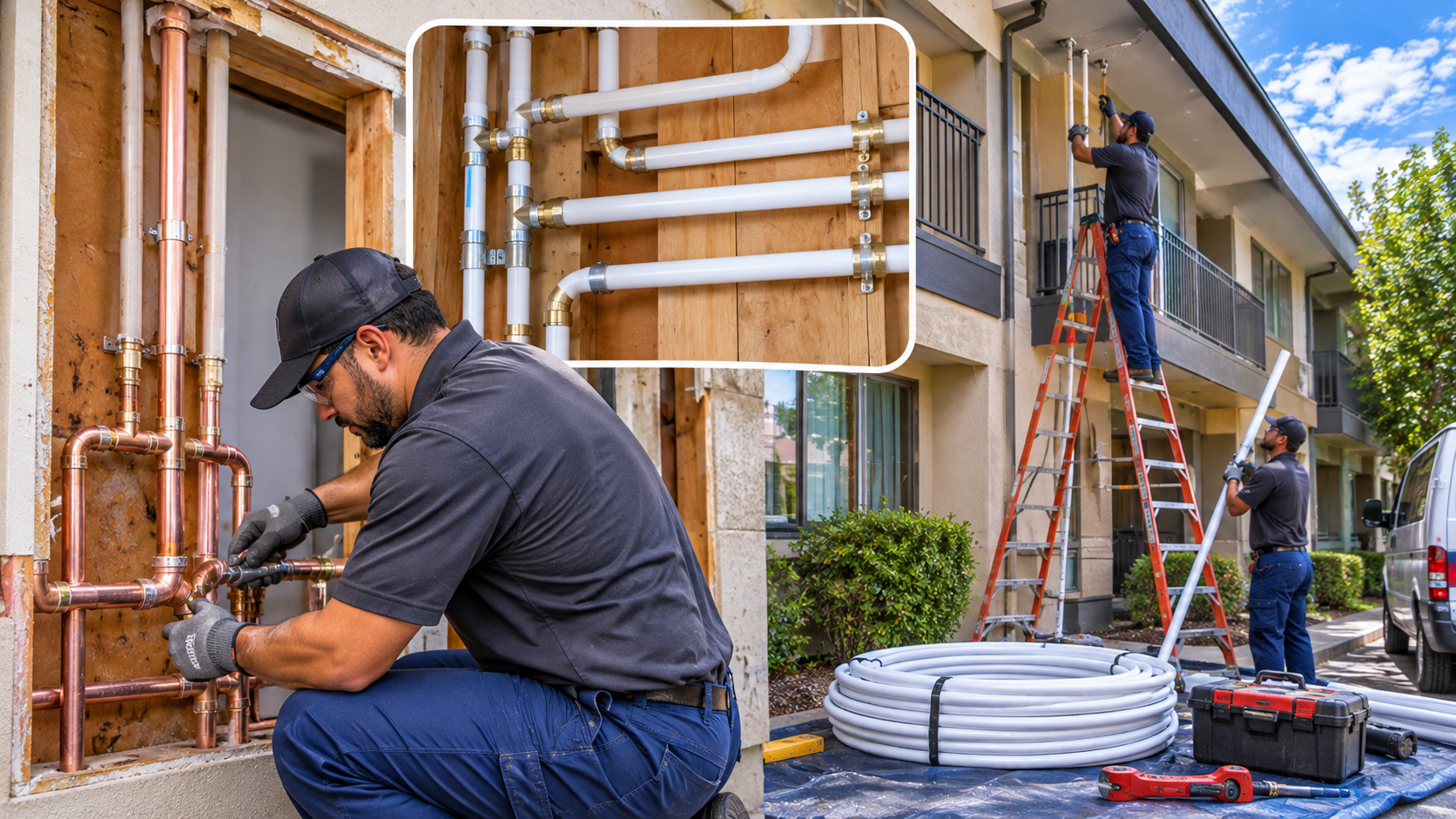
A whole property repipe replaces aging or damaged water supply piping when isolated repairs no longer address the underlying problem. Recurring leaks, persistent flow problems, and corrosion can justify an evaluation, but no single symptom automatically means every pipe needs replacing. This guide explains the warning signs, what to check first, and how Umbrella Plumbing’s inspection, repair, and pipe replacement services can help you plan your next step.
When should you consider a whole property repipe?
Consider a whole property repipe when recurring problems suggest deterioration across the water supply system rather than one damaged connection or fixture. Leaks in different locations, corrosion-related discoloration, and restricted flow together provide stronger reasons for an assessment than any symptom alone. The decision should follow an inspection that identifies the source and extent of the trouble.
Before requesting estimates, organize what you already know. A useful starting record includes:
Leak locations: Note whether failures keep happening along one line or in separate rooms.
Affected fixtures: Record whether weak flow or discoloration affects one faucet, several fixtures, or the entire property.
Hot versus cold water: Identify which supply shows the problem and when it occurs.
Repair history: Gather invoices, photographs, and descriptions of previously replaced sections.
Changes over time: Explain whether the symptoms appeared suddenly or have gradually become more frequent.
Bring this record to your appointment and ask the plumber to explain which findings support repair, partial replacement, or broader home repiping. You should understand the recommendation before approving the scope.
Recurring leaks deserve a broader investigation
One leak needs attention, but it does not prove the entire piping system has failed. Household leaks can come from worn fixtures, corrosion, freezing, pressure problems, equipment malfunctions, or installation issues. Understanding the cause matters because replacing pipes without addressing a contributing problem may leave part of the issue unresolved.
When separate leaks keep appearing, ask for an assessment beyond the latest wet spot. Request an explanation of whether the failures share a material, installation condition, or corrosion pattern. Also ask which accessible sections were inspected and what remains uncertain behind finished surfaces.
Compare more than the next repair invoice. Include previous plumbing bills, restoration work, and disruption when reviewing your options. This does not establish that replacement is automatically cheaper; it gives you a more complete basis for discussing the alternatives.
Persistent weak flow needs the right diagnosis
Weak water flow throughout a property deserves investigation, but the cause may be outside the building. Michigan’s drinking water guidance recommends contacting the supplier when low pressure or low flow suddenly affects the entire residence. A problem at one tap may instead involve its aerator, while a localized restriction may involve a fixture or pipe.
Corroded galvanized plumbing can also be associated with discoloration and a noticeable reduction in pressure. When those symptoms occur together, ask whether deteriorated supply piping is contributing to the problem. Do not assume that a weak shower, by itself, makes a plumbing repipe necessary.
Describe the conditions precisely during your appointment. Does the kitchen faucet weaken only when another fixture runs? Is the hot side different from the cold side? Ask the plumber to distinguish a fixture problem, supply issue, and internal piping restriction before recommending replacement.
Discolored water and corrosion need context
Rust-colored water can originate in household plumbing or the public water system. Water main disturbances can stir up sediment, while older galvanized pipes may contribute recurring discoloration inside a building. Water that changes color only on the hot side may point toward the water heater or hot-water plumbing instead.
Record whether the discoloration follows a period of nonuse, affects every fixture, or coincides with nearby utility work. Contact your water supplier about sudden changes, then share its findings with the plumber. Seattle Public Utilities specifically notes that discoloration associated with galvanized plumbing does not alone establish that replacement is needed.
Blue-green staining, a metallic taste, and small leaks can also accompany corrosive water interacting with plumbing materials. These clues warrant investigation rather than an assumption about water safety or pipe condition. Ask your water supplier or an appropriate testing professional what evaluation is suitable for your situation.
Rising water use is a clue, not a repipe verdict
An unexplained increase in water use can indicate a leak, including one you cannot readily see. EPA recommends comparing usage with the same period in the previous year and checking the water meter during a period when no water is being used. A changed reading suggests a probable leak, but it does not identify the source.
Before assuming hidden supply pipes are responsible, arrange a leak investigation. Common sources include running toilets, dripping faucets, and leaking valves, which may need targeted repairs rather than new piping throughout the property. A high bill should start the diagnosis, not determine the solution.
Ask for the leak location and recommended repair in writing. If the investigation identifies broader deterioration, request a separate explanation of why additional replacement is warranted.
Is pipe replacement better than another repair?
Pipe replacement becomes a stronger option when the investigation identifies deteriorated piping beyond a single failure. A targeted repair may remain appropriate when the problem is isolated, while replacement can address outdated or corroded sections. The right scope depends on the findings—not simply the age of the house or the inconvenience of the latest leak.
Ask for a comparison that addresses these points:
Evidence: Which observations support the recommendation, and which are still assumptions?
Scope: Does the proposal cover one branch, interior hot and cold supply lines, or additional piping?
Alternatives: What would a smaller repair address, and what concerns would remain?
Underlying causes: Does the plan address any identified pressure, corrosion, or installation issue?
Exclusions: Are access openings, surface restoration, fixtures, and related work included or separate?
Avoid treating “whole property” as a complete scope description. Ask the contractor to list the lines and components included, along with anything excluded. In particular, request separate clarification about the incoming service line, drain piping, sewer line, and water heater rather than assuming they are part of the same project.
Plan the project before approving the work
A detailed proposal should help you understand both the plumbing work and its effect on daily life. Request a walkthrough of the proposed routes, access locations, and sequence. Ask what decisions must be made before scheduling and which conditions could change the estimate.
Use the planning conversation to clarify practical details:
Materials: Request the proposed pipe material and the reason it suits the project.
Access and protection: Confirm which areas need clearing and how belongings and finishes will be protected.
Water interruptions: Ask when service will be unavailable and how updates will be communicated.
Completion checks: Request an explanation of testing, applicable inspections, and handover documentation.
Restoration: Identify who handles drywall, paint, tile, and other affected finishes.
If you already plan to remodel, raise that before approving either project. Umbrella Plumbing’s renovation services include rerouting lines, installing new pipes, and upgrading water supply systems. Ask whether coordinating the work would make sense for your property rather than assuming every renovation requires repiping.
A Smarter Approach to Plumbing: Quality Materials, Cost-Effective Solutions
Umbrella Plumbing offers inspections, leak detection, repairs, installations, and plumbing renovations for residential and commercial properties. Its listed services include supply lines, shutoff valves, and pipe replacements, providing options for investigating symptoms and addressing the piping problems found. Its renovation services also describe replacing outdated or corroded pipes with materials such as copper or PEX.
For recurring leaks, ask the team to locate the source and explain whether the findings support a localized repair or a broader replacement discussion. For persistent flow problems or discoloration, share your symptom record and any information from your water supplier. Request a property-specific explanation before committing to repiping services.
You want more than a company calling itself “the trusted name everyone calls.” Ask for clear findings, an understandable scope, and straightforward answers about what the work will—and will not—resolve.
Recurring plumbing trouble deserves a clear diagnosis, not another guess. Contact Umbrella Plumbing to discuss the warning signs and request an assessment. Use the findings to choose between repair, partial pipe replacement, and a whole property repipe with greater confidence.
