
Why Is My Water Bill Suddenly So High? 8 Plumbing Problems to Check
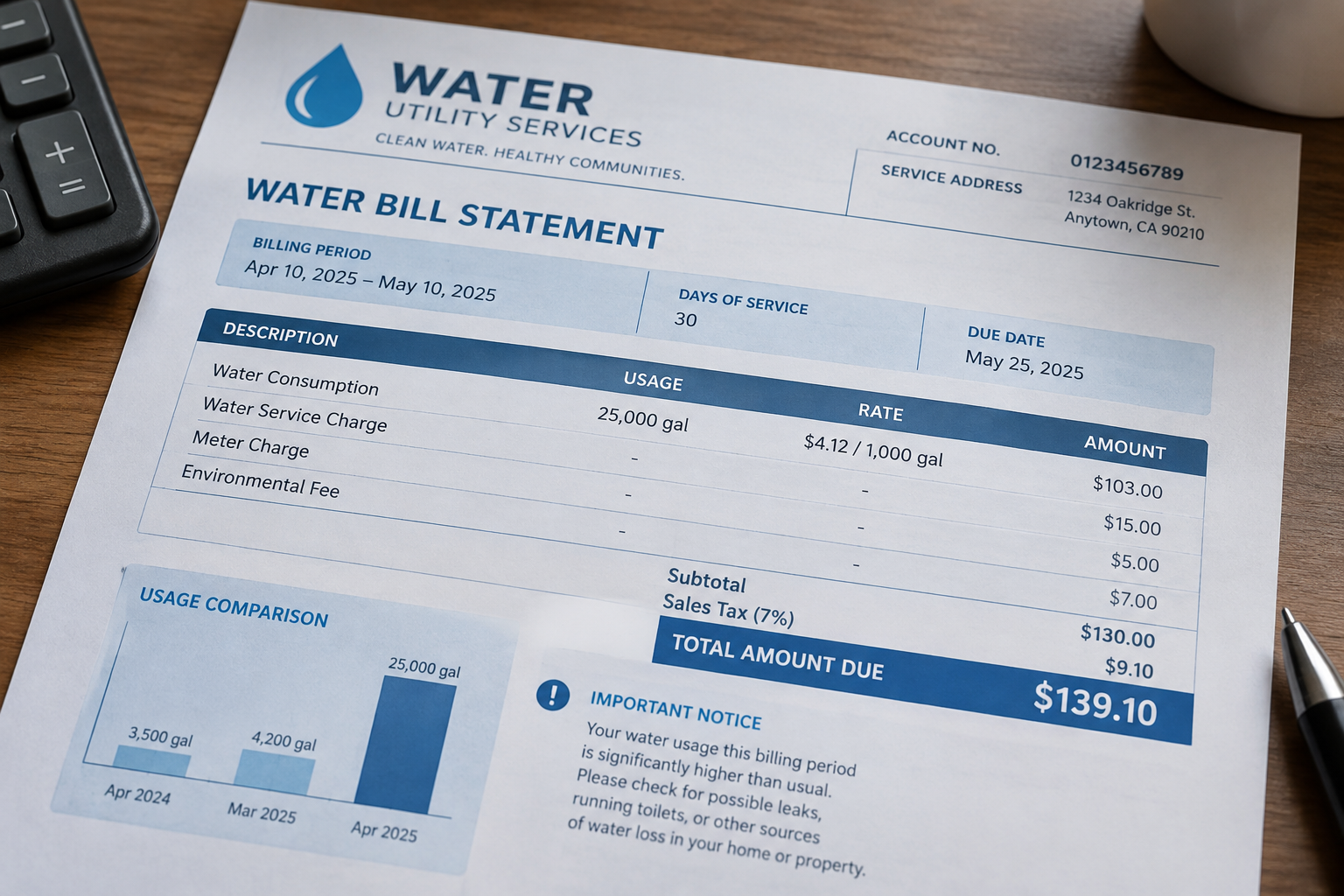
A suddenly high water bill can point to a running toilet, hidden pipe leak, faulty irrigation system, or water-using equipment that won’t shut off properly. But first, confirm that your water use actually increased—not just the amount charged. These eight plumbing checks will help you narrow down the cause and decide what needs professional attention.
Why is my water bill suddenly so high?
Your water bill can jump because you used more water, your utility charges changed, or a plumbing problem is wasting water between normal uses. Compare the consumption shown on your latest bill with earlier bills before assuming you have a leak. If consumption increased without a matching change in your routine, start investigating plumbing fixtures and equipment.
Use this quick review before reaching for tools:
Compare billing periods: Check the number of days covered, not just the total gallons.
Look at consumption separately from charges: Base fees, sewer charges, and seasonal or tiered rates can affect the total.
Review recent activities: Guests, extra laundry, pool filling, and increased watering deserve a second look.
Ask about unclear readings: Have your utility explain any estimated reading or unexpected adjustment.
Keep the current bill and a few previous statements handy. They give you a starting point for checking whether repairs bring consumption back toward normal.
Eight plumbing problems worth checking
1. A toilet that leaks silently into the bowl
A toilet doesn’t have to overflow to waste water. A worn flapper—the seal inside the tank—can let water escape into the bowl, while a malfunctioning fill valve can keep water running. You might hear occasional refilling even though nobody flushed.
For a tank-style toilet, add a few drops of food coloring to the tank and wait 10 minutes without flushing. Color appearing in the bowl indicates a leak; flush afterward to help prevent staining. Test every toilet, including the guest bathroom that rarely gets used.
2. Dripping faucets, shower valves, or outdoor spigots
That familiar drip deserves attention. Worn washers, seals, and other faucet parts can allow water through after you turn the handle off. A shower that drips when nobody is using it may need a valve repair rather than a new showerhead.
Check kitchen and bathroom faucets, bathtub spouts, utility sinks, and outdoor hose connections. Look beneath each sink as well as at the spout. Record which fixtures stay wet or continue dripping after use, and turn off the fixture’s water supply before attempting repairs.
3. A supply pipe leaking behind a wall
Not every leak leaves an obvious puddle. Water escaping from concealed plumbing may show up as bubbling paint, discoloration, damp cabinets, or soft spots on a wall. You may also hear dripping or spraying where plumbing runs.
Walk through the rooms adjoining bathrooms, kitchens, and laundry areas. Note exactly where you notice changes rather than assuming the nearest faucet is responsible. Photograph suspicious areas and arrange an inspection instead of opening walls at random; the goal is to locate the source before choosing a repair.
4. An underground water supply leak
A leak in the buried supply piping can waste water without leaving an indoor clue. If the meter records flow while everything is off, the problem may be outside between the meter and the building’s shutoff. Underground leaks need prompt attention because they can also damage property.
Ask a plumber to distinguish the buried supply line from indoor plumbing and any separate irrigation branches. Don’t assume a dry yard rules out trouble. Share your meter readings and let the inspection guide the next step rather than digging based on a guess.
5. A leaking water heater or relief valve
Check around the water heater for pooling water and inspect accessible connections visually. A puddle nearby deserves investigation, but its location alone doesn’t establish which component is leaking. Make a note of whether you see water at a connection, beneath the tank, or near the relief-valve discharge pipe.
The temperature-and-pressure relief valve is a safety device, and discharge can involve dangerously hot water. Never cap, plug, or block that valve or its discharge pipe. Have a qualified professional investigate ongoing dripping rather than treating it as a nuisance to seal shut.
6. A water softener stuck in a cleaning cycle
Water softeners use water during their cleaning process. If a unit gets stuck on backflush, it can keep using water when you expect the house to be quiet. That makes it a useful checkpoint when faucets and toilets seem fine.
Check the display and operating instructions for an unusually long or repeated cycle. Ask a service professional whether temporarily bypassing the softener is appropriate for your setup. Comparing meter activity before and after correctly bypassing the unit can help narrow down the source. Don’t guess at unfamiliar valves.
7. Leaking appliance connections or automatic refill equipment
Dishwashers, washing machines, refrigerators with ice makers, and other connected equipment deserve a look. Check accessible water connections and surrounding floors for moisture. Automatic refill equipment, including pool or fountain systems, also needs to be accounted for during a meter test.
Make a list of everything connected to the water supply, including equipment tucked into garages or utility rooms. Note whether unusual water use happens continuously or only during operation. Give that list to the technician so the investigation includes more than the obvious bathroom and kitchen fixtures.
8. Broken sprinklers or irrigation valves that won’t close
Outdoor watering problems are easy to miss when sprinklers run before you wake up. Broken heads, leaking joints, and valves that fail to close can waste water. Pooling between watering cycles may indicate an underground irrigation leak.
Inspect the system during a permitted watering or testing period. Watch for damaged heads, water spraying onto pavement, and zones that don’t shut off. Also review the controller’s schedule: unnecessary watering can raise consumption even when the plumbing itself works correctly. Follow local watering restrictions while checking the system.
How can you check for a leak when nothing looks wet?
For a high water bill with no visible leak, compare meter readings during a period when no water should be running. A changed reading suggests a leak or overlooked water use, but it doesn’t identify the source. EPA recommends checking before and after a two-hour no-use period.
Choose a quiet window. Avoid showers, toilet flushing, laundry, dishwashing, and outdoor watering.
Account for automatic equipment. Make sure irrigation, softeners, ice makers, and refill systems won’t run unnoticed.
Record the reading and time. Take a photo if the meter is safely accessible.
Check again after two hours. If it changes, share both readings with your plumber.
A steady reading doesn’t rule out a problem that happens intermittently. Repeat the check when you suspect equipment is cycling, and keep notes rather than relying on memory.
Give larger properties a coordinated check
For a commercial building or multi-building property, organize the investigation around the meters serving each building and major water use. Submeters, where installed, can help distinguish irrigation demand from indoor consumption and show which area needs attention. Start by confirming what each meter actually supplies.
Assign someone to collect readings, maintenance reports, and tenant observations. Give occupants a clear way to report running toilets, dripping fixtures, and outdoor leaks. Sharing that information with maintenance staff helps keep an overlooked restroom or landscaping problem from slipping through the cracks.
Find the cause, then confirm the fix
Start with the bill, test the toilets, inspect accessible fixtures, and document unexpected meter activity. After repairs, keep checking consumption rather than waiting for another surprise bill. Ask your utility whether it offers a leak-adjustment review and what repair documentation it requires.
When contacting Umbrella Plumbing, have your bills, meter photos, and observations ready. If you’re looking for “the trusted name everyone calls,” ask for a clear explanation of the findings and proposed repair—not just a quick guess. Fix the confirmed problem first, then use regular checks to help conserve water usage and catch the next issue sooner.
