
Maintenance Tips for Sump Pump Longevity
Regular testing, a clean basin, and an unobstructed float switch help sump pump systems stay ready to move water when it matters. Maintenance also gives you a chance to catch drainage problems before they become emergencies. The practical routines below apply to homeowners and light commercial property managers, with the equipment manufacturer’s instructions taking priority over general advice.
How often should you maintain a sump pump?
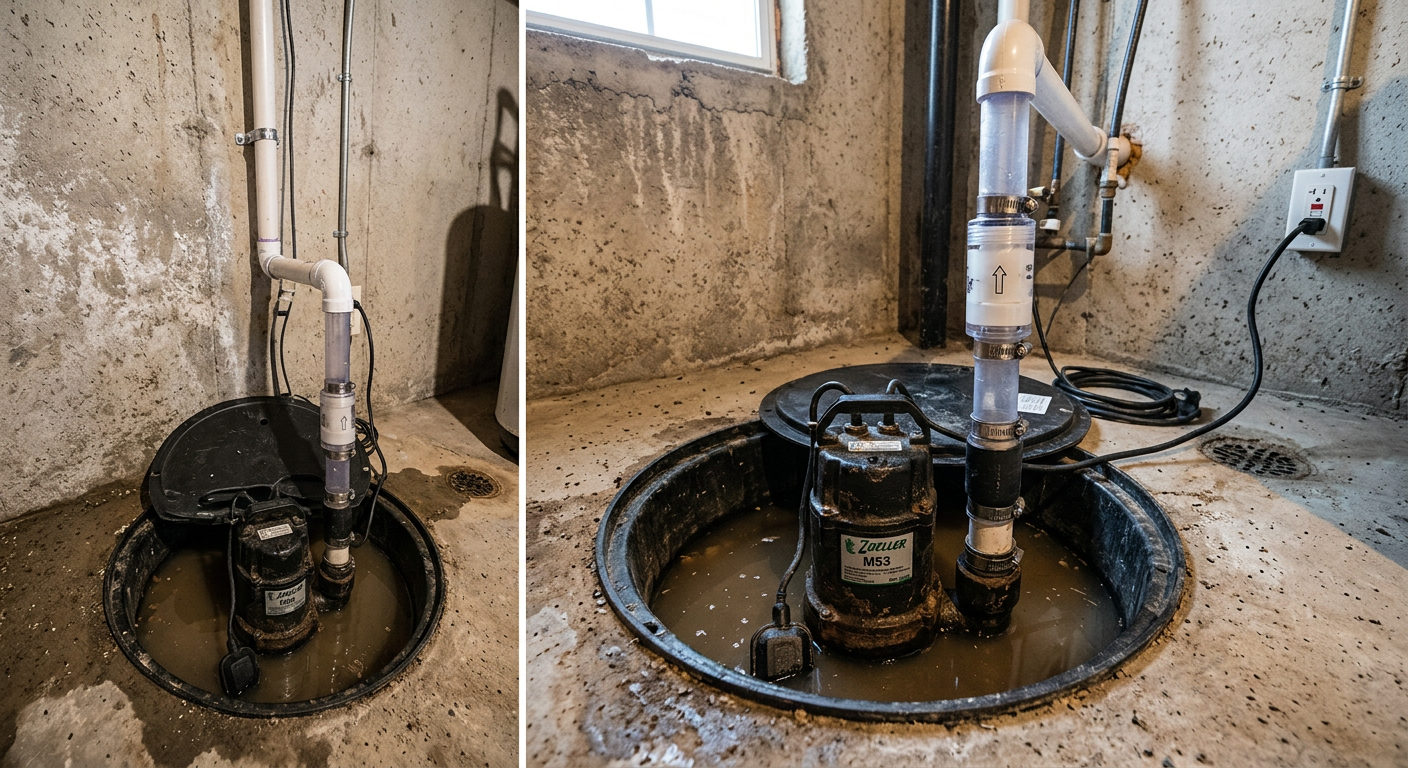
Follow your model’s maintenance schedule rather than assuming every pump needs the same attention. Manufacturer instructions vary: some specify monthly operational tests, quarterly component checks, and annual basin cleaning; others call for cleaning and testing at least every three months. Start with the manual, then ask a qualified professional whether your operating conditions warrant additional checks.
Turn that schedule into reminders you can actually follow. For a home, keep the manual and maintenance notes with other household records. For a small office, shop, or rental property, assign responsibility to a named person rather than leaving inspections to whoever notices a problem.
A useful maintenance record includes:
Test date and result: Note whether the pump started automatically, lowered the water, and stopped.
Observed changes: Record unusual sounds, repeated starts, leaks, or visible damage.
Work completed: List cleaning, component repairs, and professional service.
Next action: Give unresolved issues an owner and a follow-up date.
These notes give your plumber something more useful than “it sounded different last week.” They also help distinguish an isolated event from a recurring pattern.
Start with safe access and electrical precautions
Disconnect the pump from its power source before touching it, clearing debris, or making adjustments. Systems with backup equipment may have more than one power source, so follow the isolation instructions for the entire system. Never lift a pump by its electrical cord, and leave electrical circuit inspections or repairs to a qualified electrician.
Flooding changes the situation. If water has reached electrical equipment or makes access unsafe, do not enter the area to unplug the pump. Have the utility or a qualified electrician disconnect electrical service before pump removal. A maintenance task is never worth risking contact with energized water.
For commercial properties, make access part of the maintenance plan: identify the equipment location, keep service instructions available, and establish who is authorized to work on it. Staff should know whom to contact without having to troubleshoot unfamiliar equipment themselves.
Keep the basin clean and the float unobstructed
Debris in the basin can interfere with the float or jam the pump intake. During a safe, power-isolated inspection, look for accumulated dirt, small stones, and other loose material. Remove accessible debris using the procedure in your manual, and arrange service if cleaning requires pump removal beyond your capabilities.
Pay particular attention to the float switch. It needs to move freely through its full operating range without hitting the basin wall, piping, or cables. Also check that the pump remains upright: movement or tilting can prevent the switch from operating correctly. Do not change float settings simply to make the pump start sooner or run longer; ask a technician to assess questionable operation.
Avoid treating the basin like a drain for cleaning products or unwanted liquids. A groundwater sump pump is not automatically suitable for sewage, laundry discharge, or chemical-containing wastewater. Check its approved application, especially in light commercial spaces where nearby activities may introduce materials the pump was never designed to handle.
Test a complete pumping cycle
A pump that looks clean still needs an operational test. With cleaning finished, the equipment reassembled, and power safely restored, add water according to the manufacturer’s directions until the automatic switch activates. Observe the whole cycle—not just whether the motor makes noise. Manufacturer maintenance instructions specifically call for adding enough water to verify automatic operation.
Use this checklist during the test:
Watch startup. Confirm the rising water activates the pump without manual assistance.
Watch drawdown. The water level should fall while the pump operates.
Confirm shutdown. Check that the pump stops as the water reaches its normal shutoff level.
Observe the aftermath. Note immediate repeated starts, unexpected backflow, or other changes for your service provider.
Keep hands and tools out of the basin while equipment is energized. If the motor hums but water does not move, or the pump fails to shut off, stop the test and arrange troubleshooting. Possible causes include a blocked intake, discharge restriction, float problem, or operating conditions beyond the pump’s capacity; the symptom alone does not identify the repair.
Inspect the discharge route and check valve
The pump needs a clear route for the water it removes. Inspect accessible piping for obvious damage and report any suspected restriction rather than focusing only on the motor. A clogged discharge line, closed valve, or stuck check valve can leave a running pump delivering little or no water.
The check valve prevents discharged water from flowing back after a pumping cycle. If it fails, the pump may start and stop too frequently. Record that behavior and have the valve checked; replacing the pump without resolving the backflow problem may leave the underlying issue untouched.
Some installations also require an air-relief or vent hole to prevent air locking. Its location and maintenance requirements depend on the equipment instructions. Clean an existing hole only as directed, and do not drill or modify discharge piping based on a generic diagram.
Include backup equipment in the routine
Where a battery backup pump is installed, test it separately using its own manual. A successful primary-pump test does not demonstrate that the backup pump, controller, or battery is ready. Follow the prescribed test sequence and verify that normal power connections and controller settings are restored afterward.
Check the system’s readiness indicators and investigate warnings rather than simply silencing them. Battery backup systems can provide protection when the primary pump fails or loses power, but they still require inspection and testing. Ask your service provider to explain the indicators and demonstrate the approved test if the process is unfamiliar.
For business premises, document who receives an alarm and who responds after hours. An alert is most useful when it leads to a clear action, not an unanswered notification.
Recognize problems that cleaning cannot solve
Frequent cycling, continuous operation, reduced output, and repeated electrical trips deserve investigation. These symptoms can have different causes, including switch trouble, restrictions, electrical faults, or a mismatch between incoming water and pumping capacity. Do not assume every performance problem means the motor has worn out.
Avoid opening sealed motor housings or adding lubricant unless the manufacturer explicitly requires it. Some sump pumps have oil-filled motors that need no routine lubrication, and unauthorized disassembly can affect warranty coverage. Use qualified service for internal repairs rather than turning a manageable fault into a damaged unit.
For light commercial plumbing maintenance, request a system-level review when problems recur. Ask the technician to assess the float arrangement, basin, discharge route, check valve, and pump capacity together. Manufacturer troubleshooting guidance identifies several of these installation conditions as possible reasons for excessive cycling or poor output.
When is sump pump installation or replacement the better option?
Sump pump installation may be appropriate when a property lacks a pumping system and a drainage assessment identifies a suitable application. Sump pump replacement becomes the stronger option when damage or persistent failure makes dependable operation doubtful. Neither decision should substitute for checking whether drainage restrictions, controls, or sizing caused the problem.
Ask whether a component repair is practical before replacing the entire unit. Some pumps have replaceable float switches, for example. Conversely, when a pump cannot handle the application, choosing another unit requires a capacity assessment—not simply purchasing the same size again.
Make maintenance a repeatable habit
The most useful plan is one you can sustain: follow the manual, document tests, and arrange qualified help for unresolved faults. Put the next inspection on the calendar before closing the maintenance record. Whether you manage a basement or business premises, consistent attention beats waiting for water to reveal a problem.
